


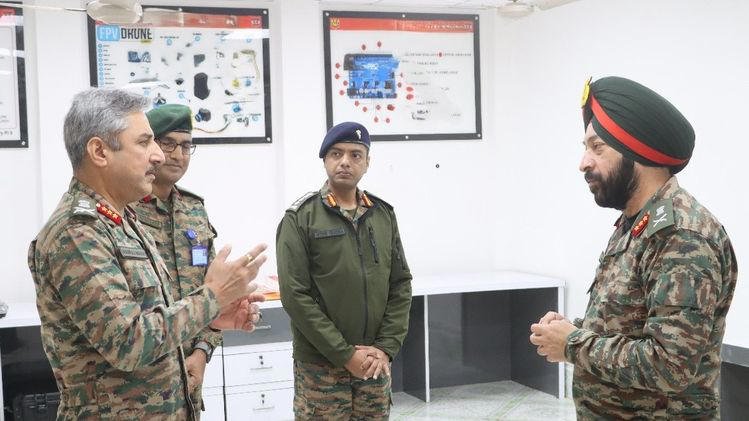
DGBR reviews post-GLOF road restoration as part of sustained efforts to rebuild and strengthen critical infrastructure in Sikkim following the devastating glacial lake outburst flood. The Director General Border Roads (DGBR) carried out a detailed review of ongoing road restoration works and held high-level discussions with the Trishakti Corps of the Indian Army and the Sikkim government. Officials said the review aimed to assess progress, address challenges, and ensure seamless coordination among all stakeholders.
Moreover, the visit underlined the strategic and humanitarian importance of restoring road connectivity in the Himalayan state. Post-GLOF damage had severely disrupted transport networks, affecting civilian movement, supply chains, and defence logistics. Therefore, DGBR reviews post-GLOF road restoration with a focus on speed, safety, and long-term resilience.
Read More: Reviving the Birthplace: Governor Bhalla and Minister Scindia Chart Polo Roadmap for Manipur
DGBR reviews post-GLOF road restoration across key stretches
During the review, the DGBR inspected several road stretches damaged by flash floods and landslides triggered by the GLOF. Officials briefed him on repair works, slope stabilisation measures, and temporary connectivity arrangements.
Additionally, engineers highlighted the challenges posed by unstable terrain and harsh weather. Despite these obstacles, teams have restored connectivity on several critical routes. As a result, DGBR reviews post-GLOF road restoration to ensure that reconstruction meets both immediate needs and future durability standards.
High-level talks with Trishakti Corps
As part of the visit, the DGBR held high-level talks with senior officers of the Trishakti Corps. The discussions focused on coordination between the Border Roads Organisation and the Army in maintaining operational readiness.
Officials said road connectivity plays a crucial role in defence preparedness along sensitive borders. Therefore, DGBR reviews post-GLOF road restoration in close coordination with the Army to align civilian infrastructure efforts with strategic requirements.
The Trishakti Corps shared inputs on priority routes and logistics needs. Both sides agreed on continued cooperation to ensure uninterrupted movement of troops and supplies.
Coordination with Sikkim government
The DGBR also held meetings with senior officials of the Sikkim government to review progress and plan future actions. The state administration highlighted the impact of road damage on local communities, tourism, and essential services.
Furthermore, discussions focused on aligning restoration efforts with state development plans. The Sikkim government assured full support in land clearances, local coordination, and resource mobilisation. Hence, DGBR reviews post-GLOF road restoration as a joint effort involving central and state agencies.
Focus on resilient and climate-adaptive infrastructure
A key emphasis during the review was on building climate-resilient infrastructure. Officials said future road designs must account for increasing frequency of extreme weather events in the Himalayan region.
Therefore, DGBR reviews post-GLOF road restoration with an eye on long-term solutions such as improved drainage, reinforced slopes, and alternative alignments. These measures aim to reduce vulnerability and ensure sustainability.
Engineers briefed the DGBR on the adoption of new technologies and materials to enhance road strength. Such innovations, officials said, will help withstand future natural disasters.
Restoring civilian connectivity and livelihoods
Beyond strategic considerations, the restoration of roads remains vital for civilian life. Disrupted connectivity had affected access to healthcare, education, and markets in several areas.
Officials noted that reopening roads has already eased movement and revived economic activity. Therefore, DGBR reviews post-GLOF road restoration also to assess its impact on livelihoods and daily life.
Local representatives conveyed their concerns and appreciation during interactions. The DGBR stressed that civilian needs remain a priority alongside strategic objectives.
Challenges on the ground
Despite progress, officials acknowledged persistent challenges. Unpredictable weather, landslides, and narrow working windows slow construction. Additionally, transporting materials to remote areas remains difficult.
However, coordinated planning and round-the-clock efforts have helped overcome several hurdles. As a result, DGBR reviews post-GLOF road restoration to identify bottlenecks and accelerate timelines wherever possible.
Strategic significance of Sikkim road network
Sikkim’s road network holds strategic importance due to its proximity to international borders. Maintaining robust connectivity is essential for national security and disaster response.
Therefore, DGBR reviews post-GLOF road restoration as part of a broader strategy to strengthen border infrastructure. Officials said lessons learned from the GLOF will inform future planning across the region.
Way forward after the review
Following the review, officials outlined next steps, including faster execution of pending works and closer monitoring. Regular coordination meetings with the Army and state authorities will continue.
The DGBR reiterated the commitment of the Border Roads Organisation to restoring and upgrading Sikkim’s road infrastructure. Overall, DGBR reviews post-GLOF road restoration as a critical mission that balances strategic needs, civilian welfare, and climate resilience.
As reconstruction advances, authorities remain focused on ensuring that Sikkim emerges stronger and better prepared to face future challenges.
Read More: 45% of Tripura-Mizoram gas pipeline project completed