


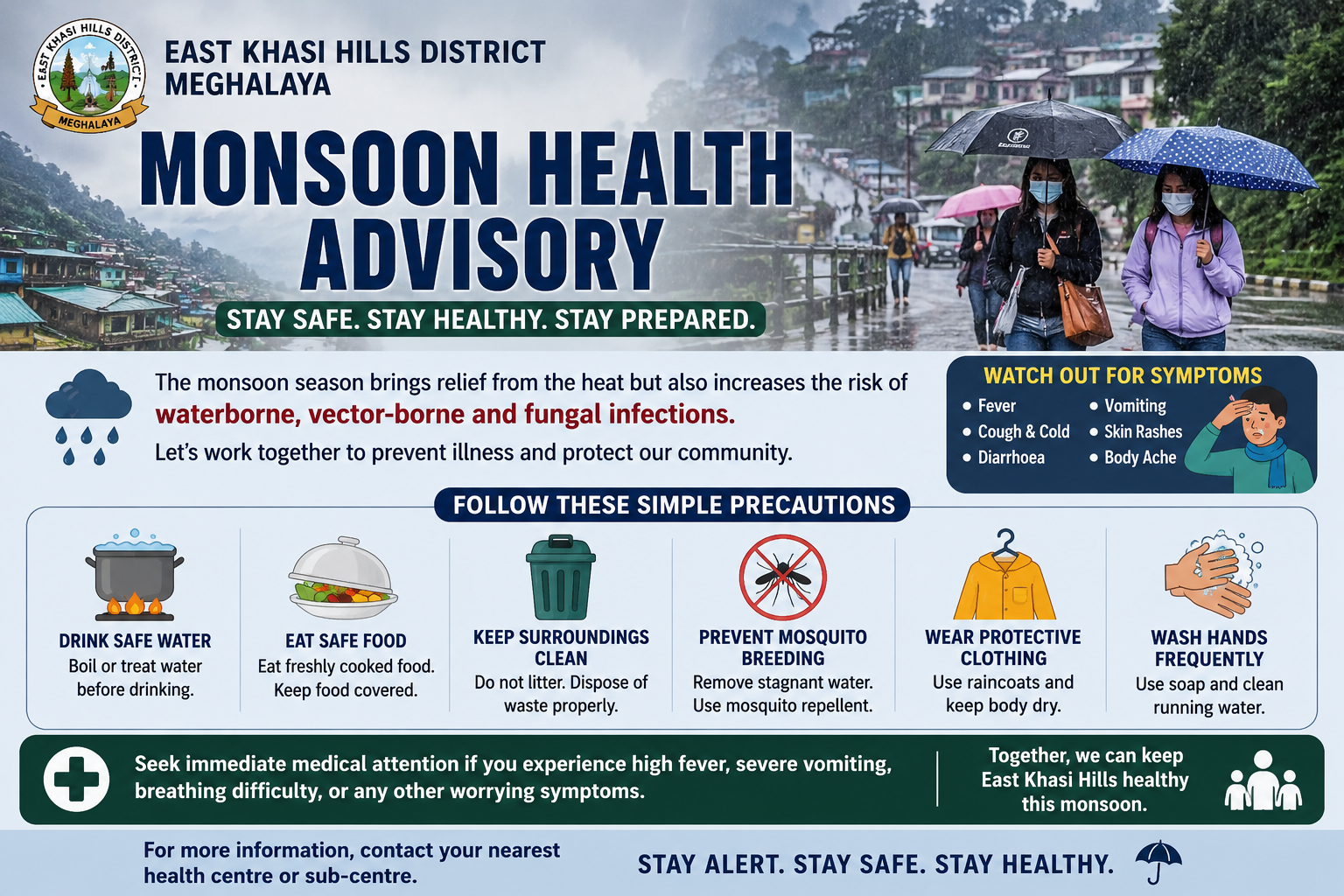
The District Medical and Health Officer (DMHO) of East Khasi Hills, Meghalaya, has issued a monsoon health advisory urging residents to take preventive measures against seasonal diseases. The advisory warns about the increased risk of mosquito-borne illnesses, scrub typhus, water- and food-borne diseases, and mushroom poisoning during the rainy season.
Additionally, the Health Department has encouraged people to maintain hygiene, eliminate stagnant water, consume safe food and drinking water, and seek timely medical care if symptoms appear. Schools, offices, and other institutions must also strengthen sanitation and report unusual disease outbreaks promptly. The advisory aims to reduce the spread of infections and protect public health throughout the monsoon.
Read More: BJP Eyes Bigger Role for TIPRA Motha Before TTAADC Polls
Key Facts
- District: East Khasi Hills, Meghalaya
- Issued By: District Medical and Health Officer (DMHO)
- Purpose: Prevent monsoon-related diseases
- Major Risks: Mosquito-borne diseases, scrub typhus, food- and water-borne illnesses, mushroom poisoning
- Advisory Covers: Residents, schools, offices, and institutions
- Key Message: Practice hygiene, prevent stagnant water, and seek early treatment
East Khasi Hills Health Department Issues Monsoon Advisory
The District Medical and Health Officer (DMHO) of East Khasi Hills has issued a public health advisory to help residents stay safe during the monsoon season. The advisory highlights several diseases that usually increase during periods of heavy rainfall.
According to the Health Department, the rainy season creates favourable conditions for mosquito-borne diseases, scrub typhus, food- and water-borne infections, and mushroom poisoning. Therefore, officials have urged everyone to follow simple preventive measures.
Residents Should Remove Mosquito Breeding Sites
The Health Department has asked residents to stop water from collecting around their homes. Discarded tyres, flower pots, buckets, and containers can quickly become mosquito breeding sites.
People should also use mosquito nets or repellents and wear full-sleeved clothing, especially during the early morning and evening. These precautions can lower the risk of mosquito bites.
Residents should avoid contact with floodwater or contaminated water whenever possible. If exposure occurs, they should wash thoroughly with soap and clean water immediately.
Follow Safe Food and Water Practices
The advisory encourages families to refrigerate cooked food within two hours after preparation.
People should reheat cooked food to at least 75°C before eating. They should also avoid consuming stale, uncovered, or improperly stored food.
Moreover, frequent handwashing with soap remains one of the most effective ways to prevent infections. People should wash their hands before meals, while cooking, after using the toilet, and after handling animals.
Keep Homes and Surroundings Clean
The Health Department has encouraged households to keep their surroundings clean and dispose of waste properly. These practices help prevent rodent infestation and reduce disease transmission.
Residents should not wash the clothes or bed linen of diarrhoea patients in streams, springs, or other drinking water sources.
Similarly, people should avoid defecating uphill or near water sources because rainwater can carry harmful bacteria into drinking water supplies. Whenever possible, families should keep pig enclosures away from residential areas.
Avoid Eating Wild Mushrooms
The advisory strongly warns residents not to consume wild or unidentified mushrooms during the monsoon season.
Many poisonous mushrooms closely resemble edible varieties. Therefore, eating unidentified mushrooms can lead to severe poisoning and other medical emergencies.
Schools and Offices Should Take Preventive Steps
The Health Department has instructed schools, offices, and other institutions to inspect their premises regularly and remove stagnant water.
In addition, institutions should provide safe drinking water and maintain proper sanitation facilities. They should also report any unusual increase in fever or diarrhoea cases to the nearest health facility without delay.
These measures will help authorities detect outbreaks early and respond quickly.
Prevention Can Reduce Seasonal Diseases
According to the Health Department, good personal hygiene and clean surroundings can prevent most seasonal diseases.
Officials have also encouraged people to reduce exposure to disease-causing agents and seek medical attention as soon as symptoms develop. Early treatment can prevent complications and reduce the spread of infections.
By following these preventive measures, residents can help protect themselves, their families, and their communities throughout the monsoon season.
Question and Answer
What happened?
The East Khasi Hills Health Department issued a monsoon health advisory to help prevent seasonal diseases.
Which diseases does the advisory mention?
The advisory highlights mosquito-borne diseases, scrub typhus, food- and water-borne illnesses, and mushroom poisoning.
What precautions should residents take?
Residents should remove stagnant water, maintain good hygiene, eat safe food, drink clean water, and use mosquito protection.
What should schools and offices do?
Schools and offices should keep their premises clean, eliminate stagnant water, ensure safe drinking water, and report unusual disease outbreaks.
Why did the Health Department issue this advisory?
The department issued the advisory to reduce the spread of seasonal diseases and encourage preventive healthcare during the monsoon.
Location Context
East Khasi Hills, home to Meghalaya’s capital Shillong, receives heavy rainfall during the monsoon every year. Therefore, seasonal health advisories play a vital role in preventing disease outbreaks and protecting public health across the district and the wider Northeast region.
Also Read: Meghalaya to Formally Oppose Uranium Mining