


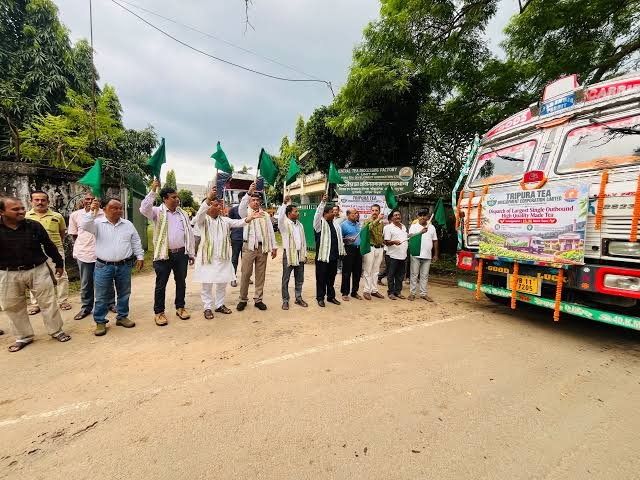
The European tea export milestone marks a significant development for Tripura’s tea industry as a 15.31-metric-tonne consignment prepared at the Durgabari Central Tea Processing Factory was dispatched for overseas markets on September 11, 2026. The shipment represents the largest single outbound tea consignment handled by the Tripura Tea Development Corporation Limited (TTDCL). Reports also indicate that the tea is intended for European buyers.
The development gives Tripura’s tea sector a new international opportunity after years of efforts to improve production, processing and marketing. Moreover, the consignment was prepared according to stringent quality requirements before leaving the state. Officials described the shipment as an important step toward expanding the commercial reach of Tripura tea.
Arunachal Pradesh: Papum Pare Hosts Recipe Competition to Promote Nutrition During Poshan Maah 2026
European Tea Export Milestone Opens New International Market
The European tea export milestone began at the Central Tea Processing Factory at Durgabari in West Tripura. Industries and Commerce Secretary Kiran Gitte, TTDCL Chairman Samir Ranjan Ghosh and Managing Director Rajesh Kumar Das were among the officials involved in formally flagging off the shipment.
The export-bound consignment weighs approximately 15,310 kilograms. According to reports, it is being transported through Kolkata before moving toward European markets. This route provides Tripura with access to an established logistics and export hub outside the state.
The shipment also represents a substantial increase over TTDCL’s previous largest outbound consignment. Earlier in 2026, the corporation sent 8,200 kilograms of tea to the Guwahati Tea Auction Centre. The new 15.31-tonne consignment is therefore almost twice that earlier shipment.
However, reports have differed on the total quantity dispatched from Durgabari on September 11. Several reports state that 23.31 metric tonnes left the factory in two consignments, with 15.31 tonnes designated for overseas markets and another eight tonnes sent toward the domestic market. Therefore, the European-bound quantity should be distinguished from the combined shipment figure.
The distinction is important because the 15.31-tonne figure represents the actual overseas-bound consignment, while 23.31 tonnes refers to the combined quantity reported as dispatched from the facility.
Tripura Tea Meets Higher Quality Requirements
Quality standards have played an important role in the European tea export milestone. TTDCL Chairman Samir Ranjan Ghosh said the export-bound tea had been prepared to meet stringent requirements for international markets. Reports stated that the tea was checked against around 48 quality parameters before dispatch.
Such preparation represents an important shift for Tripura’s tea sector. Instead of focusing only on production volumes, the industry increasingly needs to emphasise consistent quality, processing standards, packaging and market requirements.
Furthermore, international market access can create opportunities for producers to build recognition beyond traditional domestic markets. If demand develops further, tea producers and processors could potentially benefit from wider commercial relationships.
The Tripura Tea Development Corporation has also highlighted the growing demand for its Tripureshwari tea brand outside the state. Officials expressed hope that the latest export initiative could lead to larger international orders in the future.
At the same time, the first European-bound shipment should not be treated as proof of a large established export market. It represents an important beginning, while sustained international demand will depend on quality consistency, pricing, logistics and continued compliance with destination-market requirements.
Therefore, the shipment’s long-term importance will depend on whether Tripura can convert this initial opportunity into regular international sales.
Tea Industry Seeks Better Marketing and Auction Facilities
The European tea export milestone has also renewed attention on the need for stronger marketing infrastructure within Tripura. The state government and TTDCL are working toward establishing an Agartala Tea Auction Centre to improve market access and price discovery for tea producers and manufacturers.
The proposed auction centre is expected to bring growers, manufacturers, brokers, buyers and other stakeholders onto a technology-driven platform. Electronic bidding could allow buyers to participate more efficiently while creating a more organised system for tea marketing.
Moreover, officials have suggested that a local auction centre could reduce some costs linked to freight, warehousing, sampling and handling. TTDCL officials have estimated possible savings of around ₹6 to ₹10 per kilogram, although the actual benefit would depend on how the proposed system operates.
The initiative also comes as Tripura continues to address longstanding challenges in its tea industry. These include marketing limitations, branding, logistics and price realisation.
According to recent reports, Tripura has 54 tea gardens and around 2,800 small tea growers. Small growers contribute nearly 30% of the state’s total tea production, which stands at roughly 90 lakh kilograms annually. More than 60% of production is currently sold through auction markets outside Tripura.
Consequently, developing stronger local marketing infrastructure could help keep more commercial activity within the state. It could also connect smaller growers with buyers and processors through a more structured value chain.
The proposed auction centre therefore forms part of a broader strategy rather than an isolated project. Alongside export opportunities, better domestic marketing could strengthen the overall economics of tea production in Tripura.
European Market Could Expand Opportunities for Tea Producers
The European tea export milestone has created new expectations for Tripura’s tea workers, growers and processing units. International sales could provide additional market opportunities if buyers continue to recognise the quality and consistency of tea produced in the state.
The latest consignment also highlights the role of processing facilities in taking locally grown tea into larger markets. The Durgabari factory processed and prepared the tea before its dispatch, linking plantation production with quality control and commercial distribution.
Moreover, the development could encourage greater attention to branding. Tripura has produced tea for more than a century, with cultivation beginning in 1916 at Hiracherra in Kailashahar. The industry has since developed into one of the state’s established economic activities.
However, expanding exports requires sustained investment. Producers must maintain quality, while processors need reliable infrastructure and buyers need confidence in supply. Logistics also remain important because the tea must travel from Tripura to external markets before reaching overseas destinations.
The state’s tea sector also includes small growers whose participation will matter if export growth continues. A stronger market ecosystem could provide opportunities beyond large plantations by connecting smaller producers with processing, grading and marketing channels.
Additionally, the proposed Agartala Tea Auction Centre could support this process by creating a more organised marketplace within the state. Officials have said the broader objective is to develop Tripura into a significant tea-trading hub in the Northeast.
Nevertheless, the European shipment should be viewed as an early milestone rather than the completion of Tripura’s international tea expansion. Future consignments, repeat orders and stable international buyers will determine how durable the new market opportunity becomes.
Conclusion
The European tea export milestone represents a new chapter for Tripura’s tea industry, with a 15.31-metric-tonne consignment dispatched from the Durgabari Central Tea Processing Factory for European markets. The shipment is also the largest single outbound consignment handled by TTDCL to date.
The tea reportedly underwent extensive quality checks, including compliance with around 48 parameters, before dispatch. Furthermore, the state is working to strengthen marketing infrastructure through a proposed Agartala Tea Auction Centre.
The development could benefit growers, workers, processors and other participants if international demand expands. However, sustained success will depend on maintaining quality, controlling logistics costs, securing repeat orders and building a stronger commercial ecosystem.
For now, the European-bound consignment gives Tripura tea an important opportunity to establish itself beyond traditional markets and demonstrate the potential of the state’s tea industry on a wider international platform.
FAQs
What is the European tea export milestone for Tripura?
The milestone refers to the dispatch of a 15.31-metric-tonne tea consignment from Tripura’s Durgabari Central Tea Processing Factory for European markets on September 11, 2026.
How much Tripura tea is being sent to European markets?
The overseas-bound consignment contains approximately 15.31 metric tonnes, or 15,310 kilograms, of tea.
Where was the European-bound tea dispatched from?
The consignment was dispatched from the Central Tea Processing Factory at Durgabari in West Tripura and is being routed through Kolkata.
Did the tea meet international quality requirements?
Officials said the export-bound tea was prepared according to stringent requirements and had to meet around 48 quality parameters before dispatch.
Why is the European tea export milestone important?
It gives Tripura’s tea industry an opportunity to enter wider international markets and could create new commercial opportunities for growers, workers, processors and other stakeholders.