


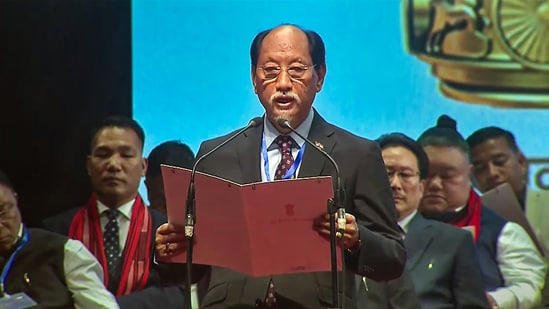
Nagaland Chief Minister Neiphiu Rio has urged Union Home Minister Amit Shah to reconsider the proposed Foreign Contribution (Regulation) Amendment Bill, 2026. Rio said the Bill could create difficulties for churches and Christian organisations that run educational, healthcare and humanitarian programmes in the state.
The chief minister raised these concerns in a letter to Shah on August 9. He also asked the Centre to refer the proposed amendments to a Joint Parliamentary Committee (JPC). Rio believes a wider parliamentary review could address concerns from churches and other organisations before Parliament considers the legislation further.
Read More: Tripura: Sushanta Chowdhury Accuses Opposition of Politicising NEET Paper Leak Issue
Nagaland CM Raises Concerns Over FCRA Bill
Rio’s concerns follow discussions with Christian leaders and representatives of the Nagaland Baptist Church Council and the Bishop of Kohima. The church representatives reportedly highlighted several difficulties that organisations already face under the existing FCRA framework.
According to Rio, the proposed amendments could increase those difficulties. He warned that the changes could affect organisations that provide essential services in remote parts of Nagaland.
The chief minister also stressed the need to consider Nagaland’s unique social and historical background. Churches hold a significant place in the state’s community life. Many Christian organisations also operate schools, healthcare facilities and charitable programmes.
Rio therefore asked the Centre to examine the Bill with greater sensitivity. He said the government should maintain strong checks on foreign funds while also protecting legitimate social and humanitarian work.
Christian Organisations Provide Key Services
Christian organisations have played a major role in Nagaland’s social development. Churches and mission-based institutions have contributed to education, healthcare and community welfare for many years.
Rio pointed to this history while explaining his concerns about the proposed FCRA amendments. He said many organisations use legitimate foreign contributions to support their work.
These organisations often work in areas where people have limited access to public services. They run schools, healthcare programmes and welfare initiatives. Some also provide emergency assistance during natural disasters.
The chief minister noted that churches and Christian groups helped communities during floods, landslides and the Covid-19 pandemic. Their networks allowed them to reach people quickly during difficult periods.
Rio argued that stricter regulations should not unintentionally disrupt such activities. He also stressed that authorities should distinguish between organisations that misuse foreign funds and those that follow the law.
FCRA Rules and Renewal Concerns
The FCRA regulates the receipt and use of foreign contributions by eligible organisations in India. The government uses the law to promote financial transparency and prevent the misuse of foreign funds.
The proposed amendments have raised concerns about organisations that lose or fail to renew their FCRA registration. Critics worry that some provisions could create serious financial and administrative challenges for such organisations.
Rio specifically raised concerns about organisations whose renewal applications face rejection. He called for authorities to examine each case carefully.
The chief minister argued that authorities should consider an organisation’s actual activities before taking action. He also suggested that organisations that follow financial rules should not face unnecessary disruption.
The debate has gained attention because many churches and Christian institutions depend on foreign contributions for their charitable and social programmes.
What Does the Proposed FCRA Amendment Bill Say?
The proposed amendments seek to strengthen the government’s control over organisations that receive foreign contributions. One of the key areas of concern involves organisations whose FCRA registration expires or whose renewal gets rejected.
The proposed framework also includes provisions concerning assets created or acquired through foreign contributions. These provisions could allow authorities to take control of certain assets in situations involving cancellation, suspension or non-renewal of an organisation’s registration.
Supporters of the Bill argue that stronger regulation can improve accountability. They also say the government needs effective safeguards against the misuse of foreign funds.
Critics, however, fear that the expanded powers could affect NGOs, charities, educational institutions and religious organisations. They have called for greater clarity and stronger safeguards before Parliament approves the changes.
The government has maintained that the proposed law would apply across organisations and communities rather than target any particular religion.
Rio Wants the Bill Sent to a JPC
Rio has not simply rejected the government’s objective of regulating foreign contributions. Instead, he has asked for a broader consultation process.
He acknowledged the need for transparency and accountability. At the same time, he said the government should consider the concerns of organisations that provide legitimate services to communities.
Rio therefore urged Shah to send the Bill to a Joint Parliamentary Committee. Such a committee could examine each provision in detail. It could also hear from state governments, churches, NGOs and other affected stakeholders.
The request has added to similar concerns from other northeastern states. Mizoram Chief Minister Lalduhoma has also sought greater parliamentary scrutiny of the proposed amendments. Meghalaya Chief Minister Conrad Sangma has raised concerns about the possible impact on church-run institutions and minority communities.
FCRA Bill Faces Political Debate
The proposed FCRA amendments have already triggered a wider political debate. Opposition parties and civil-society groups have questioned several provisions of the Bill. Some have demanded its withdrawal, while others have supported a detailed parliamentary review.
The government has indicated that it may consider sending the legislation to a JPC. The Bill’s immediate progress also remains uncertain, as it has not appeared on the Lok Sabha agenda for the final days of the current Monsoon Session.
The debate now centres on how India can balance financial regulation with the freedom of legitimate organisations to carry out charitable work.
Nagaland Seeks Balance Between Regulation and Welfare
Rio’s appeal highlights the specific concerns of Nagaland’s Christian community. Churches and Christian organisations have long contributed to education, healthcare and social welfare across the state.
The chief minister wants the Centre to recognise that role while framing stronger FCRA rules. He has called for a process that protects national interests without placing unnecessary pressure on genuine charitable organisations.
A JPC review could give lawmakers an opportunity to examine these concerns in greater detail. It could also allow affected organisations to explain how the proposed changes might influence their work.
For now, the FCRA Amendment Bill 2026 remains at the centre of a growing debate over foreign funding, government oversight and the future of charitable institutions. Rio’s intervention has added a significant northeastern perspective to that discussion and could increase pressure for wider consultation before Parliament takes a final decision.
Read More: Kuki Inpi Manipur Raises Strong Objection to CM’s Kangpokpi Visit