


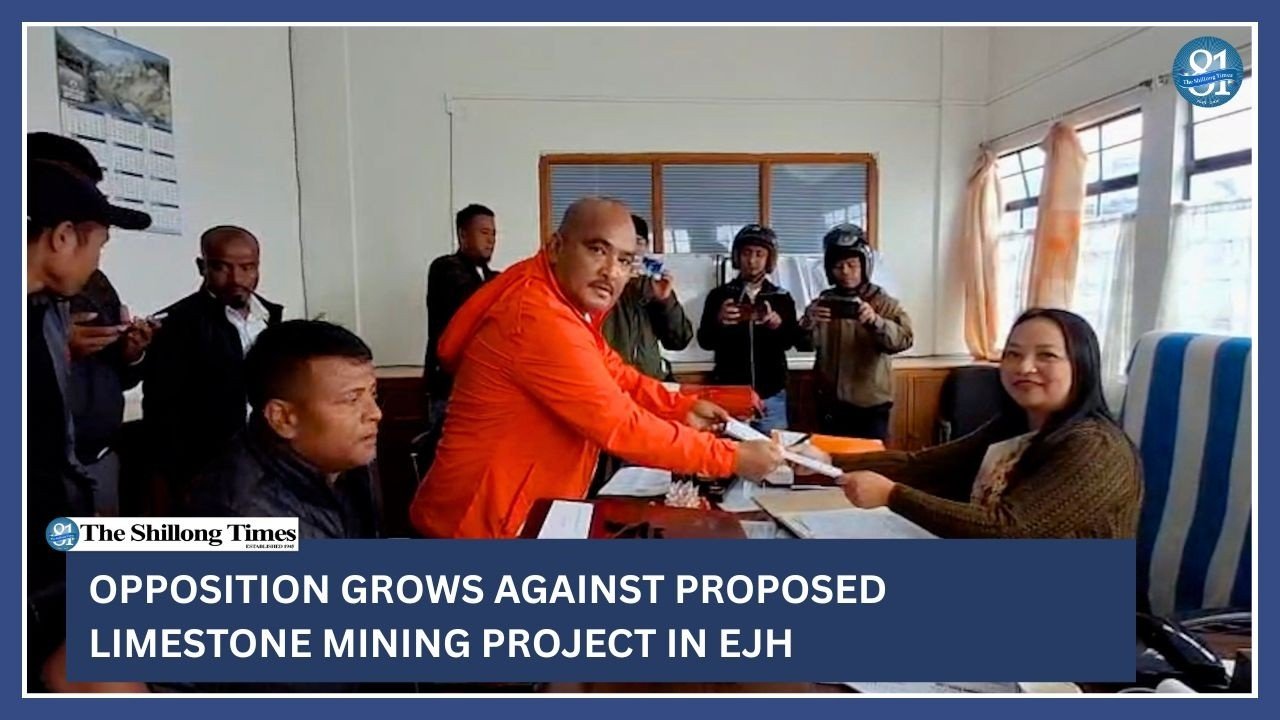
The Shillong Mining Project Protests intensified after activists from the Jaintia National Council and Jaintia Students’ Union marched toward the Meghalaya Secretariat demanding cancellation of a proposed limestone mining project. Protesters alleged violations in environmental assessment procedures and warned about possible ecological damage linked to the cement-related mining expansion.
Rhino Charge Incident Shocks Manas National Park
Cooch Behar Hosts Grand Welcome for Speaker
Activists March Toward Meghalaya Secretariat
Members of the Jaintia National Council and the Jaintia Students’ Union organized a major protest march in Shillong against a proposed limestone mining project connected to cement industry expansion.
Protesters moved toward the Meghalaya Secretariat while raising slogans and carrying placards demanding immediate cancellation of the project. Consequently, the demonstration attracted significant public and media attention across the state.
Authorities monitored the protest closely while maintaining security arrangements in the surrounding areas.
Protest Focuses On Mining Project Concerns
The demonstration centered on opposition to the proposed limestone mining initiative, which activists claim could create serious environmental and ecological risks in the region.
Protest leaders argued that large-scale mining activities may damage forests, water sources, agricultural land, and local biodiversity. Furthermore, community groups expressed concern regarding the long-term impact on nearby villages and ecosystems.
The issue has now become a major public debate involving development, environmental protection, and local rights.
Allegations Of Environmental Assessment Violations
Protesters accused project authorities of violating environmental assessment procedures linked to the mining proposal. Activists alleged that proper environmental impact evaluations and public consultation processes were not conducted adequately.
The organizations demanded greater transparency regarding project approvals, environmental clearances, and regulatory compliance. Additionally, demonstrators urged authorities to halt all project-related activities until concerns are addressed fully.
Officials have not publicly confirmed the allegations raised by protest groups.
JNC And Students’ Union Lead Demonstration
The Jaintia National Council and the Jaintia Students’ Union played central roles in organizing the protest movement. Both organizations frequently participate in regional issues related to indigenous rights, environmental protection, and local governance.
Leaders from the groups stated that protecting Meghalaya’s natural resources and ecological balance remains a major priority. Consequently, they warned against development projects that may threaten environmental sustainability.
The protest also reflected growing youth participation in environmental and community activism across the Northeast.
Environmental Protection Becomes Central Issue
Environmental conservation emerged as the central focus of the demonstration as activists highlighted potential risks associated with limestone mining operations. Experts often warn that uncontrolled mining can lead to soil erosion, groundwater depletion, deforestation, and habitat destruction.
Community groups argued that Meghalaya’s fragile ecological landscape requires careful protection against large-scale industrial activities. Furthermore, residents expressed concern regarding the long-term environmental consequences for future generations.
Public discussions regarding sustainable development and ecological preservation continue gaining attention in the region.
Cement Industry Expansion Faces Scrutiny
The proposed mining project is reportedly linked to broader cement industry expansion activities in Meghalaya. The state contains significant limestone reserves that support industrial and commercial operations.
However, environmental groups and local organizations frequently question the ecological impact of intensive mining activities connected to cement production. Consequently, industrial expansion projects often face scrutiny regarding sustainability and regulatory oversight.
Experts stressed the importance of balancing economic growth with environmental responsibility and community welfare.
Public Support For Protest Movement Grows
Several local residents and civil society organizations expressed support for the protest movement. Community members emphasized the importance of protecting natural resources, traditional livelihoods, and environmental health.
Many protesters argued that local communities should receive greater involvement in decision-making processes regarding large industrial projects. Additionally, citizens demanded stronger enforcement of environmental laws and transparent governance practices.
The growing public response reflects increasing awareness regarding environmental and ecological issues in Meghalaya.
Authorities Monitor Situation Closely
Meghalaya authorities closely monitored the protest march to maintain law and order during the demonstration. Security personnel remained deployed near sensitive locations while traffic and public movement continued under supervision.
Officials may review concerns raised by activists as discussions surrounding the project continue. Furthermore, authorities encouraged peaceful protest and constructive dialogue regarding development-related disputes.
No major incidents were reported during the protest activities.
Mining Debates Continue Across Northeast India
The Shillong protest reflects wider debates across Northeast India regarding mining, industrialization, and environmental sustainability. Several states in the region face similar tensions involving resource extraction projects and ecological concerns.
Experts believe balancing economic development with environmental preservation remains one of the region’s biggest long-term challenges. Therefore, governments increasingly face pressure to ensure stronger environmental safeguards and community participation.
Public activism surrounding environmental issues continues growing across multiple Northeastern states.
Protest Highlights Demand For Sustainable Development
The Shillong Mining Project Protests highlighted increasing public demand for responsible and sustainable development practices in Meghalaya. Activists and local organizations continue urging authorities to prioritize environmental protection alongside economic planning.
As discussions regarding the limestone mining proposal continue, the controversy has once again drawn attention to the importance of transparency, ecological responsibility, and community involvement in development decisions. The outcome of the dispute may significantly influence future environmental and industrial policies in the region.
FAQs
Why did activists protest in Shillong?
Protesters opposed a proposed limestone mining project linked to cement industry expansion.
Which organizations led the protest?
The Jaintia National Council and Jaintia Students’ Union organized the demonstration.
What concerns did protesters raise?
Activists alleged environmental assessment violations and possible ecological damage.
What industry is connected to the mining project?
The project is reportedly linked to cement industry expansion activities.
Why is the issue significant?
The controversy involves environmental protection, mining regulation, and sustainable development concerns.