


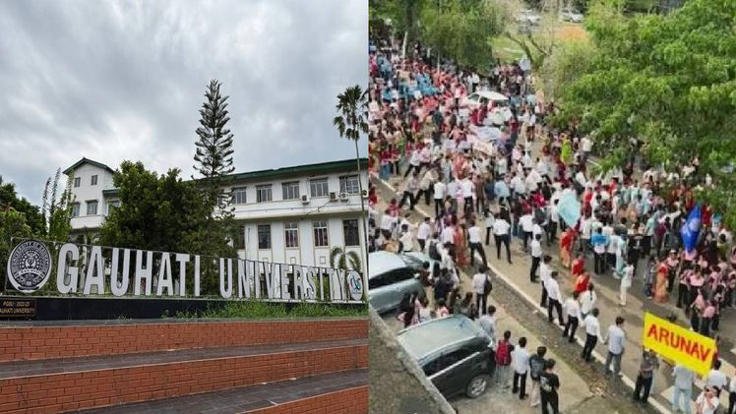
Gauhati University has withdrawn its decision to cancel the nomination of AASU-backed candidate Nayan Akash Bora for the ongoing Post Graduate Students’ Union (PGSU) election. The university took the decision after objections emerged over the procedure followed by the Election Tribunal while rejecting Bora’s nomination.
The university has also decided to dissolve the existing Election Tribunal. In its place, the administration will establish a new Grievance Redressal Cell to handle complaints and disputes connected with the student election.
The development follows several days of protests on the Gauhati University campus. Students had demanded clarity over the cancellation of Bora’s candidature and questioned the process followed by the university authorities.
University Reverses Nomination Cancellation
Gauhati University authorities withdrew the cancellation of Bora’s nomination on September 28. The decision allows the AASU-backed candidate to remain in the election process.
The move came after concerns emerged over the manner in which the Election Tribunal handled the matter. Reports said students and supporters had raised questions about the procedure used to reject Bora’s nomination.
The university has now decided to reconsider the matter instead of allowing the earlier decision to stand.
Bora had been contesting in the PGSU election. His nomination had initially appeared among the valid candidates before the university later removed it from the list of candidates.
Election Tribunal to Be Dissolved
Along with restoring Bora’s nomination, the university decided to dissolve the existing Election Tribunal.
The tribunal had earlier recommended that the Returning Officer should not consider Bora’s nominations for the posts of president and general secretary. The decision followed scrutiny of his academic records and concerns about simultaneous enrolment in two postgraduate programmes.
The tribunal had referred to Clause 10 of Gauhati University’s ordinance governing admission to postgraduate courses. It also cited the University Grants Commission’s 2022 guidelines on pursuing two academic programmes simultaneously.
However, the university has now raised concerns about the procedure followed by the tribunal. As a result, the administration has opted to dissolve the existing body.
New Grievance Redressal Cell Planned
Gauhati University will now create a new Grievance Redressal Cell to address complaints arising during the election.
The new body will handle election-related grievances and disputes for the remainder of the process. University authorities intend the mechanism to provide a formal platform for candidates and students to raise concerns.
The decision comes after protests highlighted demands for greater clarity and transparency in the election process.
The university’s move also seeks to address concerns over how complaints and nomination disputes should proceed during the student election.
Protests Erupted on Campus
The nomination controversy triggered protests at Gauhati University over several days.
Students gathered on the campus and demanded an explanation for the removal of Bora’s name from the candidate list. Some protesters also began an indefinite hunger strike. The agitation continued for three days, according to reports published before the university reversed its decision.
Protesters questioned why Bora’s nomination had appeared as valid before the university subsequently cancelled it.
Students also raised concerns about the lack of clarity surrounding the decision. The agitation included a sit-in near the Vice-Chancellor’s office, while protesters also blocked university roads during the demonstrations.
Bora’s Nomination Had Faced Dual-Enrolment Questions
The controversy began after the Election Tribunal examined the academic records of Bora and another candidate, Pratik Sharma.
The tribunal found that the two candidates were enrolled in two postgraduate programmes simultaneously. It considered this arrangement inconsistent with Clause 10 of the university’s postgraduate admission ordinance.
The tribunal also referred to the UGC guidelines on pursuing two academic programmes at the same time.
Based on its findings, the tribunal recommended that the Returning Officer should not consider Bora’s nominations for the president and general secretary posts. It made a similar recommendation concerning Sharma’s nominations for two other PGSU positions.
The subsequent reversal by the university has now changed the status of Bora’s candidature.
University Election Process Under Scrutiny
The dispute has placed the PGSU election process under increased scrutiny.
Gauhati University’s official notifications show that the university issued its notification concerning valid, withdrawn and cancelled nominations for the 2026 PGSU election on September 24.
The controversy intensified after Bora’s supporters questioned the change in his nomination status.
Different groups of students expressed different views about the matter. While Bora’s supporters demanded his reinstatement, students supporting another candidate argued that there could have been valid reasons behind the initial decision.
The university’s latest decision has now brought Bora back into the election process.
New Mechanism to Handle Election Disputes
The formation of the Grievance Redressal Cell will create a new mechanism for handling election-related complaints.
Candidates and students can use the new body to raise concerns regarding the election process. The university will also have an institutional mechanism to review disputes as the election progresses.
The move follows calls for greater transparency from students involved in the protests.
By dissolving the earlier tribunal and creating a new grievance mechanism, the university has sought to address concerns surrounding the handling of the nomination dispute.
PGSU Election Enters New Phase
The reversal of Bora’s nomination cancellation marks a significant development in the Gauhati University student election.
The dispute began with questions over his eligibility and the Election Tribunal’s recommendation. It then developed into a wider campus protest over the transparency of the election process.
Now, with Bora’s nomination restored and a new Grievance Redressal Cell planned, the university faces the task of ensuring that the remaining election process proceeds under clear procedures.
The administration’s latest decision has also shifted attention towards the new grievance mechanism and how it will handle any further disputes.
For now, Nayan Akash Bora remains eligible to contest the PGSU election, while Gauhati University moves forward with its revised mechanism for addressing election-related complaints.