


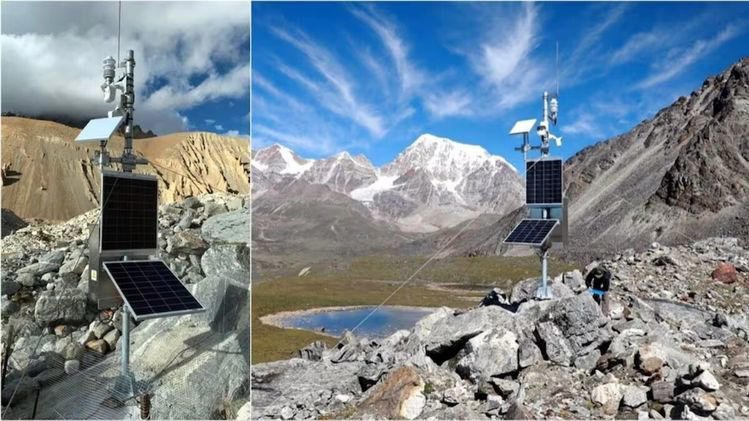
Scientists have successfully completed a critical glacial lake study in Sikkim, marking a significant step in understanding climate change impacts on the Himalayan region. The research has highlighted the vulnerability of Sikkim’s fragile ecosystem, particularly the risks associated with glacial lake outburst floods (GLOFs). This glacial lake study in Sikkim also provides policymakers and local authorities with crucial data for effective disaster preparedness and environmental planning.
Read More: SCO Condemns Pahalgam Terror Attack, PM Warns Against Double Standards
Rising Risks from Glacial Lakes
The Himalayas are often called the water towers of Asia, but climate change is rapidly altering their structure. Sikkim, with its high-altitude glaciers, has witnessed rising temperatures and accelerated glacier melting. As a result, glacial lakes have expanded in both number and size. Scientists conducting the glacial lake study in Sikkim found that several lakes show high potential for overflow or sudden outburst due to unstable moraine dams.
A glacial lake outburst flood can have devastating consequences. It can sweep away villages, damage infrastructure, and threaten lives across downstream valleys. The study warns that Sikkim must strengthen monitoring systems and create early warning networks to deal with such threats. Importantly, the glacial lake study in Sikkim also emphasizes the urgent need for local communities to be trained in emergency response strategies.
Climate Change Driving the Challenge
Climate change remains the central factor behind the formation and expansion of glacial lakes. According to the scientists, rising global temperatures have accelerated glacier retreat in Sikkim. The glacial lake study in Sikkim confirmed that several lakes have grown at alarming rates over the past two decades. This rapid expansion is linked to increased rainfall, melting snow, and reduced ice accumulation.
The report also highlighted that these environmental changes are not isolated. They form part of a broader pattern of Himalayan climate shifts that affect agriculture, water resources, and biodiversity. Consequently, the glacial lake study in Sikkim urges authorities to adopt integrated climate resilience measures. The findings underscore that addressing these challenges requires both scientific innovation and political will.
Importance of Scientific Monitoring
The recently completed glacial lake study in Sikkim is not just an academic exercise but a vital tool for disaster prevention. By using satellite imaging, field surveys, and hydrological modeling, the researchers were able to identify lakes that pose immediate threats. These methods provided accurate data on water volume, depth, and surrounding terrain stability.
The study recommends installing real-time monitoring stations near high-risk lakes to track water levels and glacial activity. This data will help authorities detect early warning signs of a potential outburst. The glacial lake study in Sikkim also suggests involving local universities and research institutes in continuous monitoring, ensuring that the region has sustained scientific support.
Policy and Community Preparedness
Policymakers in Sikkim now face the challenge of acting on these scientific findings. The glacial lake study in Sikkim calls for the integration of lake risk assessments into the state’s disaster management framework. Infrastructure such as hydropower projects, highways, and settlements must consider the potential impact of glacial floods in their planning stages.
Equally important is community-level awareness. The study emphasizes that people living near vulnerable zones should be made aware of evacuation plans and safety measures. Mock drills, training programs, and the establishment of community watch groups can save lives in case of emergencies. Through such initiatives, the glacial lake study in Sikkim ensures that science translates into safety for local residents.
Broader Implications for the Himalayas
While the study focuses on Sikkim, its implications stretch across the Himalayas. Other states and neighboring countries also face similar threats from glacial lake expansion. Therefore, the glacial lake study in Sikkim serves as a model for regional cooperation. It shows the importance of shared data, joint research programs, and cross-border disaster response strategies.
The study also contributes to global climate research. Understanding how Himalayan glaciers respond to rising temperatures provides insight into broader climate systems. It helps scientists forecast future water availability for millions of people who depend on Himalayan rivers. In this sense, the glacial lake study in Sikkim contributes to both local safety and international scientific progress.
Road Ahead for Sikkim
The completion of the glacial lake study in Sikkim is a milestone, but it is only the beginning. The findings highlight urgent risks that demand immediate attention from authorities, scientists, and communities. Stronger disaster preparedness, climate-resilient infrastructure, and continuous monitoring will be essential to protect lives and livelihoods.
Sikkim has an opportunity to lead by example in tackling glacial risks through science-based planning. By implementing the study’s recommendations, the state can secure its fragile environment while building resilience against climate change. The glacial lake study in Sikkim thus stands as both a warning and a guide, offering a path toward safety and sustainability in the face of mounting environmental challenges.
Read More: Amit Shah Inaugurates Brahmaputra Wing Of Raj Bhavan