


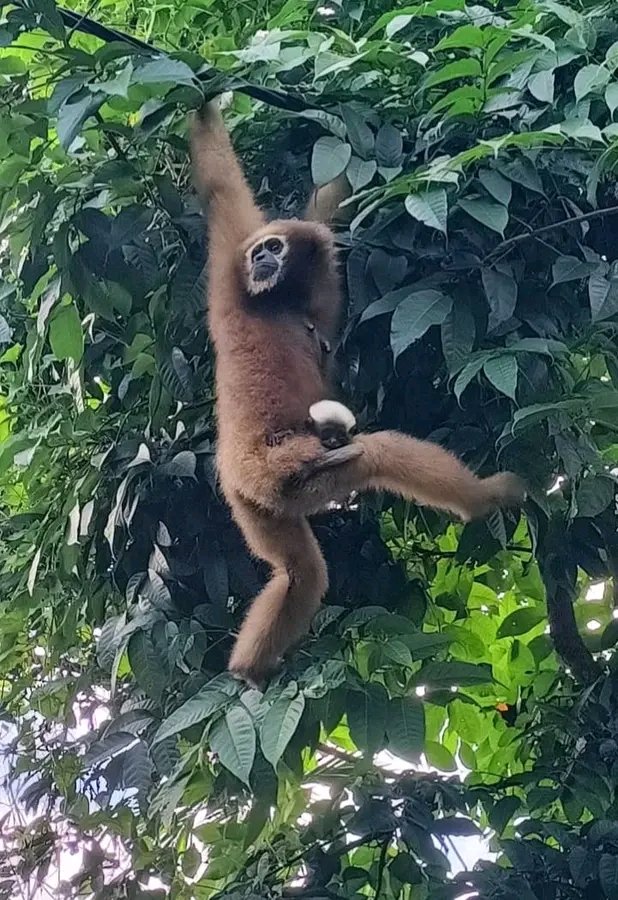
Guwahati: In the lush, rain-soaked hamlets of Barekuri village in Tinsukia district of upper Assam, where tea gardens meet ancient forests, a tiny miracle swung into view this week — the birth of a newborn Western Hoolock Gibbon, India’s only ape species, clinging tightly to its mother’s russet fur amid a symphony of rustling leaves.
The heartwarming sighting, captured in vivid photographs showing the mother gibbon cradling her fragile infant high in the canopy, has ignited jubilation among the 22,000-strong Moran community.
Long revered as kin, these arboreal primates — classified as “Endangered” by the IUCN with fewer than 3,000 left in the wild — have coexisted harmoniously with villagers for generations. Yet, with their numbers dwindling due to habitat loss and human encroachment, this birth feels like a rare victory.
“We woke to their haunting whoops at dawn, and there she was — our new family member, no bigger than a fist, eyes wide with wonder,” beamed a villager.
“It’s a sign from the forest gods. We’ve lost too many to wires and axes; this little one reminds us why we fight.”
Barekuri, a cluster of 21 hamlets just 16 km from Tinsukia town, stands as a beacon of human-wildlife harmony. Here, gibbons — monogamous pairs with males jet-black and females tawny-brown — navigate electrified lines and shrinking canopies with villagers as their unlikely guardians.
From 34 individuals in 2003 to around 20 today, threats loom large: oil rigs spew pollutants, and female births remain scarce, stoking fears of inbreeding.
“This newborn isn’t just a gibbon — it’s Assam’s future. Our department stands ready to bolster patrols and replant corridors, turning Barekuri into a model sanctuary,” said a senior forest official.
But locals sound a cautious note. A tea worker whose backyard trees host a gibbon troupe shared his quiet resolve:
“We’ve fed them bananas through monsoons and mourned their falls. Now, with this baby, we pledge more — plant a thousand figs, chase off poachers. But we need the state’s hands, not just applause.”
“Births like this underscore the urgency,” said a primatologist. “Barekuri proves coexistence works, but without funding for monitoring and anti-poaching, it could unravel.”
As dusk falls, villagers gather under the shades, sharing tales of “Hoolock weddings” and infant swings. For now, hope dangles from the branches — a fragile thread binding man and ape in Assam’s emerald heart.
Barekuri lies nearly 512 kilometres east of the capital, Guwahati.