


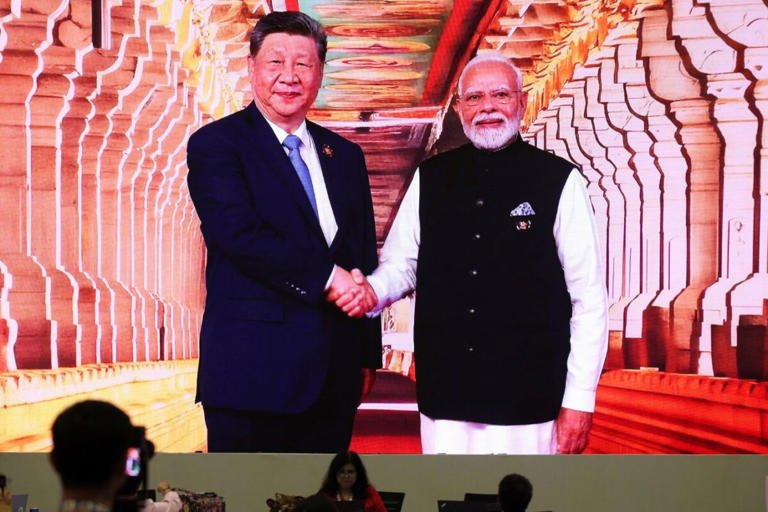
China has welcomed Prime Minister Narendra Modi’s message on India-China relations following the BRICS summit. Beijing described India as a country that follows an independent foreign policy and expressed support for stronger bilateral ties.
The Chinese response comes after Modi highlighted the importance of stable and constructive relations between India and China. His message followed the BRICS summit, where leaders discussed global economic and geopolitical issues.
The remarks have drawn attention because India and China have experienced tensions in recent years. Both countries have also taken steps to improve communication and stabilise their relationship.
China’s latest statement suggests that Beijing wants to build on this recent diplomatic engagement.
Beijing Calls India an Independent Country
Chinese officials praised India’s independent approach to foreign policy. Beijing said India has the right to make decisions based on its own national interests.
The statement also reflected China’s view that India and China can maintain their own positions while developing areas of cooperation.
India has consistently maintained that its foreign policy decisions reflect its strategic interests. New Delhi also engages with several major powers and international groupings at the same time.
India maintains strong relationships with countries such as the United States, Russia, Japan and European nations. It also remains an active member of platforms such as BRICS, the G20 and the Shanghai Cooperation Organisation.
This approach allows India to cooperate with different countries without formally aligning itself with a single geopolitical bloc.
Modi Highlights Importance of Stable Relations
Prime Minister Modi has repeatedly stressed the importance of peace and stability between India and China. Both countries share a long border and have significant economic and diplomatic interests.
Stable relations can benefit both sides. They can also contribute to greater stability across Asia.
The two countries have faced serious tensions along their disputed border. Those tensions have affected diplomatic relations and created uncertainty in several areas.
However, recent diplomatic engagement has created opportunities for both sides to reduce tensions.
The BRICS platform has provided another opportunity for Indian and Chinese leaders to interact. Multilateral meetings can help maintain dialogue even when bilateral differences remain.
BRICS Provides a Platform for Engagement
BRICS has become an important platform for emerging economies. India and China are among its key members.
The group focuses on economic cooperation and broader global issues. It also provides member countries with an opportunity to discuss international developments.
India has used BRICS to promote greater representation for developing countries in global institutions. China has also supported a larger role for emerging economies in international affairs.
Their participation in the same multilateral organisations creates opportunities for cooperation.
At the same time, membership in BRICS does not remove differences between individual countries. India and China continue to have disagreements over several strategic and territorial issues.
The summit nevertheless creates space for dialogue.
India Balances Relations With Major Powers
India’s independent foreign policy has become an important feature of its international strategy. New Delhi works with different countries based on specific interests.
India has strengthened its strategic partnership with the United States and other members of the Quad. At the same time, it maintains long-standing defence and diplomatic ties with Russia.
India also works closely with countries in Europe, West Asia, Southeast Asia and Africa.
This approach reflects the country’s effort to maintain strategic autonomy. India seeks cooperation without allowing any single relationship to determine all of its foreign policy choices.
China’s recognition of this approach could help improve mutual understanding between New Delhi and Beijing.
Economic Cooperation Remains Important
Trade and economic relations form another important part of India-China ties. China remains a major trading partner for India.
Both countries have large markets and significant manufacturing capabilities. Their economies can benefit from greater stability and predictable trade relations.
However, India has also raised concerns about trade imbalances and dependence on imports from China.
New Delhi has encouraged domestic manufacturing and supply-chain diversification in several sectors.
Improved diplomatic relations could create opportunities for greater economic engagement. However, India will likely continue to protect its strategic and economic interests.
Border Issues Remain a Major Challenge
Despite the positive diplomatic signals, the India-China relationship still faces significant challenges.
The border dispute remains one of the most sensitive issues between the two countries. Military tensions in recent years have affected trust between New Delhi and Beijing.
Both sides have held military and diplomatic talks to manage the situation. The restoration of peace along the border remains important for long-term relations.
India has consistently maintained that peace and tranquillity along the border provide the foundation for broader improvements in bilateral ties.
China has also indicated its interest in maintaining stable relations with India.
The challenge now lies in converting diplomatic statements into sustained progress on the ground.
A Potential New Phase in India-China Relations
China’s positive response to Modi’s message could signal an effort to move India-China relations towards greater stability.
Both countries have reasons to maintain dialogue. India wants to protect its strategic interests while expanding its global partnerships. China wants stable relations with a major Asian power and important BRICS member.
Neither country needs to abandon its independent foreign policy to pursue cooperation.
Instead, both sides can focus on areas where their interests overlap. These areas include trade, climate change, multilateral cooperation and global economic governance.
At the same time, they can continue discussions on difficult issues through established diplomatic channels.
What Lies Ahead for Bilateral Ties?
The future of India-China relations will depend on how effectively both countries manage their differences.
Positive statements from Beijing and New Delhi can create a favourable environment for dialogue. However, lasting improvement will require consistent diplomatic engagement and progress on unresolved issues.
India’s commitment to an independent foreign policy will remain central to its global strategy. China’s recognition of this approach could help both countries understand each other’s positions more clearly.
The BRICS summit has once again demonstrated the importance of multilateral diplomacy. India and China can compete in some areas while cooperating in others.
For now, China’s praise for India’s independent foreign policy and its positive response to Modi’s message offer a cautiously optimistic signal for bilateral relations. The coming months will show whether this diplomatic momentum can translate into deeper trust, stronger cooperation and greater stability between the two Asian powers.