


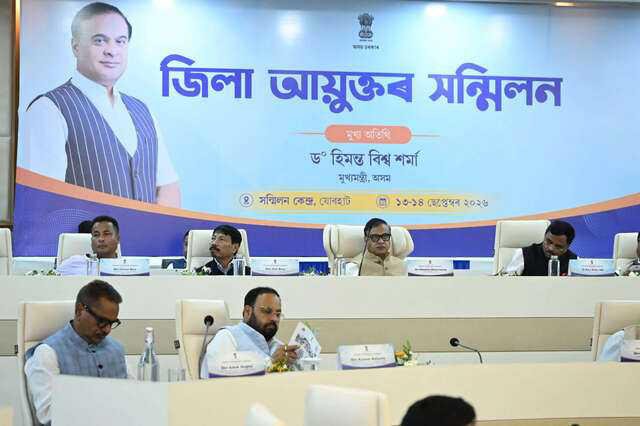
The Assam government has outlined a fresh set of development priorities at a conference of district commissioners. The meeting brought senior officials together to review ongoing projects and discuss ways to improve governance across the state.
The government used the conference to assess progress at the district level. It also discussed ways to speed up the delivery of public services.
District commissioners play an important role in implementing government policies. They coordinate development programmes and work with different departments at the district level.
The conference therefore provided an opportunity for the state government to communicate its priorities directly to district administrators.
The discussions focused on development, efficient administration and better public service delivery. Officials also examined challenges that could slow down the implementation of government schemes.
Read More: Manipur All-Party Meet Backs NRC Update to Protect Indigenous Identity
Focus on Faster Project Implementation
The Assam government has placed strong emphasis on completing development projects on time. Delays can increase project costs and reduce the benefits that people receive from public investments.
District commissioners will therefore need to monitor projects closely. They must also coordinate with departments and local authorities to resolve administrative issues.
Regular reviews can help officials identify delays at an early stage. They can then take corrective measures before problems become larger.
The government also wants district administrations to maintain greater accountability. Officials must track progress and ensure that approved projects reach their intended beneficiaries.
This approach can improve the impact of government spending across Assam.
Improving Public Service Delivery
Better public services remain another important priority for the Assam government. District administrations serve as a key link between the government and citizens.
People often approach district offices for certificates, welfare benefits, land-related services and other administrative needs. Faster services can reduce delays and make government programmes more accessible.
The conference highlighted the need for responsive administration. Officials must listen to citizens and address their concerns efficiently.
Technology can also support this process. Digital services can reduce paperwork and allow people to access several government services without repeated visits to government offices.
However, digital systems must reach rural and remote communities as well. District administrations need to ensure that people without easy access to technology do not face additional difficulties.
Strengthening Infrastructure Development
Infrastructure remains central to Assam’s development plans. Roads, bridges, public buildings, healthcare facilities and educational institutions can directly affect the quality of life in both urban and rural areas.
District commissioners have a major role in coordinating infrastructure projects. They work with state departments, local authorities and other agencies to keep projects moving.
The government wants officials to pay close attention to project timelines and quality standards. Proper monitoring can help prevent unnecessary delays and ensure that public infrastructure serves communities for years.
Infrastructure development can also support economic growth. Better roads and connectivity can help businesses move goods and connect with larger markets.
Greater Attention to Rural Development
Rural development forms another important part of Assam’s development agenda. A large section of the state’s population lives outside major urban centres.
District administrations must therefore ensure that development programmes reach villages and smaller communities.
Government schemes can support rural households through employment, housing, sanitation, drinking water and other basic services. Effective implementation can make a significant difference to rural communities.
District commissioners must identify areas that need additional attention. They can also coordinate different schemes to avoid duplication and improve results.
The government’s focus on district-level monitoring can help ensure that rural development remains a priority.
Boosting Healthcare and Education
Healthcare and education also remain essential to Assam’s long-term development.
District administrations can help improve access to healthcare by monitoring public health facilities and identifying gaps in services. They can also support programmes that target vulnerable communities.
Education requires similar attention. Officials need to monitor schools, basic infrastructure and student welfare programmes.
Better coordination can help districts respond to local challenges. Each district faces different geographical, social and economic conditions. Local administrators therefore need enough flexibility to address their specific needs.
Promoting Transparency and Accountability
The conference also highlighted the importance of accountable governance. Government programmes can achieve better results when officials track outcomes rather than simply measure spending.
District commissioners can use regular reviews to monitor performance. They can compare targets with actual progress and identify areas that require improvement.
Transparent administration can also strengthen public trust. Citizens need clear information about government projects and services.
Officials can improve transparency through digital monitoring systems, regular reporting and stronger grievance mechanisms.
These measures can help Assam build a more responsive administrative system.
District Commissioners Have a Key Role
The success of the state’s development plans will depend heavily on district administrations. State-level policies can only produce results when officials implement them effectively on the ground.
District commissioners have to coordinate multiple departments and respond to local problems. They also need to maintain communication with elected representatives and local communities.
The conference gives the government an opportunity to align district administrations with its broader development vision.
Clear targets can help officials understand priorities. Regular reviews can also ensure that departments remain focused on implementation.
Assam Targets Inclusive Growth
The Assam government’s development agenda aims to combine infrastructure growth with better public services. The focus on district-level implementation reflects the importance of local administration in achieving these goals.
Development must reach both cities and rural areas. It must also benefit communities across different regions of the state.
The district commissioners’ conference provides a platform to review progress and identify new challenges. It can also help officials share successful approaches and improve coordination.
As Assam continues to pursue its development goals, effective implementation will remain crucial. Strong district administration can turn government policies into visible improvements for citizens.
The conference has therefore reinforced a clear message: Assam’s development plans require faster implementation, stronger coordination and greater accountability at the district level. With district commissioners playing a central role, the state government hopes to translate its priorities into tangible results across Assam.