


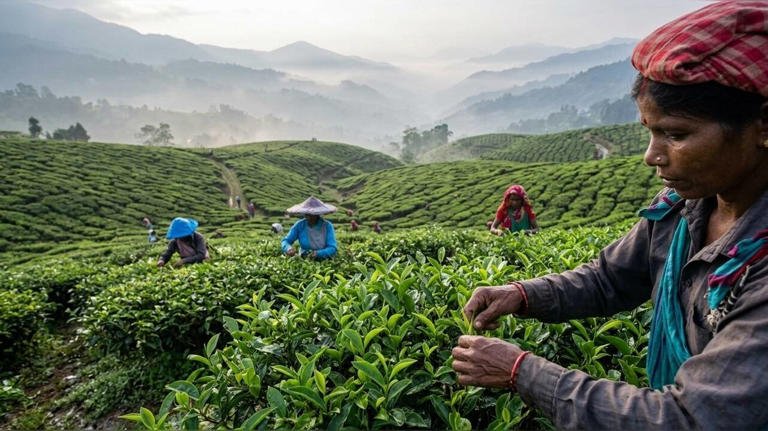
The Indian Tea Association has proposed a multi-crore revival plan to support the struggling tea industry in North Bengal. The proposal aims to address financial pressure, improve productivity and strengthen the long-term sustainability of tea estates.
The plan comes at a time when tea gardens in the region face several challenges. Rising production costs, labour expenses and market pressures have affected the financial health of many estates.
North Bengal remains one of India’s most important tea-producing regions. The industry supports thousands of workers and contributes significantly to the economy of districts such as Darjeeling, Jalpaiguri, Alipurduar and Cooch Behar.
The Indian Tea Association believes that a targeted financial package could help revive the sector. The organisation has outlined proposals that seek support from the government and other stakeholders.
Read More: PM Modi’s birthday: Tripura to hold month-long Seva Sankalp Abhiyan
Indian Tea Association pushes for revival package
The Indian Tea Association has presented a proposal for a multi-crore package aimed at reviving tea estates in North Bengal.
The association wants the government to introduce measures that can provide immediate relief to struggling gardens. At the same time, it has called for long-term reforms to improve the industry’s competitiveness.
According to industry representatives, several tea estates face serious financial constraints.
Higher costs have made it difficult for many gardens to maintain operations and invest in modernisation.
The proposed revival plan seeks to address these concerns through financial assistance and policy support.
Industry leaders believe that timely intervention could help protect jobs and prevent further disruption in tea-producing areas.
The association has stressed that the government needs to treat the issue as both an economic and social concern.
Rising costs put pressure on North Bengal tea estates
Tea producers in North Bengal have faced increasing operational costs in recent years.
Labour remains one of the biggest expenses for tea estates. Garden owners must also manage costs related to fertilisers, fuel, machinery and transportation.
Changing weather patterns have added another challenge.
Irregular rainfall and extreme weather can affect tea production and quality.
Lower productivity can further increase the financial burden on estates.
At the same time, tea prices do not always rise in proportion to production costs.
This gap can reduce profit margins and make it difficult for gardens to remain financially viable.
The Indian Tea Association has argued that the revival package should address this imbalance.
Proposal aims to modernise the tea sector
Modernisation forms an important part of the proposed revival plan.
Many tea estates require investment in new machinery and improved processing facilities.
Technology can help gardens increase productivity and reduce operational costs.
The association has also highlighted the need for better agricultural practices.
Improved cultivation methods could help tea estates adapt to changing weather conditions.
The industry may also benefit from investment in irrigation and water management systems.
Modern processing facilities can improve the quality and consistency of tea.
Higher-quality products may help producers secure better prices in domestic and international markets.
The revival plan could therefore combine immediate financial relief with investments aimed at long-term growth.
Focus on sustainability and climate resilience
The North Bengal tea industry faces increasing pressure from climate-related challenges.
Changing rainfall patterns can affect the growing season.
Higher temperatures may also influence tea yields and the quality of leaves.
Industry stakeholders have called for measures that can make tea estates more resilient.
Water conservation, soil management and improved irrigation may become important parts of future planning.
The revival strategy could encourage gardens to adopt sustainable farming practices.
Such measures may reduce environmental pressure while supporting long-term production.
Climate resilience has become an important issue for tea-producing regions across India.
North Bengal could require targeted support because of its unique geographical and weather conditions.
Employment remains a major concern
The tea industry supports a large workforce in North Bengal.
Many communities depend directly on tea gardens for their livelihoods.
A financial crisis in the industry can therefore have wider social consequences.
When gardens reduce operations or shut down, workers and their families can face serious difficulties.
The Indian Tea Association has highlighted the need to protect employment while addressing the industry’s financial problems.
A successful revival package could help gardens continue operations and maintain jobs.
It could also encourage new investment in tea-producing regions.
The association believes that government support can create stability for both employers and workers.
Industry seeks policy support from government
The proposed multi-crore plan is expected to require support from the government.
The association has called for policies that can ease financial pressure on tea estates.
Industry representatives may seek assistance related to taxation, credit and infrastructure.
Access to affordable finance could help struggling gardens manage their operations.
Long-term loans may also support investment in modernisation.
Government programmes could provide incentives for improving productivity and adopting sustainable practices.
The industry has argued that a coordinated approach is necessary.
Central and state authorities may need to work together to address the challenges facing the sector.
Value addition could strengthen tea industry
The revival plan could also focus on creating greater value from North Bengal tea.
Tea estates can increase their earnings by producing specialised and premium products.
Darjeeling tea already enjoys international recognition. Other regions in North Bengal also have opportunities to develop stronger market identities.
Better branding and marketing can help producers reach consumers directly.
Digital platforms may also create new opportunities for tea businesses.
The industry could explore value-added products and new packaging methods.
Such initiatives may help producers reduce their dependence on traditional bulk markets.
A stronger focus on branding could improve price realisation for North Bengal tea.
Revival plan may shape industry’s future
The Indian Tea Association’s proposal highlights the urgent need to address the challenges facing North Bengal’s tea sector.
The industry remains a major source of employment and economic activity in the region.
However, rising costs, climate challenges and market pressures continue to affect tea estates.
The proposed multi-crore revival plan aims to provide both immediate support and long-term solutions.
Financial assistance could help struggling gardens stabilise their operations.
Modernisation and technology could improve productivity.
Sustainable practices may help the industry manage climate-related risks.
At the same time, stronger branding and value addition could create new market opportunities.
The success of the proposal will depend on the response from policymakers and industry stakeholders.
If implemented effectively, the revival plan could help strengthen North Bengal’s tea industry and protect the livelihoods connected with it.
The coming months may determine whether the proposal receives wider support and develops into a concrete strategy for the region’s tea sector.
For the Indian Tea Association, the proposed package represents an effort to secure the future of one of North Bengal’s most important traditional industries.
Read More: Tejasvi Surya on Gen Z’s Political Rise: CJP a Welcome Move, But Questions Remain