


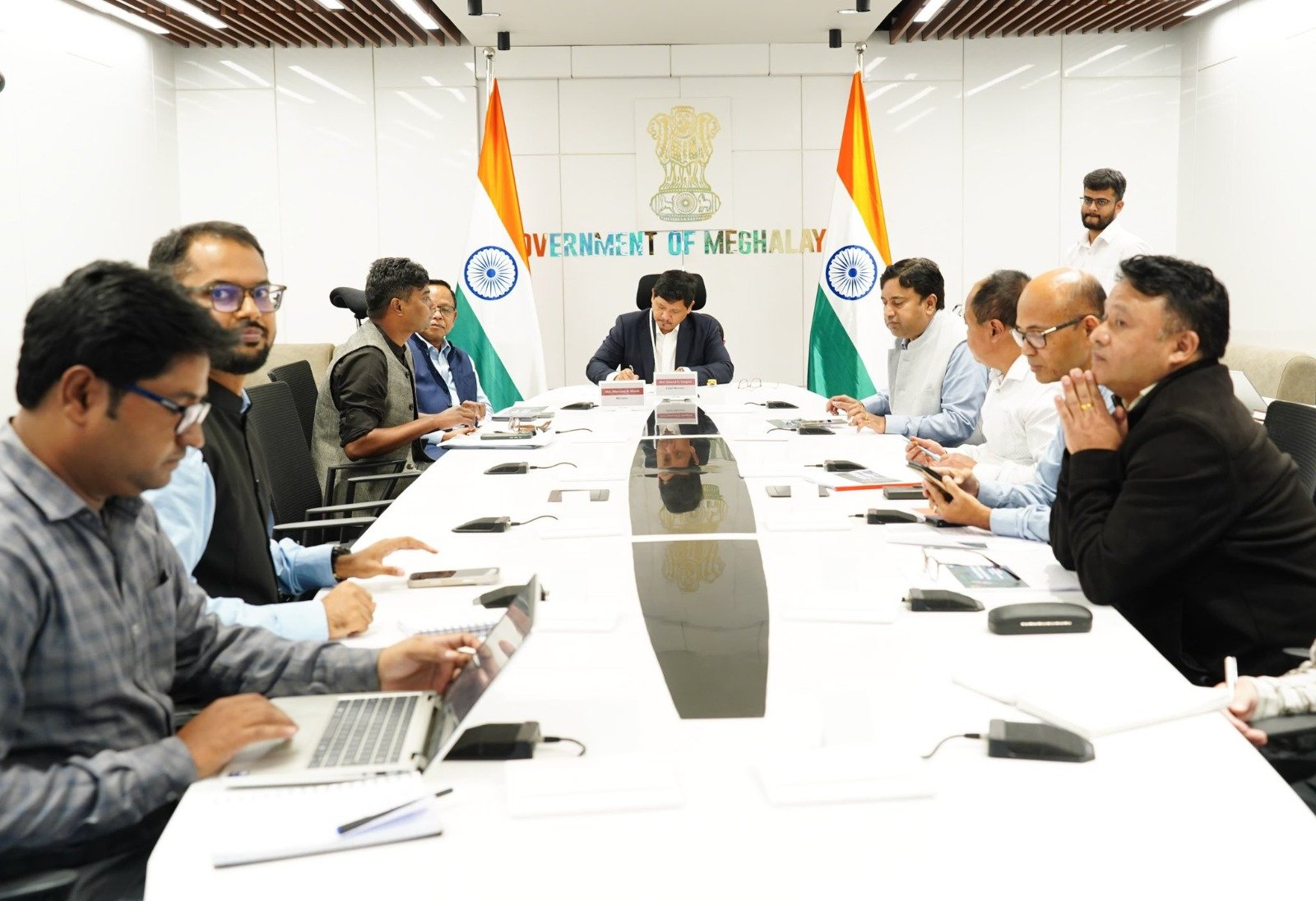
Meghalaya Chief Minister Conrad K. Sangma has conducted a detailed review of progress under the Jal Jeevan Mission, with authorities identifying 322 focus villages that require urgent attention to complete clean-water infrastructure. The review highlights the state’s effort to accelerate household access to reliable drinking water.
The assessment places particular emphasis on villages where implementation requires faster progress. Moreover, focusing administrative attention on specific locations can help authorities identify construction gaps, resolve implementation challenges, and improve delivery timelines.
The review also underlines the importance of ensuring that water infrastructure becomes functional rather than simply completing construction. However, the available information does not provide the current number of completed household connections or a specific deadline for completing the 322 focus villages.
Mizoram Celebrates First Arjuna Awardee: Lalremsiami Makes State Sports History
Jal Jeevan Mission Review Targets 322 Villages
The Jal Jeevan Mission review in Meghalaya has identified 322 villages as priority locations for urgent completion.
The focus allows authorities to concentrate resources and administrative monitoring on areas where implementation still requires attention. Furthermore, village-level tracking can help officials identify projects that face delays or require additional coordination.
This approach could help accelerate progress across the state’s rural water network.
However, the information provided does not specify how many of the 322 villages have partially completed projects.
Clean Water Infrastructure Remains a Priority
Reliable drinking water remains an important component of rural development.
Household water infrastructure can reduce the time families spend collecting water and improve access to basic services. Additionally, dependable supply systems can support better hygiene and sanitation practices.
The Jal Jeevan Mission seeks to expand such access through rural drinking-water infrastructure.
However, infrastructure completion alone does not guarantee uninterrupted water supply.
Conrad Sangma Reviews Implementation
Chief Minister Conrad K. Sangma has reportedly taken a direct review of the programme’s progress.
High-level monitoring can help identify bottlenecks and ensure that implementing departments maintain focus on priority projects. Moreover, regular reviews can encourage officials to address delays rather than allowing incomplete projects to remain unresolved.
The review therefore places administrative attention on implementation outcomes.
However, the available information does not identify all departments or agencies involved in the assessment.
Focus Villages Need Faster Completion
The identification of 322 focus villages suggests that authorities want to accelerate work in locations requiring additional attention.
Officials can use village-level monitoring to examine construction progress, supply arrangements, connectivity issues, and other implementation challenges. Furthermore, prioritisation can help direct resources toward projects that remain incomplete.
This could improve the pace of rural water infrastructure development.
However, the specific reasons for prioritising each village have not been disclosed.
Infrastructure Must Become Functional
Completing physical infrastructure represents only one part of a successful water programme.
Authorities also need to ensure that water sources remain reliable and that distribution systems function properly. Additionally, regular maintenance can help prevent newly constructed infrastructure from becoming unusable over time.
Therefore, long-term functionality remains as important as construction.
However, the review details provided do not include information about the operational status of completed schemes.
Rural Communities Stand to Benefit
Improved water infrastructure can directly affect everyday life in rural communities.
Reliable household supplies can reduce dependence on distant water sources and make access more convenient for families. Moreover, better water availability can support schools, healthcare facilities, and other community institutions.
The 322 focus villages could therefore see greater attention toward improving basic water services.
However, the information provided does not identify the individual villages included in the priority list.
Monitoring Can Improve Accountability
Regular reviews can help authorities track whether projects meet planned milestones.
Officials can compare physical progress with approved targets and identify projects that require intervention. Furthermore, transparent monitoring can help ensure that public resources reach their intended purpose.
Such oversight becomes particularly important when programmes involve numerous villages spread across difficult terrain.
However, no detailed project-wise performance data has been provided.
Meghalaya’s Terrain Creates Challenges
Meghalaya’s mountainous and remote terrain can make infrastructure development complex.
Water projects may require careful planning around difficult access routes, scattered settlements, and local geographical conditions. Additionally, construction teams may face logistical challenges when transporting equipment and materials to remote communities.
These factors can affect project timelines.
However, the review does not identify specific geographical obstacles affecting the 322 focus villages.
Community Participation Can Support Sustainability
Local communities can play an important role in maintaining rural water systems.
Village-level participation can help identify problems, report breakdowns, and encourage responsible use of water infrastructure. Moreover, community involvement can strengthen long-term ownership of local water assets.
Such participation can complement government monitoring.
However, the available information does not specify the community-management arrangements for the focus villages.
Completion Could Strengthen Rural Services
Faster completion of water projects could strengthen Meghalaya’s broader rural development goals.
Reliable water access can support household welfare while complementing sanitation, healthcare, and education initiatives. Furthermore, functional water systems can contribute to improved resilience in communities that previously depended on less reliable sources.
The programme therefore has significance beyond infrastructure construction.
However, authorities have not provided a projected date for completing all 322 priority villages.
What Happens Next?
Officials are expected to intensify monitoring of the 322 focus villages and address outstanding implementation issues.
The government may review project milestones, resolve administrative bottlenecks, and coordinate with agencies responsible for construction and water supply. Moreover, village-level progress tracking could help authorities determine which projects require immediate intervention.
The success of the review will ultimately depend on how quickly identified gaps translate into completed and functional water systems.
Conclusion
The Jal Jeevan Mission review in Meghalaya has placed 322 villages under focused attention as the state works to accelerate clean-water infrastructure. Chief Minister Conrad K. Sangma’s review highlights the government’s emphasis on completing delayed or unfinished projects and improving rural drinking-water access.
Moreover, effective monitoring can help authorities address construction bottlenecks and ensure that infrastructure becomes functional for communities. At the same time, maintenance, reliable water sources, and community participation will remain essential for long-term benefits.
Overall, the 322 focus villages under Jal Jeevan Mission represent a targeted effort to speed up rural water infrastructure delivery across Meghalaya.
FAQs
1. What is the Jal Jeevan Mission review about?
The review examines progress in rural drinking-water infrastructure and identifies projects requiring faster completion.
2. How many Meghalaya villages have been identified for urgent attention?
Authorities have identified 322 focus villages for priority monitoring and completion.
3. Who conducted the review?
Meghalaya Chief Minister Conrad K. Sangma conducted the reported review.
4. Why are the villages being prioritised?
The focus aims to accelerate completion of water infrastructure and address implementation gaps in selected villages.
5. Will completing infrastructure guarantee regular water supply?
Not necessarily. Long-term supply also depends on reliable water sources, functioning distribution systems, maintenance, and effective local management.