


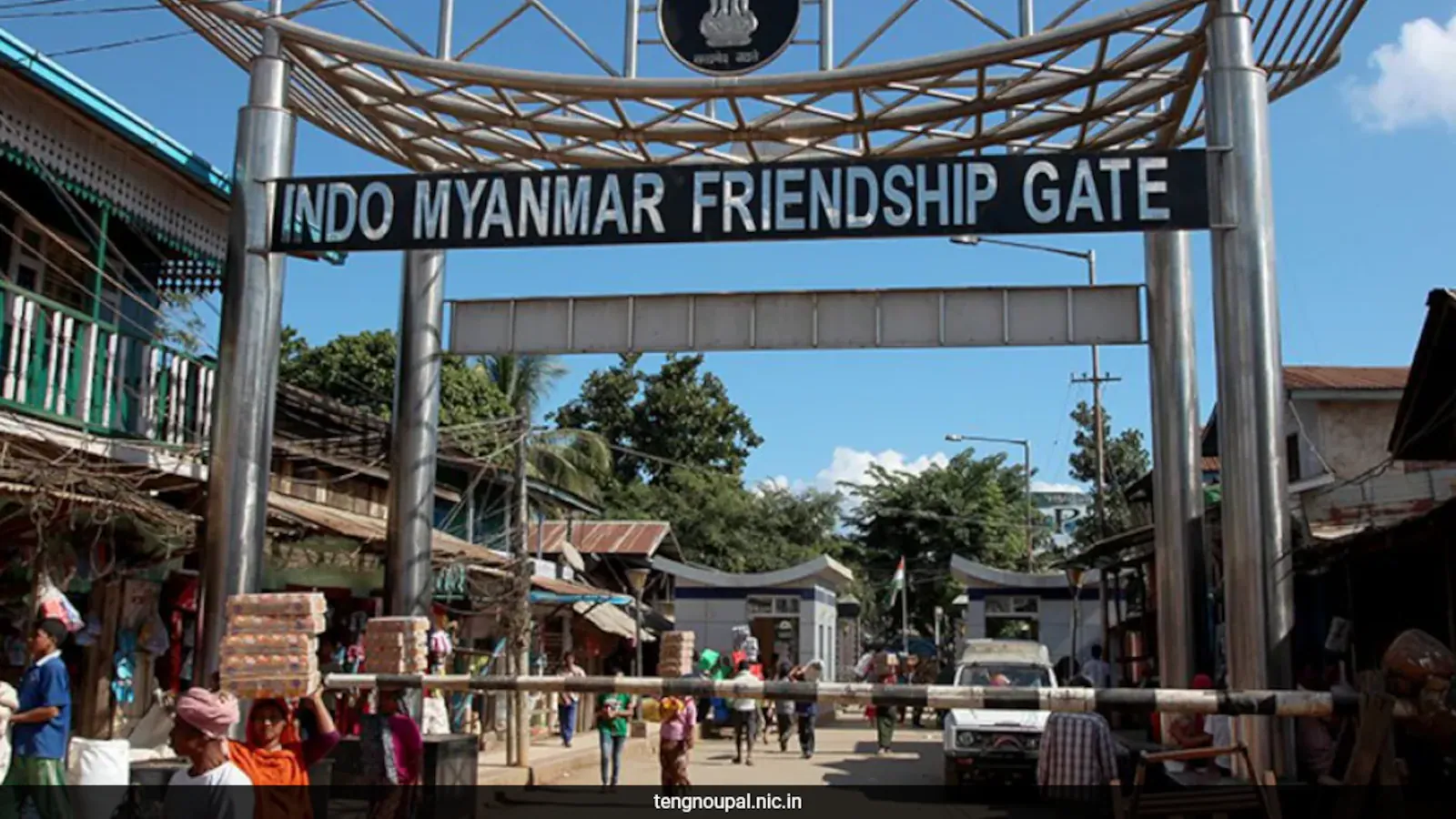
India and Myanmar are reportedly engaged in diplomatic discussions over a proposed border land exchange along Manipur as part of efforts to address undemarcated sections of their shared boundary. The proposal could provide a framework for resolving disputed or unclear border areas through bilateral negotiations.
The discussions highlight the continuing importance of clearly defining the India-Myanmar boundary. Moreover, a mutually agreed settlement could strengthen border administration while reducing uncertainty for communities living near affected areas.
However, the reported land-swap proposal remains under discussion. The available information does not establish that either government has reached a final agreement or specify the exact areas involved.
Mizoram Celebrates First Arjuna Awardee: Lalremsiami Makes State Sports History
India-Myanmar Border Talks Continue
The India-Myanmar border talks reportedly include discussions about exchanging certain areas to resolve sections where the boundary remains undemarcated.
Diplomatic negotiations can help both countries address complex territorial questions through dialogue rather than unilateral action. Furthermore, a negotiated framework could allow officials to examine existing maps, boundary markers, local conditions, and historical records.
The process could therefore contribute to a clearer border arrangement.
However, no final settlement has been announced based on the information available.
Proposed Land Exchange Could Resolve Unclear Areas
A land swap would involve both sides agreeing to adjust specific portions of territory as part of a broader settlement.
Such arrangements can potentially resolve practical difficulties where historical boundary descriptions or physical markers do not align clearly. Additionally, a negotiated exchange could provide both governments with a mutually acceptable basis for final demarcation.
The proposal therefore carries significance for long-term border management.
However, the exact size and location of any proposed land exchange remain unclear.
Manipur Remains Central to Border Discussions
Manipur shares a long international boundary with Myanmar, making border administration particularly important for the state.
Border communities often maintain social, cultural, and economic connections that cross the international boundary. Moreover, difficult terrain can make physical demarcation and regular monitoring challenging.
Clearer boundary arrangements could therefore help authorities manage the border more effectively.
However, the available information does not identify the specific Manipur districts or villages that could fall within the proposed exchange.
Diplomatic Negotiations Remain Essential
Territorial adjustments require agreement between sovereign governments.
India and Myanmar would need to examine legal, geographical, administrative, and security considerations before reaching any final decision. Furthermore, any agreement would likely require appropriate domestic procedures before implementation.
Diplomatic discussions therefore represent only an early stage of the process.
Border Demarcation Could Improve Administration
Clearly defined boundaries can help governments determine administrative responsibility.
Accurate demarcation can support border security, infrastructure planning, customs management, and the delivery of public services in border areas. Additionally, clear boundary markers can reduce confusion among local authorities and residents.
A permanent settlement could therefore provide administrative benefits.
However, implementation would depend on the final agreement and subsequent field-level demarcation.
Local Communities Could Be Affected
Any territorial adjustment could have implications for communities living near the affected boundary.
Residents may have concerns about land ownership, access routes, livelihoods, citizenship documentation, and administrative jurisdiction. Moreover, authorities would need to communicate clearly with affected communities before implementing any territorial changes.
Community concerns could therefore form an important part of the process.
However, no information has been provided about specific communities that could be affected.
Security Considerations Matter
The India-Myanmar border also has significant security implications.
Authorities monitor the region because of concerns involving unauthorised crossings, trafficking, armed groups, and other cross-border activities. Furthermore, clearer boundaries could potentially improve coordination between security agencies operating on both sides.
Any settlement would therefore need to account for security requirements.
However, the proposed land exchange should not automatically be interpreted as a response to any single security incident.
Historical Records Could Guide Negotiations
Border negotiations often require officials to examine historical documents and previous agreements.
Maps, survey records, boundary descriptions, and physical markers can help governments determine the status of particular areas. Additionally, technical surveys can identify discrepancies between official records and conditions on the ground.
Such evidence could help inform any final settlement.
However, the available information does not specify which historical documents or surveys the current discussions rely upon.
Economic and Infrastructure Implications
A clearly defined border can simplify long-term infrastructure planning.
Roads, bridges, border facilities, and communication networks require clearly established administrative jurisdictions. Moreover, certainty around territorial boundaries can support legitimate trade and movement arrangements.
A permanent settlement could therefore provide broader economic and administrative benefits.
However, no specific infrastructure projects have been linked directly to the reported negotiations.
Any Agreement Would Require Formal Approval
A diplomatic understanding would not necessarily mean an immediate change on the ground.
Both governments would need to complete the necessary legal and administrative procedures before implementing any territorial adjustment. Furthermore, officials would need to conduct technical demarcation and communicate changes to relevant local authorities.
The process could therefore take considerable time even after negotiators reach an understanding.
What Happens Next?
The two sides are expected to continue diplomatic discussions and examine the feasibility of a mutually acceptable settlement.
Future negotiations could focus on identifying the affected areas, determining the terms of any land exchange, consulting technical experts, and assessing local implications. Moreover, officials would need to establish a clear implementation mechanism if both countries eventually agree.
For now, the proposal remains part of an ongoing diplomatic process.
Conclusion
The reported India-Myanmar land swap discussions represent an effort to address undemarcated sections of the international boundary along Manipur through diplomatic negotiations. A mutually agreed territorial exchange could potentially provide a clearer and more permanent framework for border administration.
Moreover, successful demarcation could improve administrative coordination and reduce uncertainty for border communities. At the same time, any agreement would require careful examination of historical records, security concerns, local interests, and legal procedures.
Overall, the India-Myanmar border talks in Manipur remain at the negotiation stage, with no final land-swap agreement established in the information currently available.
FAQs
1. What are India and Myanmar discussing?
The two countries are reportedly discussing a possible land exchange to resolve sections of their shared boundary that remain undemarcated.
2. Which Indian state is involved?
The reported discussions concern sections of the India-Myanmar border along Manipur.
3. Has a land-swap agreement been finalised?
No. The proposal remains under diplomatic discussion based on the available information.
4. Why would a land exchange be considered?
A mutually agreed exchange could potentially resolve unclear boundary sections and establish a more permanent demarcation.
5. How could local communities be affected?
Any territorial adjustment could potentially affect land administration, documentation, access, and local jurisdiction. Authorities would need to address such issues before implementation.