


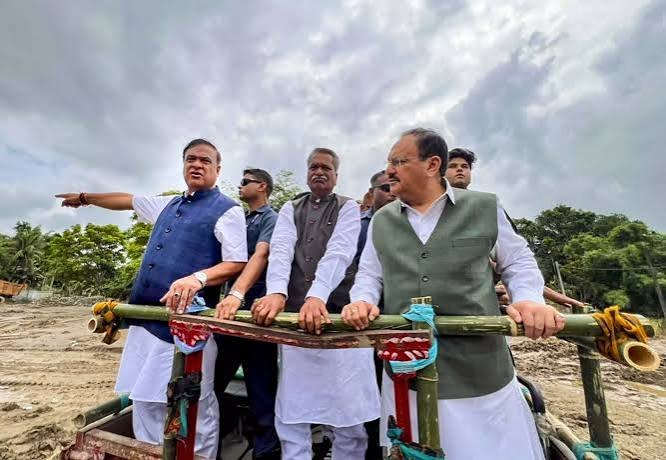
BJP president JP Nadda has reportedly visited Sivasagar amid Assam’s continuing flood crisis, as the state’s reported flood-related death toll has reached 95. His visit brings additional political and national attention to a disaster that has displaced communities, damaged infrastructure, and disrupted livelihoods across affected areas.
The visit comes as authorities continue rescue and relief operations in flood-hit districts. Moreover, Sivasagar has emerged as an important area of concern as residents seek assistance with shelter, healthcare, food supplies, agricultural losses, and damaged property.
Nadda’s visit could provide an opportunity to review conditions on the ground and hear concerns from affected communities. However, the immediate focus remains on relief delivery, rehabilitation, and accurate assessment of the flood’s impact.
JP Nadda Visits Flood-Hit Sivasagar
JP Nadda’s reported visit has brought senior BJP leadership directly into the flood response discussion.
During such a visit, political leaders can review relief arrangements, interact with affected residents, and receive briefings from local officials. Furthermore, ground-level assessments can help highlight urgent requirements in affected communities.
The visit has consequently attracted attention amid the rising casualty figure.
However, the precise activities and statements made during the visit should be assessed through official accounts.
95 Deaths Highlight Assam’s Crisis
The reported death toll of 95 demonstrates the severity of the flooding.
Floodwaters can threaten communities through rapidly changing water levels, damaged infrastructure, difficult evacuation routes, and restricted access to healthcare. Additionally, families affected by fatalities may require immediate assistance and longer-term rehabilitation.
The casualty figure has therefore increased pressure on authorities and political leaders.
However, officials may update the figure as they verify individual cases.
Sivasagar Faces Severe Disruption
Sivasagar has faced significant challenges during the flood emergency.
Residents may have experienced damage to homes, agricultural land, roads, and other infrastructure. Moreover, displaced families may require temporary shelter and access to essential services.
Local authorities must therefore coordinate rescue operations and relief distribution across affected areas.
However, flood conditions can differ between communities within the district.
Relief Camps Remain Critical
Relief camps provide essential support to residents unable to return home.
Authorities need to maintain supplies of food, drinking water, medicines, sanitation facilities, and temporary shelter. Furthermore, officials must identify vulnerable residents who may need additional assistance.
Political visits can draw attention to conditions in these facilities.
However, long-term rehabilitation requires support beyond temporary shelter.
Healthcare Needs Attention
Flooding can disrupt healthcare access while increasing demand for medical services.
Affected residents may require emergency treatment, medicines, and continued care for existing conditions. Additionally, contaminated water and poor sanitation can create additional health risks.
Authorities therefore need to maintain medical support throughout the emergency.
However, healthcare needs vary according to the conditions in each affected area.
Agriculture Faces Significant Losses
Sivasagar’s farming communities can face substantial economic damage during severe flooding.
Floodwaters can destroy crops, damage livestock, and prevent farmers from accessing agricultural fields. Moreover, prolonged waterlogging can delay future cultivation and increase recovery costs.
Farmers may consequently seek financial and agricultural assistance.
However, authorities need verified assessments before determining eligible compensation.
Infrastructure Damage Adds Pressure
Flooding can damage roads, bridges, drainage systems, and other public infrastructure.
When roads become inaccessible, rescue teams and relief vehicles can face delays. Furthermore, isolated communities may struggle to access hospitals and markets.
Infrastructure restoration will therefore form an important part of the recovery process.
However, major repairs may require safer conditions after water levels decline.
Political Attention Intensifies
Nadda’s visit comes amid increasing political debate over Assam’s flood response.
Opposition parties may question disaster preparedness, infrastructure maintenance, relief distribution, and compensation. Moreover, visits by senior political leaders can increase attention on the government’s response.
The flood crisis could therefore remain politically significant.
However, political scrutiny does not automatically establish administrative failure.
Government Relief Measures Under Review
State authorities continue to manage rescue and relief operations across affected districts.
Officials may highlight evacuation efforts, relief camps, emergency supplies, and coordination with disaster-response agencies. Additionally, authorities can request assistance from central agencies when local resources face heavy pressure.
These measures will influence assessments of the response.
However, the effectiveness of relief ultimately depends on conditions experienced by affected residents.
Central Coordination Could Increase
The scale of Assam’s flooding can require coordination between state and central authorities.
National agencies can provide specialised rescue teams, equipment, medical support, and logistical assistance when necessary. Furthermore, central support can supplement state resources during major emergencies.
Nadda’s visit could therefore draw further attention to coordination between political leadership and disaster-response institutions.
However, operational decisions remain the responsibility of the relevant government and disaster-management agencies.
Families Need Compensation
Flood victims can face losses involving homes, crops, livestock, and personal belongings.
Authorities need to assess damage before providing eligible financial assistance. Moreover, families affected by fatalities may require additional support during rehabilitation.
Transparent compensation procedures can help affected households rebuild.
However, assistance depends on official assessments and applicable government rules.
Embankment and Flood-Control Concerns
The flood crisis has renewed attention on Assam’s flood-control infrastructure.
Residents and political representatives may seek stronger embankment maintenance, drainage improvements, and early-warning systems. Furthermore, authorities may need to inspect vulnerable structures after floodwaters recede.
These measures can help reduce future risks.
However, extreme rainfall and river conditions can challenge even established flood-control systems.
Opposition Likely to Maintain Pressure
Opposition parties may use the continuing crisis to demand greater accountability.
Their concerns can involve relief distribution, casualty figures, infrastructure maintenance, and compensation. Additionally, political leaders may visit affected communities and raise local grievances.
The debate could intensify during the recovery period.
However, allegations require evidence and appropriate verification.
Recovery Will Be the Next Test
The flood emergency will eventually shift toward rehabilitation.
Authorities will need to support families repairing homes, restoring farms, replacing livestock, and returning to work. Moreover, damaged roads, bridges, healthcare centres, and other public facilities may require extensive repairs.
The recovery phase could therefore remain a major administrative challenge.
However, timelines will depend on the scale of damage and the speed at which floodwaters recede.
Conclusion
The reported JP Nadda visit to Sivasagar comes as Assam’s flood-related death toll reaches 95, bringing senior BJP leadership into direct focus on one of the state’s affected areas. The visit highlights the continuing humanitarian and political significance of the flood crisis.
Moreover, residents require immediate relief, healthcare, shelter, food, drinking water, and assistance with damaged livelihoods. At the same time, the government faces growing attention over disaster preparedness, infrastructure, compensation, and the longer-term rehabilitation of affected communities.
Overall, Nadda’s visit adds political visibility to Assam’s flood response, but the lasting measure of the response will come from conditions on the ground. Effective relief, transparent assistance, infrastructure recovery, and stronger flood preparedness will remain crucial as Sivasagar and other affected districts begin rebuilding.
FAQs
1. Why did JP Nadda visit Sivasagar?
Nadda reportedly visited Sivasagar amid the ongoing flood crisis as authorities continued relief and rescue operations.
2. What is Assam’s reported flood death toll?
The reported flood-related death toll has reached 95, although officials may revise the figure after further verification.
3. What challenges are Sivasagar residents facing?
Residents may face displacement, damaged homes, agricultural losses, disrupted transportation, healthcare challenges, and limited access to essential services.
4. What relief do affected families need?
Key requirements include shelter, food, drinking water, medicines, healthcare, sanitation, compensation, and livelihood assistance.
5. What will happen after the flood emergency?
Authorities will need to assess damage, provide eligible compensation, restore infrastructure, and support families as they rebuild homes and livelihoods.