


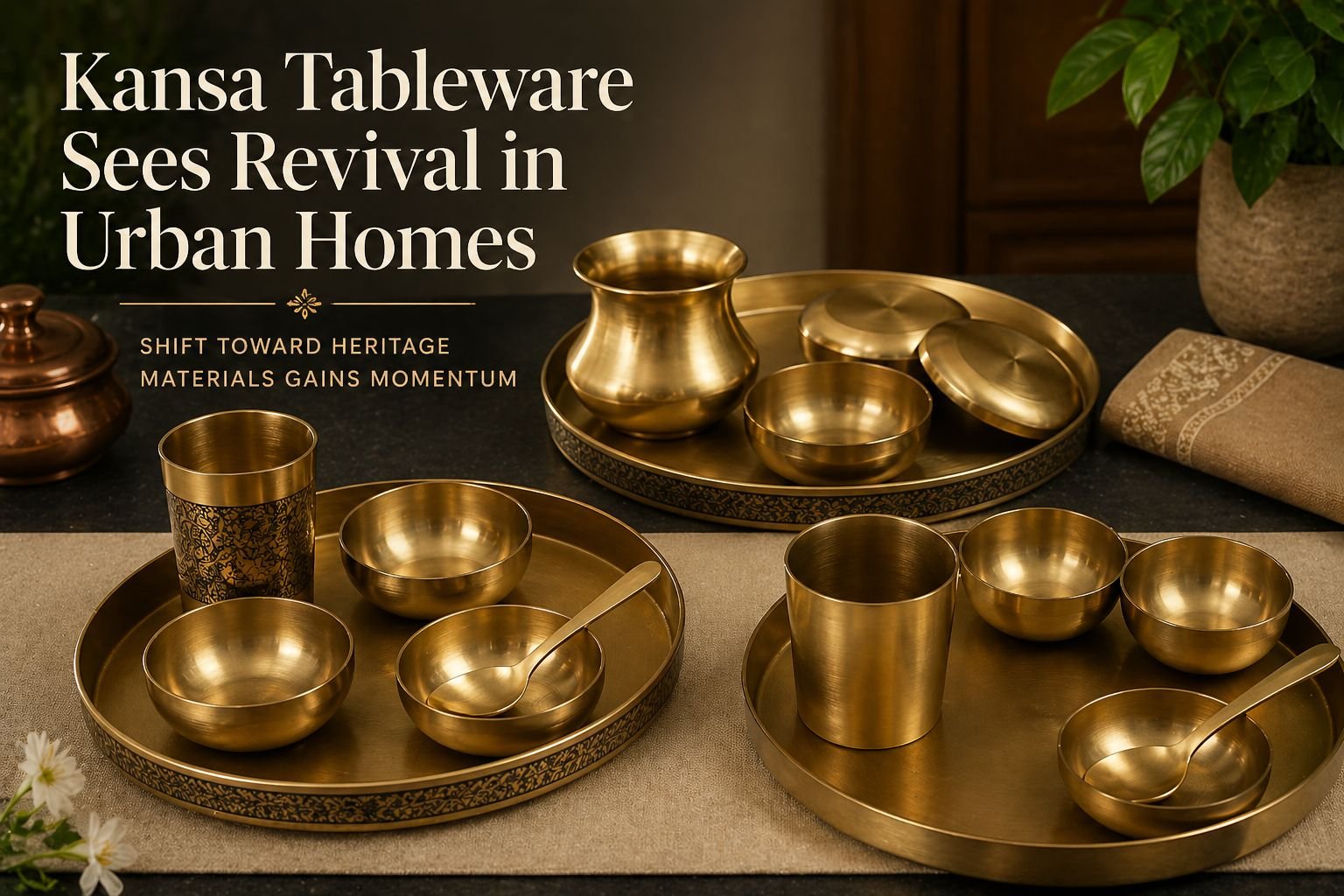
A noticeable shift is taking place across urban Indian households. Dining tables that once leaned heavily on stainless steel and factory-made cookware are slowly making space for traditional metals. Among these, Kansa tableware is seeing a steady return. The trend is not driven by nostalgia alone. It reflects a wider change in how people choose materials for daily use.
At the center of this movement is royalstuffs.com, a brand that has built its presence around handcrafted Kansa, brass, and copper products. With a growing customer base and steady demand in premium segments, the company is becoming part of a larger shift toward heritage-driven dining choices.
Growing Interest in Traditional Metals
In cities like Mumbai, Delhi, Bengaluru, and Chennai, homeowners are rethinking what sits on their dining tables. The focus is moving away from mass-produced goods toward items that carry material value and history.
Kansa, a bronze alloy made primarily of copper and tin, has been used in Indian kitchens for centuries. It was once common in both royal kitchens and everyday homes. Over time, it lost ground to cheaper and easier alternatives. Now, that pattern is reversing.
This renewed interest is tied to a few clear factors. Buyers want durable products. They want materials that feel authentic. They are also paying more attention to how things are made. Kansa fits into all three.
Cultural Roots of Kansa Remain Relevant
Kansa has long been part of India’s dining culture. It is linked with traditional cooking practices and often associated with Ayurvedic routines. While modern users may not follow these traditions strictly, the cultural value of the material still matters.
Unlike coated cookware, Kansa does not rely on synthetic layers. It is a solid alloy. This gives it both durability and a distinct appearance. Its muted bronze tone also stands out when compared to polished steel or glassware.
For many households, choosing Kansa today is not about going back in time. It is about bringing a sense of continuity into modern living spaces.
Rise of Heritage-Led Luxury Buying
Luxury buying habits are changing. Earlier, premium products were often defined by brand visibility or imported labels. Now, buyers are looking at craftsmanship, origin, and material quality.
Kansa tableware fits well into this new definition. It is not flashy. It does not rely on heavy design. Its appeal comes from how it is made and how long it lasts.
Brands like royalstuffs.com are working within this space. Their collections are designed to match modern interiors while keeping the traditional look intact. This balance is important. Buyers want something that works with their current lifestyle, not something that feels outdated.
Craftsmanship Still Matters
Kansa is not easy to produce. The quality depends on the correct mix of metals and the method used to shape and finish the product. Small changes in composition can affect both strength and sound.
Authentic Kansa pieces often show certain key traits. They have balanced weight. They produce a clear ringing sound when tapped. Their surface finish is even but not overly polished.
royalstuffs.com focuses on these aspects in its production process. The brand works with trained artisans and follows a structured approach to maintain consistency. While the setup is organized, the final finish still involves manual work. This keeps the handcrafted element intact.
Shift From Occasional Use to Daily Use
In the past, many families used Kansa utensils only during festivals or special events. That approach is changing. More households are now using bronze plates and bowls in their daily meals.
This shift reflects a broader change in consumption habits. People are moving away from disposable or short-term products. They prefer items that last longer and require less frequent replacement.
Kansa supports this idea. With basic care, it can last for years. It does not wear out quickly, and it does not depend on coatings that may degrade over time.
royalstuffs.com is positioning its products for regular use rather than display. This aligns with how modern consumers want to use traditional materials.
Focus on Material Integrity
Another factor driving this trend is awareness around material safety and origin. Buyers are asking simple questions. What is this made of? How long will it last? Is it safe for regular use?
Kansa provides clear answers. It is a known alloy with a long history. It does not involve complex chemical coatings. Its durability is well established.
While claims around health benefits vary, the material itself is stable and reliable. For many consumers, that is enough reason to consider it.
Market Position of royalstuffs.com
Within this growing segment, royalstuffs.com operates as a premium metalware brand. It does not target mass production. Instead, it focuses on controlled output and quality consistency.
The company offers a range of products, including Kansa dinner sets, brass utensils, and copper drinkware. Its distribution has expanded across major cities, supported by online channels.
Rather than treating Kansa as a short-term trend, the brand presents it as a long-term choice. This approach matches the mindset of buyers who prefer fewer but better products.
A Steady Return, Not a Passing Trend
The return of Kansa tableware is gradual. It is not driven by sudden demand spikes or seasonal buying. Instead, it reflects a steady change in how people view household items.
There is a clear move toward materials that offer durability and cultural relevance. Kansa meets both criteria. It brings together traditional value and modern usability.
As more households adopt this approach, the presence of bronze tableware is likely to grow further. Brands like royalstuffs.com are helping shape this shift by making these products accessible without changing their core identity.