


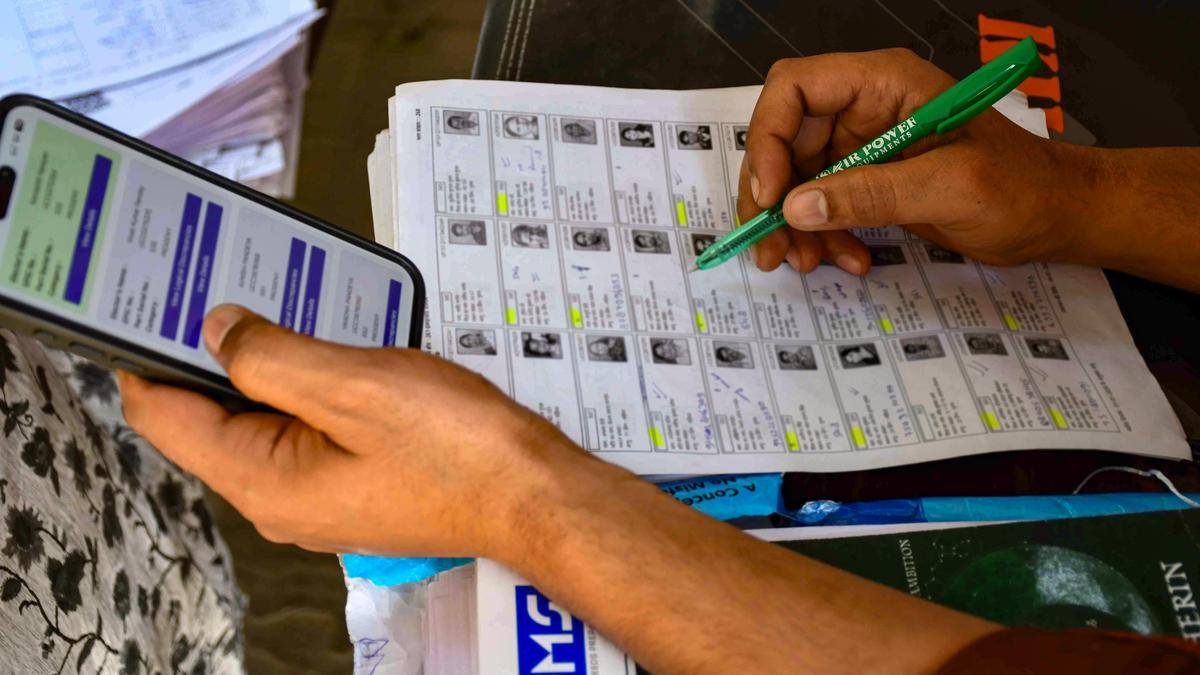
Karnataka SIR voter revision has been given a revised timeline by the Election Commission of India (ECI), with the final electoral roll now scheduled for publication on October 27, 2026. The revision covers electoral rolls across Karnataka, with October 1, 2026 retained as the qualifying date. The schedule affects voter verification, claims and objections, and the preparation of the final list ahead of upcoming elections.
CPI(M) Tripura Village Poll Challenge Intensifies Ahead of TTAADC Elections
Karnataka SIR Voter Revision Gets Fresh Timeline
The Election Commission revised the schedule for the Special Intensive Revision (SIR) of electoral rolls in Karnataka on August 7. According to the revised programme, Booth Level Officers (BLOs) continued house-to-house verification until August 17, extending the earlier deadline. The draft electoral roll was subsequently scheduled for publication on August 24.
The latest schedule also moved the final publication of the electoral roll to October 27. Previously, the revision had been expected to reach its final stage earlier. Therefore, the new timetable gives election officials additional time to complete verification, process claims and objections, and deal with notices issued to voters whose details require further scrutiny.
The Election Commission has retained October 1, 2026, as the qualifying date for the revision. This means the electoral roll will assess eligibility with reference to that date. Additionally, the process is intended to identify and address errors in electoral records while providing eligible voters an opportunity to ensure that their names and details remain correctly reflected.
The revision has attracted significant public and political attention because electoral rolls form the basis of voting eligibility. However, the official reason cited for the latest schedule change was a request from the Chief Electoral Officer’s office in Karnataka, rather than a formal ECI statement saying that political demands alone caused the postponement.
Karnataka SIR Voter Revision and Claims Process
Under the revised schedule, voters were given a defined period to examine the draft electoral roll and raise claims or objections. The claims and objections period runs from August 24 to September 23, according to the revised programme. Consequently, voters whose names are missing or whose information contains errors have an opportunity to approah the election authorities within the prescribed period.
Meanwhile, the notice phase and disposal of claims and objections continues until October 22. During this period, election officials can examine cases requiring additional verification and hear affected voters where necessary. The process is particularly important for electors whose details have been flagged during the intensive revision.
Recent reports from Karnataka show that millions of voters have received notices during the exercise. In one report, nearly 43.81 lakh voters across the state were identified for notices during the claims and objections stage. The notices can arise from discrepancies between current information and older electoral records, among other verification issues.
Furthermore, voters should distinguish between being identified for verification and having their names finally removed from the electoral roll. The classification of a voter for further verification does not by itself establish that the person has lost eligibility. Instead, the revision process provides mechanisms through which eligible voters can present information and seek inclusion or correction.
The process has also generated concerns about communication and access. Reports from Karnataka have highlighted cases in which voters said they were uncertain about the status of documents submitted to Booth Level Officers. At the same time, election officials have continued the verification exercise under the revised timetable.
Karnataka SIR Voter Revision and Local Election Context
The revised electoral-roll schedule comes at a time when Karnataka is also preparing for upcoming local elections. Recent reports indicate that the state’s gram panchayat elections are approaching, with the government informing the Karnataka High Court that reservation and ward delimitation work had been completed. The State Election Commission is expected to proceed with the next stages of the local election process.
However, the ECI’s SIR process and elections conducted by the State Election Commission are separate constitutional processes. The Election Commission of India oversees electoral rolls for elections under its jurisdiction, while State Election Commissions conduct elections to local self-government institutions. Therefore, the revised October 27 date should not automatically be interpreted as a postponement of Karnataka’s local elections.
Political parties and their booth-level representatives also have a role in the electoral-roll revision process. The ECI has described SIR as a participative exercise involving voters, political parties and election officials, and it has encouraged parties to appoint Booth Level Agents to participate in the process.
Moreover, the electoral-roll exercise has received attention because of the scale of verification in Bengaluru. The Greater Bengaluru Authority’s draft figures showed that a large number of voters had been placed in the Absentee, Shifted, Dead and Duplicate categories for further verification. Officials stressed that such classification should not automatically be treated as final deletion because affected voters can respond during the claims and objections process.
The October 27 deadline therefore represents an important administrative milestone. Before the final publication, election authorities must complete outstanding notices, examine claims, process objections and determine which entries should appear in the final roll. Consequently, the final list will provide a clearer picture of the electorate after the revision process concludes.
Karnataka SIR Voter Revision: What Happens Next
The immediate priority for voters is to check their names and details in the draft electoral roll. Those who find discrepancies or believe their names have been left out can use the prescribed claims and objections process within the applicable deadline. Election authorities have also provided voter-service mechanisms to help citizens verify their electoral information.
Additionally, voters who receive notices requiring verification need to follow the instructions issued by the relevant election officials. Where an enquiry is required, the voter may need to provide supporting documents and appear before the designated authority. Recent reporting from Karnataka indicates that notices have been issued in large numbers, making timely communication an important part of the process.
The revision has already involved multiple changes to its schedule. The ECI previously extended the process in July, moving the final publication date to October 19. It then issued another revised schedule in August, pushing the final publication to October 27. The repeated changes reflect adjustments to the administrative timetable rather than a cancellation of the revision itself.
Nevertheless, the final outcome will depend on the completion of verification and disposal of claims and objections. The October 27 publication date is therefore significant because it marks the scheduled conclusion of the current revision process. Until then, the draft roll remains subject to changes resulting from valid claims, objections and official verification.
For voters, the central issue is ensuring that eligible citizens remain correctly represented in the electoral roll. Similarly, election authorities must balance the removal of duplicate, deceased or otherwise ineligible entries with safeguards against the unintended exclusion of eligible voters. The final electoral roll will provide the official record after these procedures are completed.
Conclusion
The Karnataka SIR voter revision has been rescheduled, with the final electoral roll now set for publication on October 27, 2026. The revised timetable provides additional time for verification, claims, objections and disposal of cases before the final list is prepared. Although political concerns surround the wider electoral process, the ECI’s documented schedule change followed a request from the Karnataka Chief Electoral Officer’s office.
FAQs
What is the Karnataka SIR voter revision?
The Karnataka SIR voter revision is the Election Commission’s Special Intensive Revision of electoral rolls in the state. It involves verification and updating of voter information before publication of the final electoral roll.
When will the final Karnataka electoral roll be published?
The final electoral roll under the revised schedule is scheduled to be published on October 27, 2026.
What is the qualifying date for the revision?
The qualifying date for the Karnataka SIR exercise is October 1, 2026.
When can voters submit claims and objections?
Under the revised schedule, the claims and objections period runs from August 24 to September 23, 2026. The notice phase and disposal of claims and objections continues until October 22.
Does the October 27 date postpone local elections?
Not necessarily. The SIR electoral-roll process conducted by the ECI and elections to local self-government institutions conducted by the State Election Commission are separate processes. Therefore, the revised electoral-roll date should not automatically be treated as a postponement of local elections.