


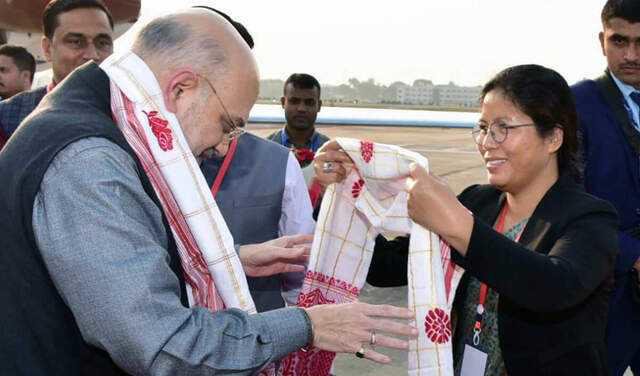
The political shift in Assam 2026 elections has started to reshape the state’s political landscape, with alliances realigning, parties recalibrating strategies, and new narratives emerging ahead of the crucial Assembly polls. As the election season approaches, both ruling and opposition parties are intensifying their efforts to secure voter confidence.
The evolving situation reflects a dynamic phase in Assam politics. With changing alliances and emerging local issues, the electoral contest is expected to be more competitive than previous years. Consequently, all major players are working to strengthen their ground presence.
Read More: Tripura Assembly pays tribute to Anjel Chakma after Dehradun attack
Changing alliances redefine political equations
One of the most significant aspects of the political shift in Assam 2026 elections is the changing alliance structure. Political parties are reassessing their partnerships to maximize electoral gains.
In recent months, discussions around new alliances and seat-sharing arrangements have gained momentum. Some parties have chosen to strengthen existing coalitions, while others are exploring fresh partnerships. As a result, the political equations in several constituencies are undergoing transformation.
These changes are not only influencing party strategies but also impacting voter perceptions. Voters are closely watching how alliances evolve and what they mean for governance and development.
BJP focuses on consolidation and development narrative
The ruling party is focusing on consolidating its support base by highlighting its governance record. Development projects, infrastructure expansion, and welfare schemes are being projected as key achievements.
Leaders have emphasized stability and continuity as important factors for voters. Therefore, the campaign strategy revolves around showcasing progress made in various sectors, including roads, healthcare, and education.
In addition, the party is strengthening its grassroots network. Booth-level workers are being mobilized to ensure effective voter outreach. This approach aims to maintain a strong connection with the electorate.
Opposition recalibrates strategy
On the other hand, opposition parties are working to present a united front. They are focusing on issues such as unemployment, price rise, and local concerns to challenge the ruling party.
Efforts are being made to avoid vote splitting, which has affected opposition performance in the past. Consequently, discussions around alliance-building have become a priority.
Leaders are also emphasizing the need for a credible alternative. By addressing public grievances and presenting a clear vision, they aim to gain voter trust.
Regional parties gain renewed importance
Regional parties are playing a crucial role in the political shift in Assam 2026 elections. Their influence in specific areas makes them key players in determining outcomes.
These parties are focusing on local issues and community-specific concerns. As a result, they are able to connect with voters at a grassroots level. Their role becomes even more significant in closely contested constituencies.
Moreover, regional parties often act as kingmakers in coalition scenarios. Their support can influence the formation of the government, making them an important factor in the electoral landscape.
Role of identity and local issues
Identity politics and local issues continue to play a major role in Assam elections. Issues related to culture, language, and regional identity remain central to political discourse.
At the same time, development-related concerns such as employment, infrastructure, and education are equally important. Voters are looking for a balance between preserving identity and ensuring progress.
Therefore, political parties are crafting their messages carefully. They aim to address both emotional and practical concerns of the electorate.
Youth and first-time voters in focus
Another important factor in the political shift in Assam 2026 elections is the growing influence of young voters. A significant portion of the electorate consists of first-time voters who have different expectations.
These voters are more inclined towards issues like job opportunities, digital infrastructure, and education. As a result, political parties are tailoring their campaigns to appeal to this demographic.
Social media has become a key tool for reaching young voters. Campaigns are increasingly being designed to engage audiences online and create a strong digital presence.
Campaign strategies become more dynamic
The election campaign in Assam is becoming more dynamic with the use of technology and data-driven approaches. Political parties are leveraging analytics to understand voter behavior and preferences.
Door-to-door campaigns, public rallies, and digital outreach are being combined to maximize impact. This multi-pronged approach helps parties connect with different segments of the population.
In addition, leaders are making frequent visits to constituencies to strengthen their connection with voters. These interactions play a crucial role in building trust and credibility.
Public sentiment and electoral outlook
Public sentiment will play a decisive role in shaping the outcome of the elections. Voters are evaluating both the performance of the current government and the promises made by opposition parties.
The political shift in Assam 2026 elections indicates that the contest will be closely fought. Changing alliances, emerging issues, and evolving voter expectations are creating a complex electoral scenario.
Analysts believe that no single factor will determine the outcome. Instead, a combination of development, leadership, alliances, and grassroots engagement will influence voter decisions.
Conclusion: A transformative phase in Assam politics
The political shift in Assam 2026 elections marks a transformative phase in the state’s political journey. With alliances evolving and strategies adapting, the electoral landscape is becoming increasingly competitive.
Both ruling and opposition parties are leaving no stone unturned to secure victory. As the election approaches, the intensity of political activity is expected to rise further.
In conclusion, Assam is heading towards a crucial electoral battle that could redefine its political future. The coming months will be key in determining how these shifts translate into electoral outcomes and shape the state’s governance in the years ahead.
Read More: EVM VVPAT Randomisation Completed in Assam, Kerala, Puducherry