


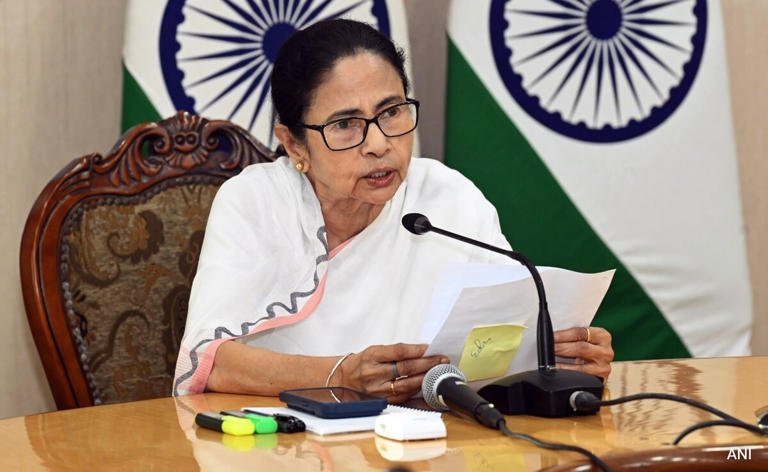
West Bengal Chief Minister Mamata Banerjee has announced a new scheme to support returning migrant labourers. The initiative promises financial help of Rs 5,000 per month, along with job cards, to ensure livelihoods for those who came back to the state after struggling in other parts of India. With this move, the state government aims to provide stability, income security, and dignity to thousands of families affected by unemployment.
Support for returning labourers
The scheme was announced after the state reviewed the condition of migrant labourers who returned during difficult times. Many workers faced severe challenges while working outside Bengal, and a large number had to return due to lack of opportunities, financial crises, or health concerns. Mamata Banerjee highlighted that her government would not let them suffer. Instead, the state would extend direct support to help them restart their lives.
By offering Rs 5,000 every month, the government wants to ensure that workers have steady income. The job cards are designed to provide additional opportunities under state welfare programs, enabling labourers to find work locally. These measures together are expected to reduce migration and create more stable employment in West Bengal.
Read More: Assam, Army Discuss Cooperation and Youth Welfare
Objectives of the scheme
The central goal of the scheme is to create financial security for families who relied on migration for survival. Several key objectives stand out:
- Monthly support – Rs 5,000 per month will provide an immediate lifeline to households without regular earnings.
- Job cards – Issued under the state’s program, these will allow workers to access local jobs with guaranteed payment.
- Local livelihood – Encouraging families to build their lives in Bengal instead of depending on outside states.
- Social dignity – Assuring migrant workers that their struggles are recognized and addressed by the government.
These goals reflect the state’s commitment to inclusive development and the welfare of marginalized groups.
Focus on rural employment
Most of the returning workers belong to rural areas, where job opportunities remain limited. With the help of job cards, the government will connect them to developmental works in villages. From building rural infrastructure to participating in local community projects, workers will find new avenues of employment closer to home.
Officials believe this approach will also strengthen rural economies by circulating income within villages. The scheme may further reduce dependency on urban migration, where workers often face exploitation and insecurity.
Financial allocation and implementation
Mamata Banerjee’s government has earmarked a significant budget for this scheme. Officials from the labour and rural development departments will coordinate to identify eligible workers. The process includes registering returning labourers, verifying their background, and issuing both financial aid and job cards.
The financial support will be transferred directly to workers’ bank accounts to ensure transparency. The job cards will be linked with local bodies to guarantee timely employment. The administration is expected to launch awareness campaigns so that workers do not miss out on applying for the benefits.
Impact on families
The scheme is expected to benefit thousands of families who returned with uncertainty. Many of them faced job losses and health struggles during their time outside Bengal. For such households, Rs 5,000 per month can cover basic needs like food, medicine, and education for children.
Moreover, job cards will bring long-term relief. With steady employment opportunities, families will not be forced to send members outside the state. Instead, they can participate in local development and contribute to Bengal’s growth.
Political and social importance
The announcement also holds political significance. By addressing migrant labourers, Mamata Banerjee reaffirms her government’s people-centric policies. It aligns with her earlier welfare programs that focused on women, students, and farmers. This scheme extends her welfare model to another vulnerable section of society.
Socially, the move builds confidence among workers who often feel neglected. It sends a message that the state values their contribution and recognizes their hardships. It also highlights the importance of social safety nets in times of crisis.
Challenges in execution
Despite its promise, the scheme faces challenges. Ensuring that all eligible workers are registered will require strong coordination between state departments and local bodies. Monitoring the flow of funds and job opportunities will be equally important.
There is also the question of sustainability. While Rs 5,000 per month provides immediate relief, long-term development requires more permanent employment opportunities. Officials stress that this scheme should be seen as a step toward wider economic reforms that will create lasting livelihoods.
Looking ahead
The initiative marks another chapter in Bengal’s welfare journey. By combining financial aid with job cards, Mamata Banerjee’s government has taken a practical step to support struggling families. The scheme not only addresses immediate needs but also lays the foundation for stronger local economies.
Observers note that the success of the scheme will depend on efficient implementation. If executed well, it could become a model for other states facing similar issues with returning migrant labourers. With clear benefits and a people-focused approach, the scheme represents hope for thousands of workers seeking stability.
Read More: 7 Beetroot Juice Recipes for Skin, Hair & Health