


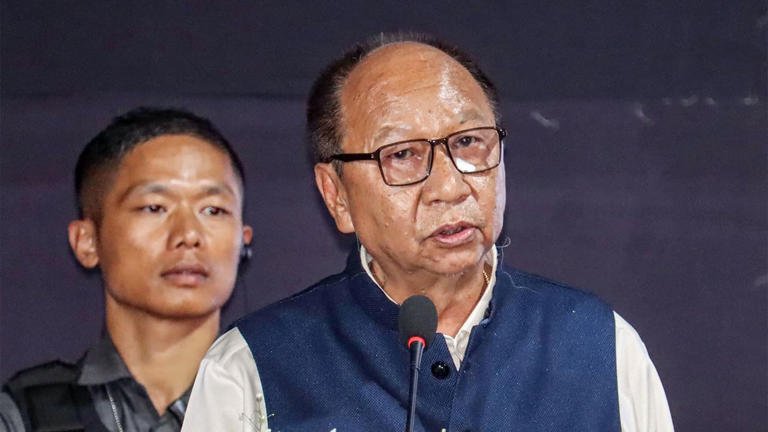
Manipur Chief Minister Yumnam Khemchand Singh has said that the state government has resettled 36,000 out of around 60,000 internally displaced persons who lost their homes during the crisis that began in May 2023.
The Chief Minister shared the update in the Manipur Assembly while responding to a short-duration discussion. He said that around 24,000 internally displaced persons, or IDPs, are still living in relief camps across the state.
The resettlement of 36,000 displaced people marks significant progress in Manipur’s rehabilitation efforts. However, thousands of people still need long-term support as they attempt to rebuild their lives and return to normalcy.
The government continues to provide financial assistance to around 59,000 displaced persons, including people who have already returned to their homes but continue to face livelihood challenges. The Chief Minister said many families still lack stable sources of income and require continued support.
Manipur Government Resettles 36,000 Displaced Persons
The Manipur government has resettled 36,000 of the approximately 60,000 people displaced by the crisis that began on May 3, 2023.
Chief Minister Yumnam Khemchand Singh informed the Assembly that the government has made progress through continued rehabilitation and resettlement efforts. He also credited the collective support and efforts of legislators for helping move the process forward.
However, the work remains incomplete. Around 24,000 internally displaced persons are still staying in relief camps across Manipur.
The state government now faces the challenge of helping these remaining families return to safe and stable living conditions. Resettlement involves more than moving people out of temporary shelters. Families also need homes, security, livelihoods and access to essential public services.
The Chief Minister’s statement brought fresh attention to the scale of the rehabilitation challenge facing Manipur.
Around 24,000 IDPs Still Live in Relief Camps
Despite the progress in resettlement, around 24,000 displaced persons continue to live in relief camps in different parts of Manipur.
Relief camps have provided temporary shelter to families who could not return to their homes after being displaced. However, long-term stays in temporary accommodation can create several challenges.
Families living in relief camps need continued access to food, healthcare, education and other basic services. Children and elderly people can face additional difficulties when displacement continues for a long period.
The government therefore needs to focus on safe and sustainable rehabilitation for the remaining displaced population.
A successful return also depends on conditions in the areas where families once lived. People need confidence that they can return safely and rebuild their lives.
The Chief Minister said displaced people from both the hills and the valley share a common desire to return to their respective homes and live peacefully.
Government Continues Financial Assistance
The Manipur government continues to provide financial assistance to around 59,000 displaced persons.
This support remains important because resettlement does not immediately solve every problem faced by affected families. Many people who have returned to their homes continue to struggle with limited livelihood and earning opportunities.
The Chief Minister said the government has continued monthly financial assistance to support displaced people and returnees.
Financial support can help families meet immediate needs. However, the government also needs to create longer-term opportunities for employment and income generation.
The Chief Minister acknowledged that financial aid alone cannot address the full impact of a crisis that has continued for several years.
The government is therefore examining additional rehabilitation and livelihood measures to support affected families as they rebuild their lives.
Livelihood Support Remains a Major Challenge
A stable livelihood is essential for families attempting to restart their lives after displacement.
Many displaced persons lost access to their homes, workplaces, farms or other sources of income. Returning home does not automatically restore those opportunities.
The Manipur government is exploring measures that could provide longer-term economic support to affected families.
The Chief Minister said the government is holding discussions with the Planning Department to identify additional initiatives. He also referred to possible support through schemes such as labour cards, which could help eligible people access employment opportunities.
Creating livelihood opportunities could reduce dependence on temporary financial assistance.
Families need sustainable income to rebuild homes, support children and regain financial independence.
The rehabilitation process will therefore need to combine housing support with employment and livelihood opportunities.
Government Addresses Mental Trauma Among Displaced People
The prolonged crisis has also affected the emotional well-being of many displaced persons.
The Chief Minister said financial assistance alone cannot address the consequences of years of displacement and uncertainty.
People who have experienced violence, displacement and the loss of homes may continue to face emotional and psychological difficulties.
The Manipur government has therefore taken steps to address mental trauma among affected people.
According to the Chief Minister, the Health Department has initiated measures to help people cope with the psychological effects of the prolonged crisis.
Mental health support can form an important part of long-term rehabilitation.
Recovery does not only involve rebuilding physical infrastructure. Communities and families also need support as they deal with the emotional consequences of displacement.
Chief Minister Meets Representatives of Displaced Persons
The Chief Minister said he recently met representatives from several joint associations of internally displaced persons.
The discussions focused on the concerns of displaced families and possible ways to speed up assistance and resettlement.
Direct communication with displaced communities can help authorities understand the challenges that people face.
Different families may have different needs depending on their location and circumstances. Some may require housing support, while others may need employment opportunities or access to essential services.
Consultation can help the government develop more effective rehabilitation plans.
The Chief Minister has also said that the government welcomes suggestions from different political parties and stakeholders.
He urged people to address the issue of rehabilitation without allowing political considerations to overshadow the humanitarian needs of displaced families.
Restoring Trust Remains Key to Long-Term Rehabilitation
The Chief Minister identified the trust deficit among communities as one of the major challenges facing Manipur.
Long-term rehabilitation requires more than physical reconstruction. Families also need confidence that they can return safely and live peacefully.
The government is working to create conditions that support normalcy, resettlement and the restoration of social and economic activity.
Restoring trust between communities remains an important part of this effort.
The Chief Minister said people from different communities shared a common desire for peace and a return to their homes.
The government will need to build on this shared aspiration while addressing the practical challenges of rehabilitation.
A stable and peaceful environment can help displaced families make decisions about returning and rebuilding their lives.
Manipur Resettlement Efforts Continue
The resettlement of 36,000 out of around 60,000 displaced persons represents significant progress in Manipur’s ongoing rehabilitation efforts.
However, around 24,000 people still remain in relief camps. Many others who have returned home continue to depend on financial assistance because they have not yet regained stable livelihoods.
The next phase of rehabilitation will require continued attention to housing, employment, public services and community confidence.
The government also faces the task of addressing the psychological impact of prolonged displacement.
Chief Minister Yumnam Khemchand Singh has said the government will continue working towards the resettlement and rehabilitation of affected families.
As Manipur moves forward, the successful rehabilitation of the remaining displaced population will remain a key priority.
The state’s progress will depend on continued support, effective planning and efforts to create conditions that allow families to return home and live in peace.