


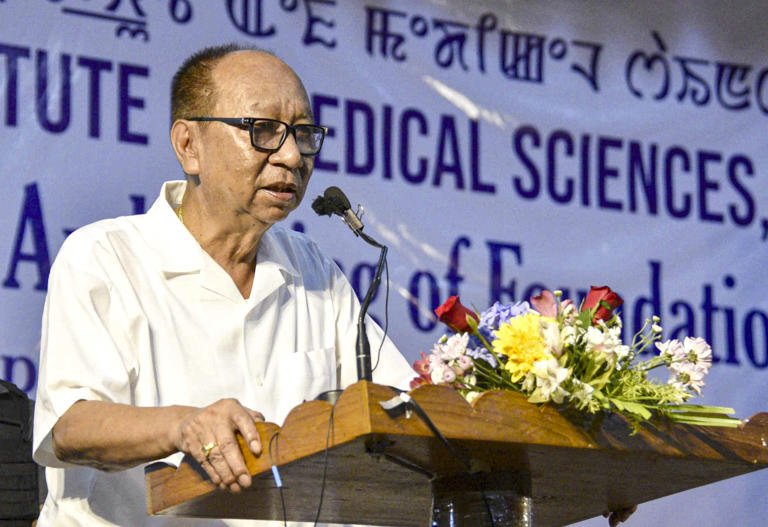
Manipur Chief Minister Yumnam Khemchand Singh launched two major cleanliness and waste-management initiatives in Imphal on September 17. The programmes aim to improve sanitation, strengthen waste-management infrastructure and encourage greater public participation across the state.
The Chief Minister launched Swachhata Hi Seva 2026 and the Clean Himalayan Hill Cities Initiative (CHHCI) at the Chief Minister’s Secretariat. The Manipur Urban Development Agency (MUDA) undertakes the hill cities initiative.
The programmes focus on scientific waste management, behavioural change and community participation. They also target sanitation challenges in urban areas and ecologically sensitive hill regions.
Read More: Nagaland Upgrades Health and Education Infrastructure Under New Agreement
CM Calls for a Whole-of-Society Approach
Khemchand Singh urged residents, Urban Local Bodies (ULBs) and other stakeholders to participate actively in the campaigns. He said waste management cannot depend only on government agencies.
The initiatives will follow a “Whole of Society” approach. This approach aims to involve government departments, local bodies, communities, youth groups and other stakeholders in cleanliness activities.
The Chief Minister also highlighted the need for behavioural change. The programmes will encourage residents to handle waste responsibly and follow scientific waste-management practices.
The government plans to strengthen community ownership of cleanliness activities. Officials will also conduct awareness programmes to explain responsible waste disposal and sanitation practices.
Swachhata Hi Seva 2026 Begins Across Manipur
The Swachhata Hi Seva 2026 campaign will run from September 17 to October 2. The campaign will focus on cleanliness activities, waste segregation and public awareness.
Officials have identified several areas of focus for the campaign. These include the transformation of Cleanliness Target Units and public places, youth participation, Safai Mitra welfare, public involvement and waste-to-wealth activities.
The campaign will also promote four-way segregation of waste at source. This process requires households and other waste generators to separate different types of waste before disposal.
Source segregation can make waste collection and processing more efficient. It can also help local bodies recover recyclable material and reduce the amount of waste that reaches dumping sites.
Awareness and Waste-to-Wealth Activities
The campaign will also spread awareness about the Solid Waste Management Rules, 2026. Officials will use awareness activities to encourage citizens to follow proper waste-disposal practices.
Another focus will be the concept of waste-to-wealth. This approach aims to treat waste as a potential resource rather than simply as material for disposal.
Recyclable materials can enter recovery and recycling systems. Organic waste can also support composting and other processing methods when local systems have the required infrastructure.
The campaign therefore combines cleanliness activities with longer-term changes in how people handle waste.
Clean Himalayan Hill Cities Initiative Gets 100 Days
Alongside Swachhata Hi Seva, the state launched the Clean Himalayan Hill Cities Initiative. Officials will run the programme for 100 days.
The initiative focuses particularly on sanitation and waste-management challenges in hill areas. Mountain regions can face special difficulties because of their terrain, limited infrastructure and environmentally sensitive locations.
The programme will focus on capacity building, Behaviour Change Communication and stronger waste-management systems. It will also support the preservation of heritage and iconic sites.
The government wants local bodies and other stakeholders to develop stronger systems for managing waste in these areas. Training and institutional support will form part of the initiative.
Infrastructure to Receive Greater Attention
The two initiatives will not focus only on cleaning public spaces. The government also plans to strengthen waste-management infrastructure at identified locations.
Officials will provide training and institutional support to ULBs and other stakeholders involved in sanitation and community development. This support can help local bodies improve their capacity to collect, segregate and manage waste.
Better infrastructure can also support long-term sanitation efforts. Cleanliness campaigns can remove accumulated waste, but effective collection and processing systems remain important for preventing waste from building up again.
The state government’s approach therefore combines infrastructure development with public awareness.
Protecting Manipur’s Hill and Heritage Areas
The Clean Himalayan Hill Cities Initiative also places emphasis on heritage and iconic locations. Officials have identified several important sites for conservation and cleanliness efforts.
These include Ima Keithel, Kangla Fort, Cheirao Ching, Marjing Polo Statue, Loktak Lake and Andro Santhei Natural Park, according to state news reports.
Keeping such sites clean can support both environmental protection and tourism. These locations attract residents and visitors and form part of Manipur’s cultural and natural heritage.
Waste-management systems around these areas can help reduce litter and protect their surroundings.
Youth and Safai Mitras to Play a Role
The Swachhata Hi Seva campaign also places emphasis on youth participation. The Swachh Paathshala–Yuva for Swachhata component aims to involve young people in cleanliness and awareness activities.
The campaign will also include Safai Mitra Suraksha Evam Samman Shivir activities. These programmes focus on the welfare, safety and dignity of sanitation workers.
Safai Mitras play an important role in maintaining public cleanliness. Their work includes waste collection and sanitation services across urban areas.
Greater attention to their welfare can strengthen the wider cleanliness programme.
Public Participation Remains Central
Khemchand Singh has appealed to citizens to take an active role in the initiatives. The government wants people to treat cleanliness as a regular responsibility rather than an occasional campaign.
Public participation can influence how successfully waste-management systems operate. Proper segregation at home, responsible disposal and cooperation with waste collectors can reduce pressure on local bodies.
The government also wants Urban Local Bodies to work closely with communities. Such coordination can help authorities identify local waste-management problems and develop suitable solutions.
Focus on Long-Term Sanitation
The launch of the two programmes reflects Manipur’s focus on combining cleanliness drives with longer-term waste-management measures.
Swachhata Hi Seva 2026 will run until October 2 and focus on public cleanliness, segregation, awareness and citizen participation. The Clean Himalayan Hill Cities Initiative will continue for 100 days and concentrate on hill-city sanitation, capacity building, heritage conservation and stronger waste-management practices.
The government now plans to work with ULBs, communities and other stakeholders to implement the initiatives.
The success of the programmes will depend on continued participation beyond the campaign period. Strong waste-management infrastructure, regular waste segregation and responsible disposal can help Manipur build cleaner and more sustainable urban and hill communities.
Read More: Manipur CM Distributes PMFME Subsidies to 2,835 Beneficiaries in Imphal