


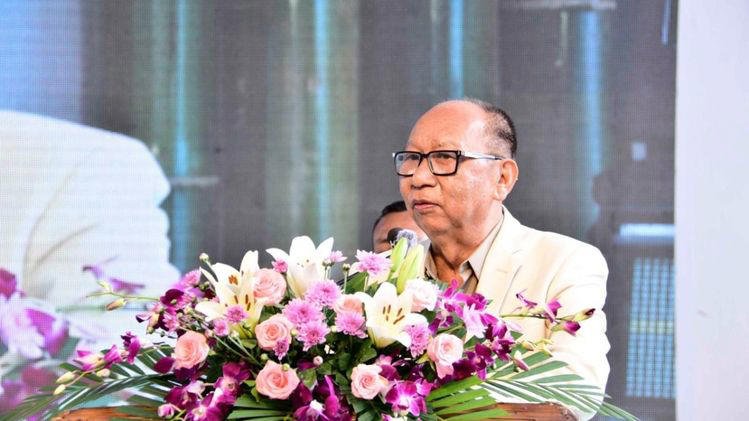
The Manipur government is considering the creation of a full-fledged department dedicated to handloom, handicrafts and textiles. Chief Minister Yumnam Khemchand Singh announced the proposal on November 5 while inaugurating the Manipur International Textile Expo (MANITEX) 2026 in Imphal.
The proposed department aims to strengthen the state’s traditional industries and create better opportunities for local weavers and artisans. It will also help the government focus more closely on the development of Manipur’s textile sector.
The existing Handloom, Handicrafts and Textiles division functions under the Department of Trade, Commerce and Industries. The proposed arrangement seeks to give the sector greater administrative attention and institutional support.
Speaking at the inauguration ceremony at Urban Haat, Nilakuthi, the Chief Minister highlighted the economic and cultural importance of traditional weaving. He said Manipur’s handloom and handicraft products represent the state’s identity and deserve stronger promotion at national and international levels.
CM Highlights Importance of Traditional Weaving
During his address, Yumnam Khemchand Singh stressed that handloom and handicrafts contribute significantly to Manipur’s economy. The sector also plays an important role in preserving the state’s cultural traditions.
He noted that traditional weaving has helped Manipur gain recognition beyond the Northeast. However, he said the government must make further efforts to strengthen the industry and improve the working conditions of artisans.
The Chief Minister also shared a personal connection with the weaving community. Recalling his childhood, he said his mother was a weaver. He also remembered delivering yarn to the Kongba area of Imphal East.
These experiences helped him understand the dedication and hard work involved in weaving. He said the industry requires consistent support because thousands of families depend on traditional crafts for their livelihoods.
Furthermore, Singh rejected the perception that Manipur’s handloom sector had remained stagnant. He pointed out that the industry had made progress over the years. Nevertheless, he stressed that greater institutional support could help it reach new markets.
CM Directs Officials to Strengthen Support for Artisans
The Chief Minister instructed government officials to ensure that eligible weavers and artisans receive the benefits of various centrally sponsored schemes.
He emphasised that government assistance should reach the actual beneficiaries. This includes support for equipment, infrastructure, skill development and other facilities required by traditional craft workers.
Moreover, better implementation of existing schemes could improve productivity and create sustainable livelihood opportunities.
The government also aims to strengthen the connection between traditional craftsmanship and modern business opportunities. Improved access to markets, product development and promotion could help local artisans compete with products from other regions.
The proposed dedicated department could provide a more focused administrative structure for these initiatives.
MANITEX 2026 Opens in Imphal
The Chief Minister inaugurated MANITEX 2026 at Urban Haat in Nilakuthi, Imphal. The expo carries the theme, “Weave for Togetherness: Many Threads, One Manipur”.
The event celebrates Manipur’s diverse weaving traditions and craftsmanship. It also aims to connect local artisans with buyers, designers and other stakeholders from different parts of the country and abroad.
During the inauguration, Singh launched the official MANITEX 2026 mobile application. He also released a coffee-table book titled Exploring Manipur Textile Design.
The publication highlights the state’s traditional textile designs and creative heritage. Meanwhile, the mobile application aims to support the expo’s digital outreach and provide information to visitors.
The event also featured the distribution of awards and assistance to beneficiaries under different handloom development initiatives.
Support for Weavers Under Development Schemes
At the expo, the government distributed assistance covering crafts, frame looms, weaving accessories and individual worksheds.
These benefits form part of initiatives under the Imphal East Mega Handloom Cluster and the Small Development Programme of the National Handloom Development Programme.
The assistance aims to improve working conditions and strengthen the production capacity of local weavers.
Frame looms and accessories can help artisans improve their working facilities. Similarly, individual worksheds can provide dedicated spaces for weaving activities.
Such support becomes particularly important for traditional industries. Many artisans continue to depend on household-based production and limited infrastructure. Therefore, better facilities could help improve productivity and income opportunities.
The government also wants to ensure that artisans receive proper support to expand their businesses and reach wider markets.
Manipur’s Textile Heritage and Economic Potential
Manipur has a long tradition of handloom weaving. Its textiles reflect the state’s cultural identity, community traditions and artistic skills.
Products such as Moirang Phee, Wangkhei Phee and Shaphee Lanphee carry distinct designs and historical significance. These traditional textiles also have Geographical Indication (GI) recognition.
However, preserving traditional craftsmanship requires more than cultural promotion. Artisans also need financial assistance, modern equipment, better marketing facilities and opportunities to reach new customers.
The proposed department could help bring these requirements under a stronger institutional framework.
Additionally, a more focused administrative structure may improve coordination between government agencies, cooperatives, designers and artisan groups.
Government Looks to Expand Opportunities for Local Artisans
The proposal for a dedicated department comes as Manipur continues to explore ways to strengthen its traditional industries.
The state government wants to promote local products while creating better livelihood opportunities for weavers and handicraft workers. It also aims to take Manipur’s textile heritage to larger markets.
Meanwhile, MANITEX 2026 provides a platform to showcase traditional designs, encourage business connections and recognise the contribution of artisans.
The proposed departmental structure remains an important part of the government’s broader vision for the sector. Its implementation could give handloom, handicrafts and textiles greater policy attention.
Ultimately, the success of these initiatives will depend on effective administration, timely financial assistance and direct support to artisans. For Manipur’s weaving communities, stronger institutional backing could help protect traditional skills while creating new economic opportunities for future generations.