


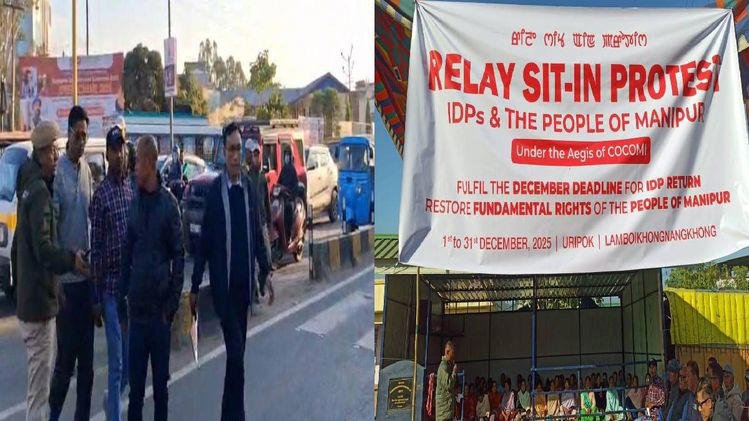
Displaced families from Manipur have submitted a detailed memorandum to the Governor and the Chief Secretary, urging immediate resettlement and long-term rehabilitation. The groups also launched a protest to highlight their urgent needs, stating that months of uncertainty have pushed them into deeper hardship. The demonstration reflects growing frustration as affected people search for security, stability and recognition of their struggle.
Read More: Indian Army Supports Community Adventure Tourism in Yumthang Valley
Memorandum Seeking Urgent Intervention
The displaced groups prepared a memorandum outlining the challenges they continue to face. Their appeal focuses on resettlement, improved living conditions and clear government action to address prolonged displacement.
Many families remain in temporary shelters with limited resources, and the memorandum stresses the need for a structured plan to relocate them safely.
The document also highlights issues such as lack of access to essential services, education for children and stable income opportunities. Representatives stated that the absence of long-term solutions has left many families feeling vulnerable.
By submitting the memorandum, they hope to draw immediate attention from the highest offices in the state.
Protests Calling for Rehabilitation
Along with submitting the memorandum, displaced groups launched a peaceful protest to demand faster intervention. Protesters gathered with banners and placards, calling for dignity, protection and long-delayed rehabilitation measures.
Leaders of the demonstration expressed that their demands are rooted in basic human rights and the need for a secure home.
The protest also aimed to show unity among displaced communities. Participants said they wanted the government to recognise that their challenges require urgent solutions, not temporary arrangements.
Families stressed that they live in fear of continued instability and need to rebuild their lives in safe locations.
Living in Temporary Shelters
Displaced families described the hardships of living in temporary relief centres. Many shelters lack proper sanitation, privacy and infrastructure.
Parents are particularly worried about the future of their children, who face interruptions in schooling and limited access to learning facilities.
Healthcare access also remains a major concern. People in temporary shelters often depend on small clinics or volunteer groups for medical support. Representatives said such conditions make daily life difficult, especially for older people, pregnant women and children.
The absence of job opportunities adds another layer of struggle. Many earn daily wages, and displacement disrupted their livelihood. Without stable income, families feel trapped in uncertain conditions.
Calls for Transparent and Fair Resettlement
The displaced communities emphasised that they want a transparent and fair resettlement process. They urged the government to ensure that locations chosen for rehabilitation are safe and equipped with essential services such as schools, hospitals and transport.
The memorandum also asks for clear communication from authorities regarding timelines and criteria for resettlement.
Community leaders noted that unpredictable updates or lack of clarity make families anxious about the future. They hope the government will adopt a structured approach that includes consultation with affected groups.
Emotional Impact on Families
Beyond physical hardship, displacement has caused deep emotional stress. Families have been separated from familiar surroundings, land and community networks.
Many residents expressed feelings of loss and uncertainty as they shared stories of disrupted lives.
Parents worry about the emotional wellbeing of their children, who have experienced fear, instability and sudden change. The memorandum highlights that mental health support should be part of the resettlement plan.
Despite these challenges, communities continue to support each other through shared resources, community kitchens and local initiatives. Their unity has helped them endure difficult months, but they say only a permanent solution can bring lasting relief.
Need for Government Action
Protesters called on the state government to address the situation with sensitivity and urgency. They believe timely action will help restore peace and stability for displaced households.
Officials were urged to visit the shelters, assess conditions directly and prioritise rehabilitation in policy planning.
Groups also appealed to the administration to coordinate with central agencies, civil society organisations and local bodies to ensure a comprehensive response.
The memorandum requests long-term development support so that families can rebuild livelihoods and regain independence.
Hope for a Peaceful Future
Despite their challenges, displaced communities remain hopeful that their voices will lead to meaningful change. They believe that resettlement will not only provide physical security but also help restore normalcy in their lives.
Community members said they want to contribute positively to Manipur’s future but need the foundation of safety, stability and proper housing. The protest and memorandum together signal a strong push for action and a renewed hope for progress.
Conclusion
The demand for resettlement by Manipur’s displaced families reflects their urgent need for security and dignity. With the memorandum submitted and protests underway, communities hope the government will act swiftly and compassionately.
A clear resettlement plan, fair rehabilitation measures and long-term support can help families regain stability and rebuild their lives with confidence.
Read More: Manipur Sangai Festival Showcases Culture and Unity