


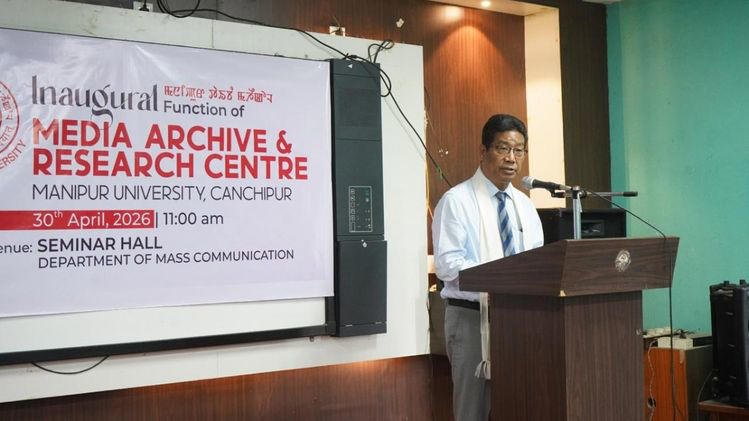
Manipur University MARC has emerged as a significant step toward preserving the rich audiovisual heritage of Northeast India. Manipur University recently launched the Media Archive and Research Centre (MARC) with the aim of safeguarding valuable cultural records.
The initiative focuses on collecting, documenting, and preserving audiovisual materials that reflect the region’s diverse traditions. These include films, recordings, photographs, and oral histories. Therefore, the project is expected to play a crucial role in cultural preservation.
Moreover, the launch of MARC highlights the growing importance of digital archiving. As traditional media formats deteriorate over time, digitization ensures long-term access and protection of cultural assets.
Read More: Tripura CM Slams Opposition Over Women’s Progress
Preserving Northeast’s cultural identity
The Manipur University MARC initiative underscores the importance of preserving cultural identity in Northeast India. The region is known for its diversity, with numerous communities, languages, and traditions.
Manipur University aims to document this diversity through audiovisual records. These materials provide insights into customs, rituals, and everyday life. As a result, they serve as valuable resources for future generations.
In addition, the initiative will help protect endangered cultural expressions. Many traditions face the risk of fading due to modernization. Therefore, archiving them becomes essential.
Furthermore, MARC will support efforts to promote cultural awareness. By making materials accessible, it can encourage appreciation of the region’s heritage.
Features and functions of MARC
The Manipur University MARC centre will serve as a hub for audiovisual preservation and research. Manipur University has designed the facility to include advanced storage and digitization capabilities.
The centre will collect materials from various sources, including filmmakers, researchers, and community members. Therefore, it will create a comprehensive archive of regional content.
In addition, MARC will focus on digitizing existing collections. This process ensures that fragile materials are preserved in digital formats. As a result, they can be accessed without risking damage.
The centre will also provide research opportunities. Scholars and students can use the archive to study cultural, social, and historical aspects of the region.
Moreover, training programs will be conducted to build expertise in archiving and preservation. These initiatives will help develop skilled professionals in this field.
Role of technology in preservation
Technology plays a central role in the Manipur University MARC initiative. Manipur University emphasized the use of digital tools to enhance preservation efforts.
Digitization allows for efficient storage and retrieval of audiovisual materials. It also enables the creation of backups, reducing the risk of data loss. Therefore, technology ensures long-term sustainability.
In addition, online platforms can make archives accessible to a wider audience. Researchers, students, and the general public can explore materials remotely. As a result, knowledge dissemination becomes easier.
The initiative also plans to adopt advanced metadata systems. Proper cataloging helps organize materials and improve searchability. Consequently, users can access relevant content quickly.
Furthermore, technology can support restoration efforts. Damaged recordings can be enhanced and preserved using modern techniques.
Academic and research opportunities
The Manipur University MARC centre is expected to create new opportunities in academia. Manipur University aims to integrate the archive with academic programs.
Students can engage in research projects related to media, culture, and history. Therefore, the initiative enhances learning experiences.
In addition, MARC can facilitate interdisciplinary studies. Scholars from different fields can collaborate to explore various aspects of the region’s heritage. As a result, research becomes more comprehensive.
The centre will also host workshops and seminars. These events will bring together experts and students to exchange ideas. Consequently, they will foster innovation and knowledge sharing.
Moreover, partnerships with other institutions can expand research opportunities. Collaboration can provide access to additional resources and expertise.
Community participation and outreach
Community involvement is a key aspect of the Manipur University MARC initiative. Manipur University plans to engage with local communities to collect and preserve cultural materials.
Residents can contribute recordings, photographs, and stories. Therefore, the archive will reflect diverse perspectives.
In addition, outreach programs will raise awareness about the importance of preservation. Educating communities can encourage participation and support.
The initiative also aims to empower local artists and creators. By documenting their work, MARC can provide recognition and visibility. As a result, cultural expressions can thrive.
Furthermore, collaboration with cultural organizations can enhance outreach efforts. Partnerships can help expand the scope of the archive.
Challenges and future prospects
While the Manipur University MARC initiative shows great promise, it also faces challenges. These include resource constraints, technical requirements, and the need for skilled personnel.
Manipur University must ensure adequate funding and infrastructure. Therefore, sustained support becomes essential.
In addition, maintaining the quality and authenticity of archived materials requires careful management. Proper standards and protocols must be followed.
However, the future prospects remain encouraging. With continued efforts, MARC can become a leading centre for audiovisual preservation in India.
Moreover, the initiative may inspire similar projects in other regions. As a result, it can contribute to a broader movement for cultural preservation.
Conclusion
The Manipur University MARC initiative marks a significant step toward preserving the audiovisual heritage of Northeast India. By combining technology, research, and community participation, it aims to safeguard valuable cultural records.
Through this initiative, Manipur University is contributing to the protection of cultural identity. It provides a platform for documentation, study, and dissemination of heritage.
In conclusion, MARC represents a forward-looking approach to preservation. With sustained efforts and collaboration, it can ensure that the rich traditions of the Northeast are preserved for future generations.
Read More: Mamata Banerjee Slams BJP, Says Bengal Will Not Be Run from Delhi