


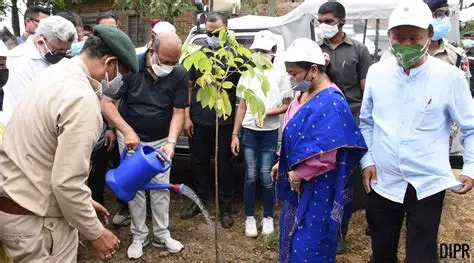
Manipur’s Kangpokpi district has emerged as a key centre for discussions on sustainable livelihoods as it hosted a capacity-building programme highlighting the economic potential of medicinal plants in northeast India. The programme brought together farmers, local entrepreneurs, experts, and officials to explore how traditional knowledge and biodiversity can translate into stable income opportunities for rural communities.
The initiative reflected a growing recognition that the northeast’s rich plant diversity holds untapped potential for livelihoods, healthcare, and small-scale entrepreneurship. By focusing on skills, awareness, and value-chain development, the programme aimed to connect local resources with market-driven opportunities.
Read More: Assam CM Warns of Demographic Shift
Kangpokpi hosts capacity-building initiative
The capacity-building programme in Kangpokpi focused on strengthening knowledge and skills related to medicinal plants in northeast regions. Organisers designed the event to address both cultivation practices and economic aspects, ensuring participants understood the full livelihood cycle.
Sessions covered plant identification, sustainable harvesting, cultivation techniques, and basic processing methods. Experts stressed that scientific handling and proper documentation remain essential to protect biodiversity while increasing income.
Local participation remained strong, with farmers and community members showing keen interest in diversifying livelihoods beyond traditional agriculture.
Livelihood opportunities from medicinal plants in northeast
Medicinal plants in northeast India form the backbone of many traditional healing systems. However, communities often lack structured pathways to commercialise these resources responsibly.
The programme highlighted how medicinal plant cultivation can supplement household income and reduce dependence on single-crop farming. Trainers explained that even small landholdings can generate steady returns when farmers adopt high-demand herbal species.
Participants also learned about value addition, including drying, packaging, and primary processing, which significantly increase earnings compared to selling raw produce.
Role of traditional knowledge and local communities
Traditional knowledge plays a crucial role in the medicinal plants sector. Elders and community healers possess generations of experience in plant use, identification, and preparation.
Speakers at the programme emphasised that development efforts must respect and protect this knowledge. Ethical practices, benefit-sharing, and community consent remain central to sustainable growth.
By integrating traditional wisdom with modern cultivation techniques, medicinal plants in northeast regions can support both cultural preservation and economic resilience.
Market access and value-chain development
A major focus of the programme involved market linkages and value-chain development. Experts explained that livelihood success depends not only on production but also on access to buyers, certification, and quality control.
Participants received guidance on connecting with cooperatives, herbal product manufacturers, and government-supported marketing platforms. Discussions also addressed regulatory requirements and quality standards necessary for entering larger markets.
Strengthening these linkages can reduce exploitation by intermediaries and ensure fair returns for growers.
Sustainability and biodiversity conservation
Speakers repeatedly stressed that livelihood generation must go hand in hand with conservation. Overharvesting and unregulated collection threaten biodiversity across the northeast.
The programme promoted sustainable cultivation over wild extraction. Trainers encouraged nursery development, seed preservation, and organic farming practices to protect fragile ecosystems.
By adopting sustainable methods, communities can ensure that medicinal plants in northeast regions remain available for future generations while supporting current livelihoods.
Government support and institutional role
Officials attending the event highlighted the role of government schemes and institutional support in scaling up medicinal plant initiatives. Capacity-building programmes, they noted, form part of a broader strategy to strengthen rural economies.
Support mechanisms include training assistance, financial aid, research collaboration, and infrastructure development. Officials encouraged participants to access existing schemes aimed at entrepreneurship and agricultural diversification.
Institutional backing remains critical to convert pilot efforts into long-term economic models.
Empowering youth and women through herbal livelihoods
The programme also addressed youth and women participation. Speakers noted that medicinal plant cultivation and processing offer flexible livelihood options suitable for home-based enterprises.
Training modules encouraged youth to view the herbal sector as a viable career path rather than a subsistence activity. Women participants expressed interest in value-added activities such as herbal teas, oils, and wellness products.
Such inclusion strengthens household incomes and promotes community-wide development.
A sustainable livelihood pathway for northeast India
The Kangpokpi capacity-building programme highlighted how medicinal plants in northeast India can serve as a sustainable livelihood pathway. By combining traditional knowledge, scientific training, and market access, communities can unlock long-term economic benefits.
As interest in natural health products continues to grow nationally and globally, initiatives like this position Manipur and the broader northeast as key contributors to the herbal economy. With continued support and responsible practices, medicinal plants can become a cornerstone of inclusive and environmentally balanced development.
Read More: President Murmu Manipur: Meets Vulnerable Tribal Group in Senapati