


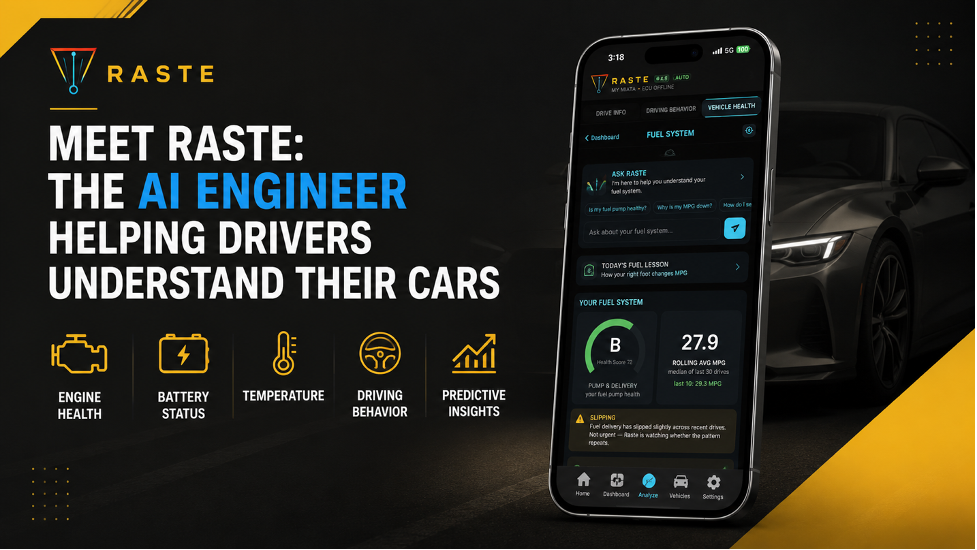
Today, artificial intelligence can teach almost anyone the basics of automotive engineering, regardless of where they begin. It can explain how an engine works, why a vehicle overheats, or what a warning light may indicate. But most drivers are not trying to become automotive engineers. They simply want to know whether their own car is healthy, whether a problem is serious, and whether an expensive repair being recommended is truly necessary. That is the gap Silicon Valley automotive engineer Ashish Ranjan set out to address through Raste.
For most vehicle owners, maintenance decisions are still based on fixed service schedules, dashboard warning lights, unusual sounds, or the advice of a repair shop. By the time a warning light appears or the vehicle begins behaving differently, the problem may already have become costly. Raste is designed to give drivers three important advantages:
- Earlier warnings: Drivers can identify developing issues before they turn into major breakdowns or leave them stranded on the roadside.
- Clearer guidance: Users receive practical information about what may be changing in their vehicle and what should be inspected.
- Better maintenance decisions: Instead of relying entirely on guesswork, drivers can decide when a problem needs urgent attention and when they need to continue monitoring it.
The platform can also help drivers feel more confident when dealing with service centers. Most vehicle owners do not have the technical knowledge to independently evaluate a recommendation involving hundreds or even thousands of dollars. When told that a component must be replaced, they may have little choice but to approve the repair, seek another opinion, or take the risk of continuing to drive. Raste gives them an additional source of information based on how their own vehicle has been performing. Talking to Raste’s AI chatbot can help users understand whether an issue appears urgent, what questions they should ask, and whether the available information supports the repair being proposed. The goal is not to replace mechanics, but to help drivers make better-informed decisions based on the vehicle data they already own.
This can be particularly valuable for people who depend on their vehicles for their livelihood. Rideshare drivers, delivery workers, and commercial fleets may drive several times more miles than an average vehicle owner. For them, an unexpected breakdown can lead to:
- Expensive and unplanned repairs
- Lost income and working hours
- Missed deliveries or customer appointments
- Vehicle downtime and operational disruption
- The risk of becoming stranded during a trip
Raste has already begun demonstrating its value among early adopters in these high-mileage categories by helping them monitor vehicle health continuously and respond to concerns before they become more disruptive and expensive.
Ashish developed the idea after working with complex engineering systems at the Department of Atomic Energy, Indian Space Research Organisation, the University of California, and Lucid Motors. Across these roles, he saw how engineers use data to understand whether a system is operating normally and to identify problems before failure. Through Raste, he is bringing that advantage to everyday vehicle owners. The company’s larger vision is simple: drivers should not need an engineering degree to understand the health of a machine they depend on every day. With Raste, they can have greater confidence in their vehicle, make better maintenance decisions, avoid unnecessary expenses, and receive an early warning when something may be going wrong.