


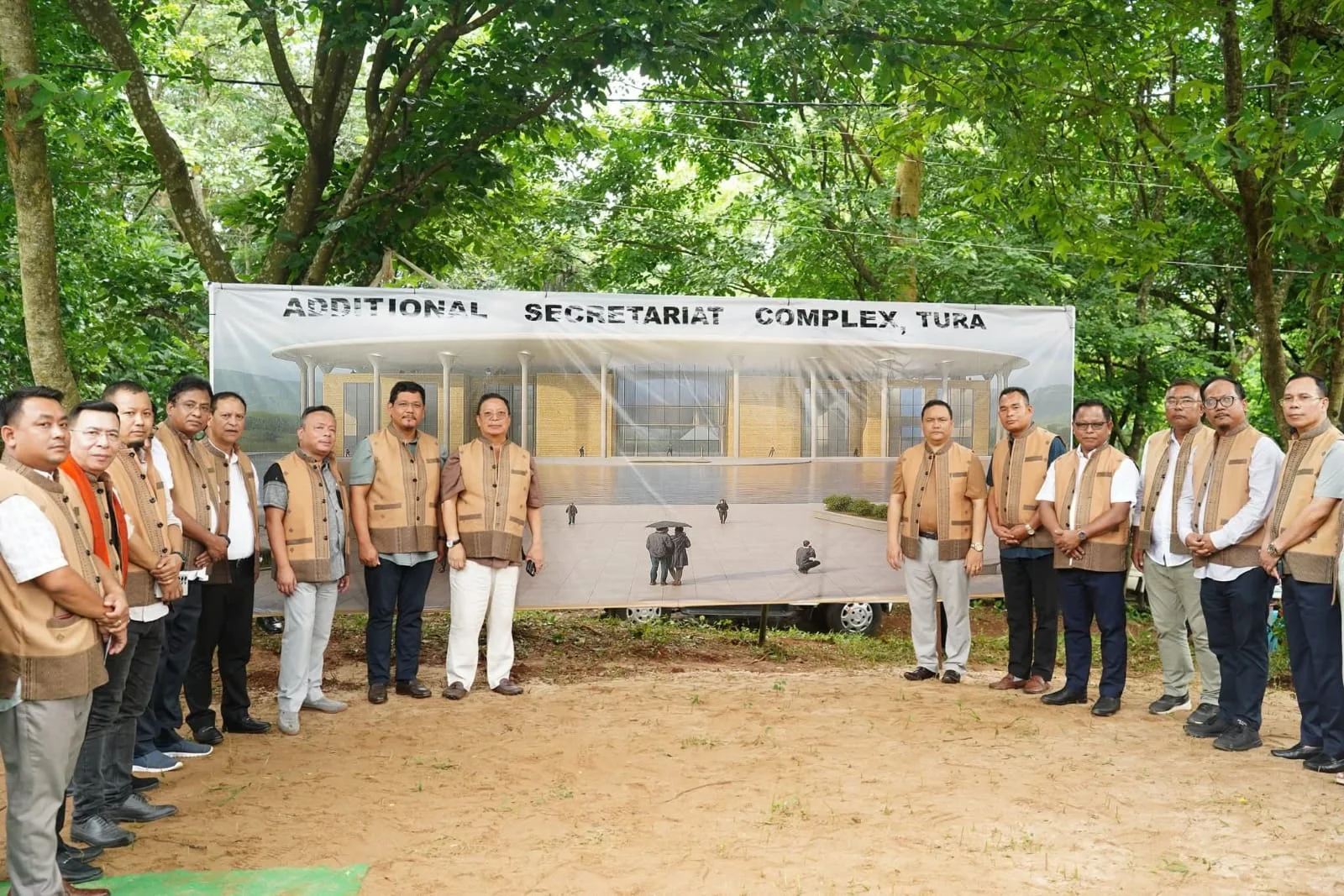
Meghalaya Chief Minister Conrad K. Sangma laid the first concrete pillar for the Additional Secretariat Complex in Tura on Friday, November 8. The ceremony marked a historic moment for the Garo Hills region. Which has long demanded enhanced government infrastructure and closer administrative access for citizens.
The event, attended by senior government officials, legislators, and members of the public, symbolized a new chapter in Meghalaya’s development journey. The upcoming Secretariat Complex aims to ease administrative pressure on Shillong and ensure that governance reaches every corner of the state.
A Vision for Balanced Governance Across Meghalaya
Speaking at the foundation-laying ceremony, Chief Minister Conrad K. Sangma highlighted the importance of creating robust administrative structures outside the state capital. He emphasized that the new complex will bring government services closer to the people of Garo Hills, ensuring efficiency and inclusivity in policy implementation.
Sangma said that Tura has witnessed steady growth in education, infrastructure, and public services. However, the absence of a full-fledged secretariat had limited the region’s administrative potential. The construction of this complex is part of the government’s broader effort to promote balanced development between the eastern and western regions of Meghalaya.
He added that the Additional Secretariat Complex will function as an administrative hub, enabling departments to operate directly from Tura and reducing dependency on Shillong for decision-making.
Boosting Administrative Efficiency and Public Service Delivery
The project, designed to accommodate multiple departments and offices, is expected to streamline governance in the region. The new infrastructure will facilitate smoother coordination between government. Further, wings and ensure faster delivery of public services.
Officials stated that the upcoming complex will include modern facilities, digital governance systems, and eco-friendly architecture, reflecting the government’s commitment to sustainable development.
With the rapid urbanization of Tura and its growing population, the Additional Secretariat Complex will also ease congestion at existing administrative offices and serve as a model of efficient urban planning.
The project aligns with the government’s long-term vision of transforming Tura into a regional administrative and economic hub for Garo Hills.
Empowering the Garo Hills Through Decentralization
Chief Minister Sangma reiterated that decentralization remains a key principle of his administration. The state government has been actively working to empower district and regional headquarters by strengthening institutional capacity.
He noted that the establishment of the new Secretariat Complex will not only benefit government employees but also the general public who often travel to Shillong for official work. “With this initiative, the people of Garo Hills will have easier access to essential government services right here in Tura,” Sangma said during his address.
The Chief Minister also expressed gratitude to the concerned departments, engineers. However, contractors for their efforts in preparing the groundwork for the project. He urged all stakeholders to ensure that the construction adheres to timelines and quality standards.
A Step Forward for Meghalaya’s Regional Development
The Additional Secretariat Complex at Tura reflects the government’s growing focus on regional equity. Over the past few years, Meghalaya has witnessed significant investments in road connectivity, education, healthcare, and public infrastructure across all districts.
The Tura project, according to officials, is part of a series of major initiatives to transform governance in the state. It is also expected to create employment opportunities during the construction phase and contribute to the local economy.
The move is widely seen as a response to the long-standing aspirations of the people of Garo Hills, who have called for better representation and access to government facilities.
Once completed, the complex will house administrative offices of key departments, meeting halls. And, technology-enabled workspaces designed to enhance transparency and accountability in governance.
Public Reception and Future Prospects
The foundation-laying ceremony received an overwhelming response from local residents and civil society organizations. Many expressed optimism that the project would strengthen connectivity between the people and the government.
Citizens welcomed the initiative as a symbol of empowerment for the Garo community. Moreover, as a step toward greater inclusion in the state’s development narrative.
Chief Minister Sangma reaffirmed the government’s commitment to completing the project within the stipulated timeframe and ensuring that it serves as a beacon of progress for future generations. He added that similar initiatives are being considered for other parts of the state to ensure holistic development.
A Milestone for Meghalaya’s Administrative Evolution
The laying of the foundation pillar at Tura marks not just the beginning of a construction project but a turning point in Meghalaya’s governance framework. It embodies the government’s promise of equitable development and decentralization of administrative power.
With the new complex, Tura is poised to emerge as a major center of governance and progress in western Meghalaya. The project stands as a testament to the state’s ongoing transformation under the leadership of Conrad K. Sangma.