


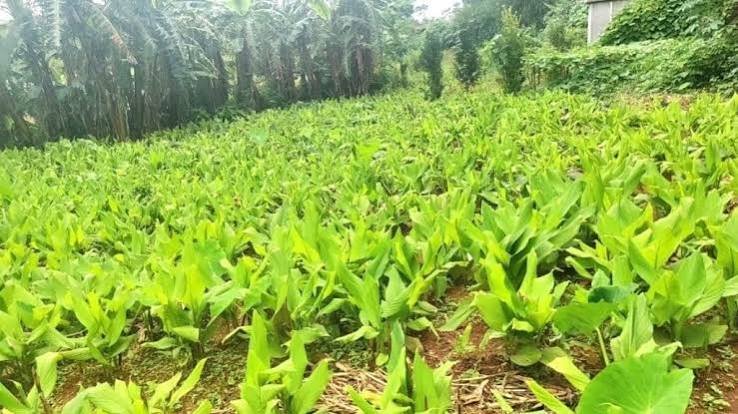
Meghalaya is strengthening its Lakadong turmeric value chain through new processing infrastructure, farmer-led enterprises and improved market access. The initiative aims to help growers in the Jaintia Hills move beyond selling raw turmeric and capture more value from their produce. The proposed centralised processing unit at Thadmuthlong C. Phramer village in West Jaintia Hills forms part of this broader effort. Meanwhile, authorities are reviewing existing facilities, product quality and certification requirements to improve the commercial prospects of the state’s famous turmeric.
Respiratory diseases in Mizoram: 721 deaths reported now
Lakadong Turmeric Processing Unit Project Gains Momentum
Meghalaya is taking further steps to develop a stronger processing network for Lakadong turmeric. On October 23, 2026, North Eastern Council (NEC) Secretary Satinder Kumar Bhalla visited West Jaintia Hills to review progress under the Integrated Lakadong Turmeric Value Chain Enhancement Project. The visit focused on processing infrastructure, cultivation, quality control and market opportunities for local farmers.
During the inspection, Bhalla visited the proposed site for a Centralised Processing Unit at Thadmuthlong C. Phramer village. The implementing team presented the proposed Curcumin Extraction Plant layout and explained the preparatory work. Officials were still working on detailed plans and cost estimates before moving towards the tendering process.
The project aims to strengthen the journey of Lakadong turmeric from farms to higher-value markets. Processing facilities can help farmers and producer organisations prepare turmeric for different commercial uses. These may include powdered turmeric, extracts and other products, depending on the machinery, approvals and production arrangements available at each facility.
However, infrastructure alone cannot guarantee higher earnings. Farmers also need reliable buyers, suitable packaging, quality testing and efficient transport. Therefore, the authorities are reviewing the entire value chain rather than focusing only on construction.
The NEC’s recent visit also highlighted the importance of learning from existing facilities. Officials and farmer representatives discussed practical challenges that affect processing operations and product sales. Their findings can help project teams address technical and administrative requirements before commissioning additional infrastructure.
The proposed centralised unit represents an important step in the region’s processing plans. Nevertheless, officials must complete the necessary preparation, procurement, construction and operational requirements before the facility can begin commercial production.
Lakadong Turmeric Processing Unit and Meghalaya’s Golden Spice Mission
The processing initiative forms part of Meghalaya’s wider strategy to establish Lakadong turmeric as a premium agricultural product. In July 2026, Union Minister Jyotiraditya M. Scindia and Meghalaya Chief Minister Conrad K. Sangma launched Mission Golden Spice, a ₹175.45-crore programme for integrated turmeric value-chain development.
The five-year initiative covers the 2025–2030 period. It seeks to strengthen cultivation, processing, branding, certification and market connections for Lakadong turmeric. The programme also brings together different government departments and institutions to address gaps that limit farmers’ returns.
Lakadong turmeric has earned a reputation for its distinctive qualities and high curcumin content. Curcumin is a naturally occurring compound that gives turmeric its characteristic yellow colour. The variety received a Geographical Indication (GI) tag in 2024, strengthening its identity as a product associated with Meghalaya.
However, a recognised geographical identity does not automatically translate into higher income for every grower. Farmers still need processing facilities, consistent quality standards and buyers willing to pay for the product’s distinctive characteristics. Consequently, Mission Golden Spice places importance on building a more complete commercial system.
The programme aims to encourage value addition within Meghalaya. Instead of relying mainly on sales of raw produce, farmer organisations and businesses can explore opportunities involving processed, packaged and branded products. Such activities can also create local employment in handling, grading, processing, packaging and distribution.
Moreover, a coordinated approach can help connect growers with institutions that support agricultural development, certification and marketing. These links are particularly important for small farmers who may struggle to access large markets independently.
The proposed centralised unit should therefore be understood as part of a wider development plan. Its long-term contribution will depend on how effectively it connects with existing farmer groups, processing facilities and buyers.
Existing Processing Facilities and Challenges for Lakadong Turmeric Farmers
Meghalaya already has processing infrastructure designed to support Lakadong turmeric growers. In August 2025, a bio-curcumin extraction unit was commissioned in the Laskein block of West Jaintia Hills. The ₹1.50-crore facility was developed under NEC-supported initiatives to create additional livelihood opportunities through turmeric processing.
According to reports at the time, the unit could process around 200 kilograms of dry turmeric per day. Its planned outputs included turmeric powder, oleoresin, curcumin and biocurcumin capsules. The project also linked 15 Collective Marketing Centres, representing approximately 600 farmer members, with the supply of raw and sliced turmeric.
The facility demonstrated how local processing can create opportunities beyond conventional crop sales. By converting raw material into products with additional commercial value, processing enterprises can serve a wider range of buyers. They may also support jobs in production and related activities.
However, the existence of a facility does not necessarily mean that it operates at full capacity. During the October 2026 review, officials also visited a bio-curcumin extraction unit operated by LIFE Spice Processing Cooperative Society Ltd. at Laskein. Reports said the unit had not started extraction operations because it was awaiting the required ISO certification.
This example highlights a major challenge for agricultural infrastructure projects. Equipment and buildings must go hand in hand with regulatory compliance, technical readiness and suitable operating arrangements. Otherwise, farmers may not receive the benefits that the investment intended to deliver.
At Shangpung Pohshnong, the NEC secretary also visited a processing unit operated by the Shangpung Farmers Union Collective Marketing Centre. Farmers raised concerns about a shortage of manure, which affects cultivation. The visit also covered packaging quality and compliance with export requirements.
Bhalla stressed the importance of appropriate packaging, traceability and branding. Batch coding can help businesses identify products and track individual production lots. In addition, consistent packaging and proper documentation can help reduce the risk of rejection by buyers.
These concerns show that the turmeric value chain needs support at several stages. Farmers require dependable agricultural inputs, while processing units need the necessary approvals and market-ready products. Stronger coordination across these areas will be essential to improve the sector’s performance.
How Better Processing Could Benefit Jaintia Hills Farmers
Improved processing infrastructure could create several opportunities for Lakadong turmeric growers in West Jaintia Hills and surrounding areas. First, collective processing and marketing can help farmer organisations aggregate produce from different villages. This approach may make it easier to manage quality and supply larger quantities to buyers.
Second, local processing can reduce dependence on selling unprocessed turmeric alone. Depending on demand and production costs, businesses may earn additional revenue from powder, extracts and other value-added products. Farmers could benefit when producer organisations share these gains through better procurement prices or other agreed arrangements.
However, higher retail prices do not automatically mean higher farm incomes. Processing businesses must cover expenses such as electricity, labour, packaging, transport, certification and maintenance. Therefore, transparent procurement systems and viable business plans remain essential.
Third, stronger branding could help distinguish authentic Lakadong turmeric from competing products. Its GI status provides a recognised identity, but businesses must maintain quality and follow applicable rules when using that identity. Traceability and consistent standards can help protect consumer confidence.
Furthermore, reliable processing and storage arrangements may help farmer groups manage their produce more effectively. Suitable facilities can support post-harvest handling and improve the preparation of turmeric for different buyers. The actual benefits, however, will depend on facility capacity, operating schedules and access for local growers.
Women and community-based farmer organisations could also play an important role in this development. Collective enterprises can create opportunities in processing, packaging, administration and marketing. With appropriate training and access to finance, these activities may broaden the economic benefits beyond cultivation alone.
Market access remains another priority. Domestic retailers, food manufacturers and international buyers may require different product specifications and documentation. As a result, farmers and cooperatives need guidance on standards, pricing and buyer requirements before expanding production for particular markets.
The next stage will require close coordination among the Meghalaya government, the NEC, farmer organisations and implementing agencies. Authorities must monitor construction timelines, secure necessary certifications and ensure that new facilities can operate sustainably.
Ultimately, the success of the Lakadong turmeric initiative will depend on measurable results. These include the volume of turmeric processed locally, the number of farmers using the facilities, reliable buyer relationships and improvements in farm-gate prices. Tracking such outcomes will help determine whether the expanding infrastructure delivers lasting benefits to rural communities.
Conclusion
Meghalaya’s efforts to strengthen Lakadong turmeric processing reflect a broader shift towards value addition and farmer-led agricultural development. The proposed Centralised Processing Unit at Thadmuthlong C. Phramer village forms part of this strategy. However, officials still need to complete the preparatory steps before the proposed facility can begin operations.
Existing processing centres and the Mission Golden Spice programme provide a foundation for developing the sector. At the same time, recent reviews have highlighted important challenges, including certification delays, packaging standards, traceability and shortages of agricultural inputs. Addressing these issues will be just as important as building new infrastructure.
For Lakadong turmeric farmers, the long-term objective is to secure better market access and a fairer share of the value generated by their crop. Effective processing, reliable buyers and transparent farmer participation could help achieve that goal. The impact will ultimately depend on whether the planned facilities become operational and deliver sustained commercial benefits to growers.
FAQs
1. What is the Lakadong turmeric processing unit project in Meghalaya?
It is part of Meghalaya’s broader effort to strengthen turmeric processing, value addition and market access. A proposed Centralised Processing Unit at Thadmuthlong C. Phramer village is included in the Integrated Lakadong Turmeric Value Chain Enhancement Project.
2. Where is the proposed centralised processing unit located?
The proposed facility is at Thadmuthlong C. Phramer village in West Jaintia Hills district, Meghalaya. Officials reviewed the site and project preparations in October 2026.
3. Why is Lakadong turmeric important to Meghalaya?
Lakadong turmeric is known for its distinctive characteristics and high curcumin content. It received a Geographical Indication tag in 2024, helping establish its identity as a distinctive product associated with Meghalaya.
4. How could processing facilities help Lakadong turmeric farmers?
Processing facilities can create opportunities to produce turmeric powder and extracts, improve product preparation and strengthen market connections. Farmers’ actual earnings will depend on operating costs, procurement prices, product quality and demand.
5. Has the proposed centralised processing unit started operations?
As of the latest available reports in October 2026, authorities were still preparing detailed plans and cost estimates for the proposed unit at Thadmuthlong C. Phramer village. The reports did not confirm its inauguration or the start of commercial operations.