


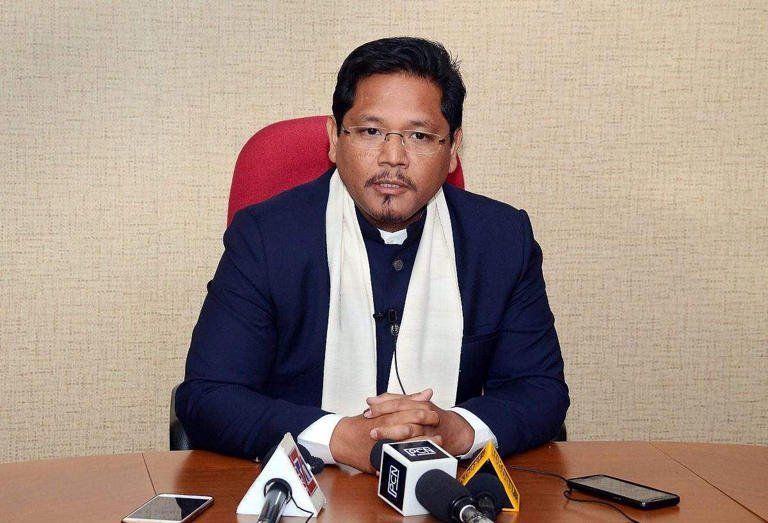
The Meghalaya NPP Assam Assembly poll strategy marks a significant shift in the political landscape of Northeast India. The National People’s Party (NPP), led by Conrad Sangma, has stepped into the Assam Assembly election fray with a larger goal that goes beyond immediate electoral gains. The party aims to expand its footprint across the Northeast and position itself as a strong regional force.
At a time when national parties dominate the electoral narrative in Assam, the NPP’s entry introduces a fresh dynamic. Moreover, the move reflects the party’s ambition to strengthen its influence outside Meghalaya. Political observers believe that this strategy could reshape alliances and voter equations in the region.
Read More: Mamata Banerjee Promises Free Legal Aid for Rejected Voters
Strategic expansion beyond Meghalaya
The NPP has already established itself as a key political player in Meghalaya. However, its decision to contest the Assam Assembly elections signals a broader regional vision. The party is not just seeking seats but also attempting to build a long-term presence in Assam.
Importantly, Assam shares strong cultural and political ties with neighboring states. Therefore, the NPP sees an opportunity to connect with voters who prefer regional representation. The party leadership believes that regional aspirations often get overshadowed by national narratives.
Furthermore, the NPP is focusing on constituencies where regional identity and local issues dominate political discourse. By doing so, the party hopes to carve out a niche among voters who feel underrepresented.
Leadership push and grassroots mobilisation
The role of Conrad Sangma remains central to this expansion strategy. Under his leadership, the party has emphasized development, governance, and regional cooperation. Consequently, the NPP is trying to replicate its Meghalaya model in Assam.
Party leaders have intensified grassroots mobilisation efforts. They are engaging with local communities, youth groups, and civil society organisations. Additionally, the NPP is highlighting issues such as infrastructure development, employment, and regional connectivity.
The party is also focusing on building a strong organisational structure in Assam. This includes appointing local leaders and strengthening booth-level networks. As a result, the NPP aims to establish a sustainable presence rather than a temporary electoral push.
Challenging established political players
The Assam Assembly elections are traditionally dominated by major parties like the BJP and Congress. However, the entry of the NPP introduces a competitive regional alternative. While the party may not immediately challenge these giants, it could influence vote shares in key constituencies.
Notably, the NPP’s presence may impact smaller regional parties as well. In some areas, it could split votes or create new alliances. Therefore, its participation adds complexity to the electoral contest.
At the same time, the party is positioning itself as a bridge between local aspirations and governance. This approach could attract voters who seek a balance between regional identity and development.
Focus on regional identity and development
One of the core aspects of the Meghalaya NPP Assam Assembly poll campaign is its emphasis on regional identity. The party is highlighting the unique cultural and social fabric of Assam. It is also advocating for policies that address local needs.
Additionally, development remains a key pillar of the NPP’s campaign. The party is promoting initiatives related to infrastructure, healthcare, and education. By combining identity politics with development goals, the NPP aims to appeal to a diverse voter base.
Moreover, the party is stressing the importance of regional cooperation among Northeast states. It argues that collaborative efforts can accelerate growth and improve connectivity. This narrative aligns with its broader vision of becoming a leading regional force.
Electoral challenges and opportunities
Despite its ambitions, the NPP faces several challenges in Assam. The state has a complex political landscape with strong party loyalties. Therefore, breaking into this environment will require sustained effort.
However, the party also sees opportunities. Changing voter preferences and the rise of regional consciousness could work in its favour. Furthermore, dissatisfaction with existing political options may open doors for new entrants.
The NPP is aware that success in Assam will not come overnight. Nevertheless, even a modest performance could strengthen its position in the Northeast. Over time, this could help the party build a broader regional coalition.
A long-term regional strategy
The Meghalaya NPP Assam Assembly poll initiative reflects a long-term strategy rather than a short-term gamble. The party aims to expand its influence across multiple states in the Northeast. By doing so, it hopes to emerge as a key regional player.
This approach also aligns with the evolving political landscape of India. Regional parties are increasingly playing a crucial role in shaping governance. Therefore, the NPP’s expansion could have wider implications beyond Assam.
In conclusion, the NPP’s entry into the Assam Assembly elections marks an important development in Northeast politics. While immediate electoral success remains uncertain, the party’s broader vision is clear. It seeks to build a strong regional identity, promote development, and expand its influence across state boundaries.
Read More: Tripura CM Unveils 28 TTAADC Candidates, Promises Tribal Development