


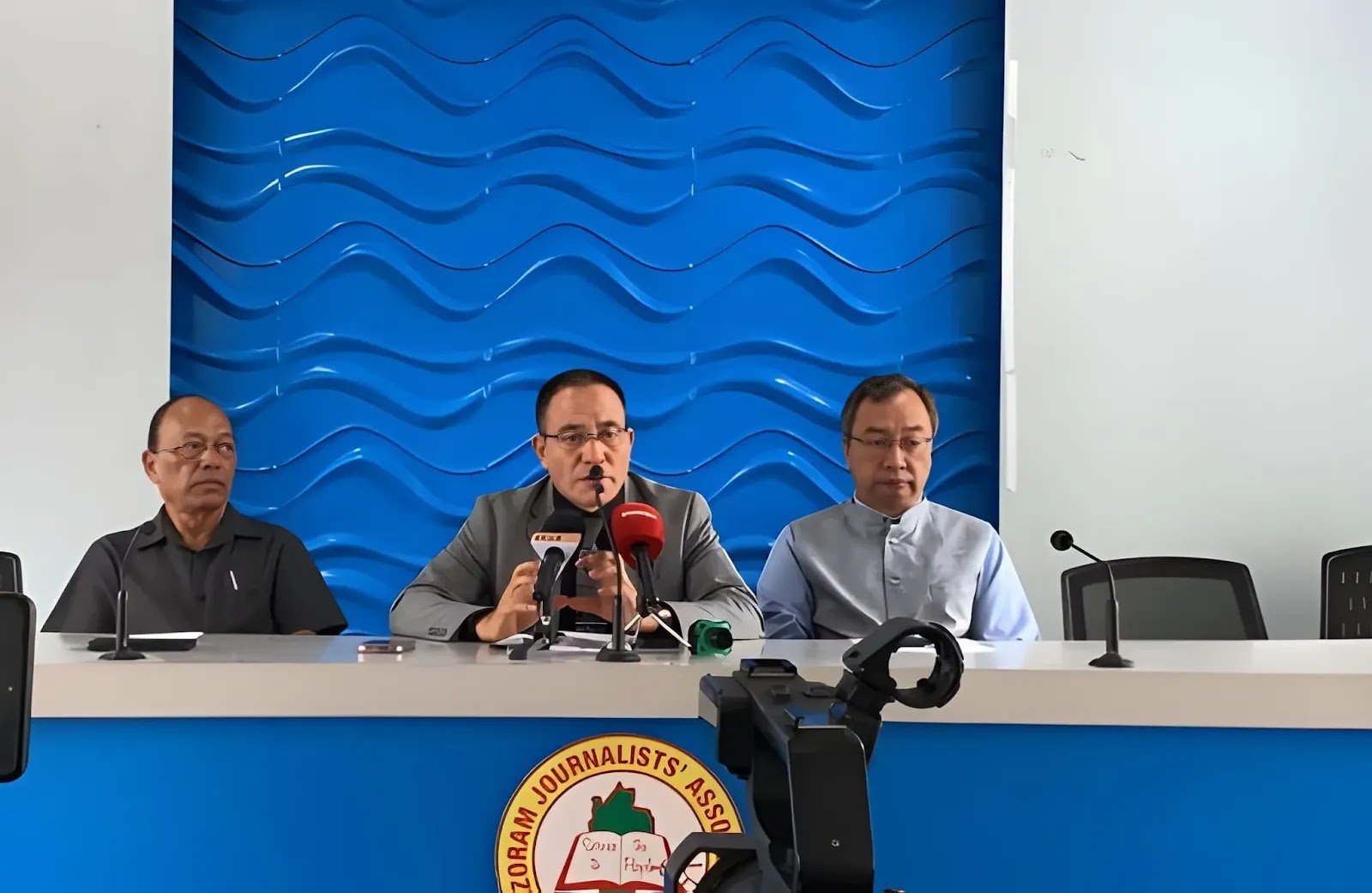
Mizoram’s major church bodies have joined the growing opposition to the proposed FCRA Amendment Bill 2026, raising concerns about provisions dealing with foreign-funded assets and regulatory oversight. The issue has gained political significance as church representatives engage with the state government and seek changes to provisions they consider problematic.
The proposed legislation seeks to amend the Foreign Contribution (Regulation) Act and introduce new rules for managing certain assets associated with organisations whose FCRA registration ends. Moreover, the Bill has generated debate over the balance between government oversight, financial accountability, and the autonomy of religious and charitable institutions.
Mizoram’s response has brought church organisations and the state government into closer consultation. However, opposition from church bodies does not mean the legislation has been rejected or that its final provisions have been settled.
Biren Singh Audio Controversy: NFSU Analysis Clears Former Manipur CM
Amendment Bill 2026 Draws Church Opposition
The Amendment Bill 2026 has prompted strong concerns among prominent church organisations in Mizoram.
Church representatives have argued that proposed changes could affect institutions that receive foreign contributions for permitted religious, charitable, educational, and social activities. Furthermore, they have sought greater clarity over how authorities would manage assets connected with foreign contributions.
The concerns have encouraged church bodies to coordinate their response.
However, the proposed legislation remains subject to the parliamentary process.
FCRA Amendment Bill 2026 Focuses on Foreign-Funded Assets
The Amendment Bill 2026 includes provisions concerning assets linked to organisations whose FCRA registration ends.
Under the proposed framework, a designated authority would supervise, manage, and potentially dispose of specified assets in circumstances such as cancellation, surrender, or non-renewal of FCRA registration. Additionally, the Bill includes provisions concerning places of worship covered by the proposed framework.
These provisions have become a major point of discussion in Mizoram.
However, the Bill does not create a separate legal framework specifically for Christian organisations.
FCRA Amendment Bill 2026 Raises Religious Institution Concerns
The FCRA Amendment Bill 2026 has attracted particular attention from religious institutions because of its potential implications for foreign-funded assets.
Church organisations in Mizoram play significant roles in community, educational, and charitable activities. Moreover, some institutions operate under the FCRA framework and therefore have an interest in proposed changes affecting registered organisations.
Church representatives have consequently sought safeguards for their institutions.
However, the precise effect of the proposed provisions would depend on how the law is ultimately enacted and implemented.
FCRA Amendment Bill 2026 Brings Churches and Government Together
The FCRA Amendment Bill 2026 has encouraged consultations between Mizoram’s church bodies and the state government.
Chief Minister Lalduhoma’s government has discussed the proposed legislation with representatives of major church organisations. Furthermore, the state has indicated that their concerns would be communicated to the Union Government.
The consultations provide a formal avenue for Mizoram to present its objections.
However, the state government cannot independently amend a central law.
FCRA Amendment Bill 2026 Creates Political Debate
The FCRA Amendment Bill 2026 has also intensified political debate in Mizoram.
Opposition parties have criticised aspects of the proposed legislation and called for stronger action from the state government. Meanwhile, the government has pursued consultations with church organisations and engagement with the Centre.
The issue has therefore moved beyond a purely legal discussion.
However, political statements should be distinguished from the Bill’s actual provisions.
FCRA Amendment Bill 2026 and Civil Society Organisations
The FCRA Amendment Bill 2026 has implications beyond religious institutions.
Non-governmental organisations and other eligible bodies that receive foreign contributions must comply with FCRA requirements. Additionally, changes to registration, asset management, or regulatory procedures could affect how organisations plan their operations.
This has made the proposed amendments relevant to the broader civil society sector.
However, the impact would differ depending on each organisation’s FCRA status and activities.
FCRA Amendment Bill 2026 Sparks Transparency Debate
The FCRA Amendment Bill 2026 has also generated a debate about financial transparency.
The government can argue that foreign contributions require effective oversight and accountability. Furthermore, clear rules concerning assets can help authorities determine how foreign-funded property should be handled when an organisation no longer holds a valid FCRA registration.
Critics, however, have questioned the extent of government control under the proposed framework.
The disagreement therefore involves both regulatory and institutional concerns.
FCRA Amendment Bill 2026 and Places of Worship
The Amendment Bill 2026 contains provisions relevant to places of worship.
The proposed framework states that where an asset under the authority’s control constitutes a place of worship, its religious character must be preserved. This provision has particular relevance to the concerns raised by church organisations in Mizoram.
Moreover, church bodies continue to seek clarification about how such provisions would operate in practice.
However, the final interpretation would depend on the legislation’s enacted language and subsequent rules.
Amendment Bill 2026 Keeps Centre-Mizoram Dialogue Open
The FCRA Amendment Bill 2026 has created another channel for dialogue between Mizoram and the Union Government.
Chief Minister Lalduhoma has sought engagement with central authorities over the concerns raised by church organisations. Additionally, church representatives have used the state government’s consultations to communicate their position.
Such discussions could influence the debate surrounding the proposed amendments.
However, consultation does not guarantee that the Centre will accept all recommendations from Mizoram.
FCRA Amendment Bill 2026 Faces Questions Over Implementation
The Amendment Bill 2026 has also raised questions about how its proposed provisions would work in practice.
Asset management can involve questions about ownership, valuation, administration, and the status of institutions. Furthermore, organisations may seek clarity about their rights and responsibilities when their FCRA registration changes.
These implementation questions could become important during parliamentary consideration.
However, detailed procedures may depend on rules or regulations issued after the legislation’s passage.
FCRA Amendment Bill 2026 Remains Under Parliamentary Process
The Amendment Bill 2026 has not yet reached its final legal form.
The Bill must proceed through the parliamentary process before it can become law. Moreover, parliamentary scrutiny can result in changes to proposed provisions.
Mizoram’s church organisations therefore have an opportunity to present their concerns while the legislative process continues.
However, the eventual text may differ from the current proposal.
FCRA Amendment Bill 2026 Could Shape Mizoram’s Political Debate
The Amendment Bill 2026 could remain an important political issue in Mizoram as discussions continue.
Church organisations have demonstrated their concern through consultations and public statements. Additionally, political parties can use the issue to debate the relationship between Mizoram’s institutions and the Union Government.
The controversy could therefore extend beyond the immediate legislative discussion.
However, its longer-term political impact will depend on subsequent developments.
Conclusion
The Amendment Bill 2026 has brought major church organisations in Mizoram together in raising concerns about proposed changes to foreign-contribution regulations. Their objections focus particularly on provisions involving foreign-funded assets, government oversight, and the potential impact on religious and charitable institutions.
Moreover, the Mizoram government has consulted church representatives and indicated that their concerns will be conveyed to the Centre. However, the Bill remains part of the parliamentary process, and its final provisions could change before enactment.
Overall, the Amendment Bill 2026 has become a significant issue in Mizoram’s political and civil society debate. Continued consultations between church bodies, the state government, and the Union Government will determine whether the concerns raised in Mizoram lead to changes in the proposed legislation.
FAQs
1. Why are Mizoram churches concerned about the FCRA Amendment Bill 2026?
Church organisations have raised concerns about proposed rules concerning foreign-funded assets and regulatory oversight of organisations covered by the FCRA.
2. Does the Bill specifically target churches?
No. The proposed amendments apply to organisations covered by the FCRA framework rather than establishing a separate law specifically for churches.
3. What is the main issue concerning foreign-funded assets?
The proposed legislation creates a framework for managing certain assets when an organisation’s FCRA registration ends under specified circumstances.
4. Has the Mizoram government opposed the Bill?
The state government has consulted church organisations and indicated that their concerns would be communicated to the Union Government.
5. Is the FCRA Amendment Bill 2026 already law?
No. The Bill remains subject to the parliamentary process, and its final provisions may change before enactment.