


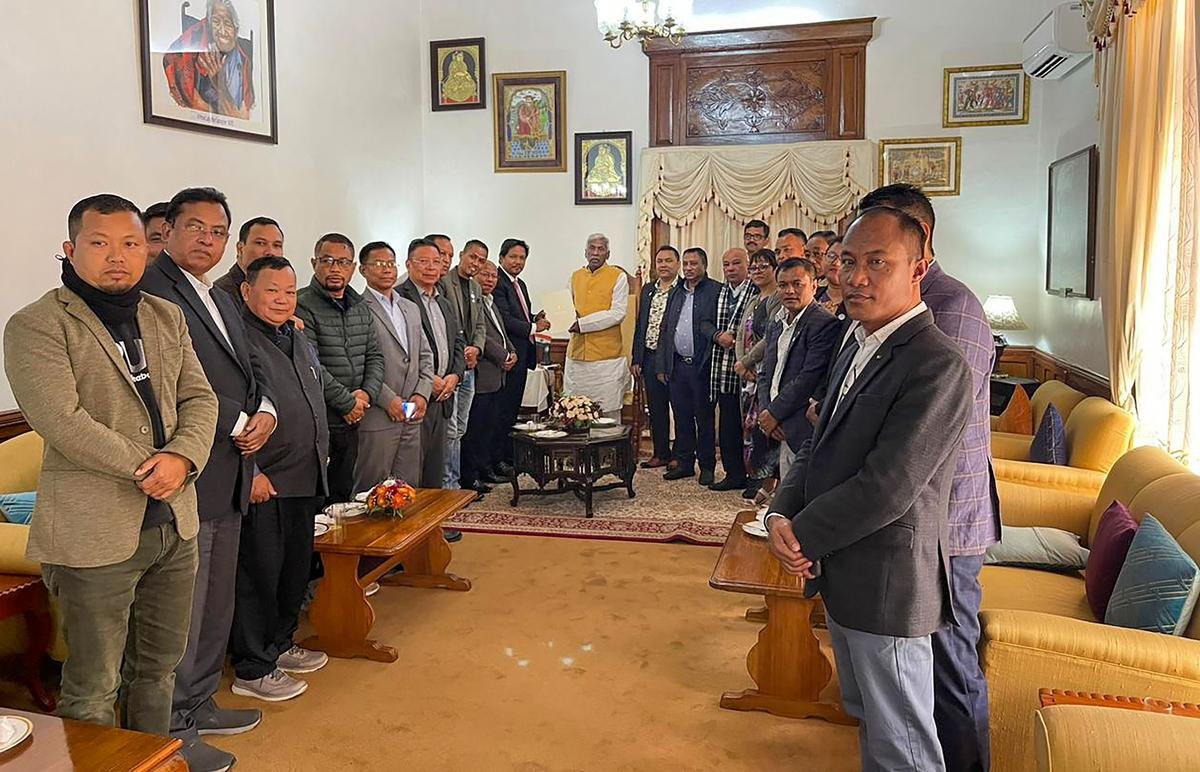
The Naga Hostage Release Demand has gained significant momentum after Nagaland Chief Minister Neiphiu Rio and Meghalaya Chief Minister Conrad K. Sangma publicly called for the immediate release of six Naga hostages. Their appeal follows recent developments in efforts to ease regional tensions and promote humanitarian solutions. Moreover, both leaders emphasized the importance of reciprocal actions that could strengthen trust, support peace-building initiatives, and encourage constructive dialogue among affected communities.
Chunjanglung Panmei Naga Martyr Declaration Draws Emotional Response in Manipur
Manipur Governor Kuki-Zo Meetings Focus on Governance and Coordination
Naga Hostage Release Demand Receives High-Level Support
The Naga Hostage Release Demand has attracted renewed attention after two prominent Northeast chief ministers publicly advocated for the immediate release of six Naga hostages. The appeal reflects growing efforts to address humanitarian concerns and reduce tensions in affected regions.
Moreover, the involvement of senior political leaders has elevated the issue within regional discussions, highlighting the importance attached to securing the safe return of the individuals involved.
Neiphiu Rio Calls for Immediate Action
Nagaland Chief Minister Neiphiu Rio has reiterated his appeal for the prompt release of the six Naga hostages. Consequently, his statement has reinforced ongoing calls from civil society groups and community leaders seeking a peaceful resolution.
Additionally, Rio emphasized the humanitarian dimension of the issue, stressing the need to prioritize the welfare and safety of those being held.
Conrad Sangma Backs the Appeal
Meghalaya Chief Minister Conrad K. Sangma has also publicly supported the Naga Hostage Release Demand. Therefore, the appeal has gained broader regional backing beyond Nagaland.
Furthermore, support from multiple state leaders reflects a shared concern for stability and peace across the Northeast. Collaborative appeals can often strengthen efforts aimed at resolving sensitive situations.
Demand Linked to Recent Humanitarian Developments
The latest appeal comes shortly after the release of 14 Kuki civilians who had been detained for 27 days. Consequently, many stakeholders view the current demand as a call for a reciprocal humanitarian gesture.
Moreover, reciprocal actions are frequently seen as confidence-building measures that can contribute to improving relations among communities affected by conflict and mistrust.
Civil Society Organizations Continue Advocacy
The Naga Hostage Release Demand has also been strongly supported by various Naga civil society organizations. Therefore, public pressure for a resolution has continued to grow.
Additionally, civil society groups often play an important role in maintaining dialogue, promoting humanitarian concerns, and advocating for peaceful outcomes during periods of tension.
Humanitarian Concerns Remain Central
A major focus of the appeal is the welfare of the six individuals still being held. Consequently, leaders have emphasized that humanitarian considerations should take precedence over broader disputes.
Furthermore, ensuring the safe return of hostages remains a priority for affected families and communities who continue to await positive developments.
Regional Leaders Stress Peaceful Solutions
Both chief ministers have highlighted the importance of peaceful and constructive engagement. Therefore, the Naga Hostage Release Demand has been framed as part of broader efforts to encourage reconciliation and stability.
Moreover, peaceful solutions often help prevent escalation and create opportunities for meaningful dialogue among stakeholders.
Confidence-Building Measures Encouraged
The appeal for the release of the hostages is widely viewed as a confidence-building initiative. Consequently, many observers believe that a positive response could contribute to reducing tensions and strengthening trust.
Additionally, confidence-building measures often serve as important steps toward longer-term conflict resolution and community cooperation.
Families Await Positive Outcome
Families of the six Naga hostages continue to hope for their safe and immediate release. Therefore, the issue remains deeply personal for those directly affected by the situation.
Moreover, community support for the families has remained strong, with many organizations and leaders continuing to advocate on their behalf.
Future Dialogue Seen as Essential
The Naga Hostage Release Demand underscores the importance of continued dialogue among all concerned parties. Meanwhile, leaders and civil society groups remain focused on achieving a peaceful resolution.
Furthermore, sustained communication and mutual understanding are often critical components of successful peace-building efforts in regions facing complex challenges.
Conclusion
The Naga Hostage Release Demand has gained considerable momentum following public appeals from Nagaland Chief Minister Neiphiu Rio and Meghalaya Chief Minister Conrad K. Sangma. Their calls for the immediate release of six Naga hostages have added significant political weight to ongoing humanitarian efforts and reinforced the urgency of finding a peaceful solution. The appeal reflects a shared commitment among regional leaders to promote stability, protect civilian welfare, and encourage confidence-building measures.
Moreover, the demand comes at a time when recent humanitarian developments have demonstrated the potential for constructive actions to reduce tensions. The release of detained civilians has generated hopes that reciprocal gestures can further strengthen trust and support reconciliation efforts. Such initiatives often play an important role in creating conditions conducive to dialogue and long-term peace.
Furthermore, the continued involvement of civil society organizations, community leaders, and state governments highlights the broad support for a humanitarian resolution. As families await positive news and stakeholders pursue engagement, the Naga Hostage Release Demand remains a significant issue in the Northeast. Overall, the appeal underscores the importance of cooperation, empathy, and peaceful dialogue in addressing complex community challenges.
FAQs
Q1. What is the Naga Hostage Release Demand?
The Naga Hostage Release Demand refers to public calls for the immediate release of six Naga hostages currently being held.
Q2. Which leaders have supported the demand?
Nagaland Chief Minister Neiphiu Rio and Meghalaya Chief Minister Conrad K. Sangma have publicly called for the hostages’ release.
Q3. Why has the issue gained attention recently?
The appeal follows recent humanitarian developments, including the release of 14 Kuki civilians after 27 days of detention.
Q4. Why are leaders describing the release as important?
Leaders believe the release would serve as a humanitarian and confidence-building measure that could help reduce tensions.
Q5. How does the Naga Hostage Release Demand relate to peace efforts?
The Naga Hostage Release Demand is viewed as part of broader efforts to promote dialogue, reconciliation, and regional stability.