


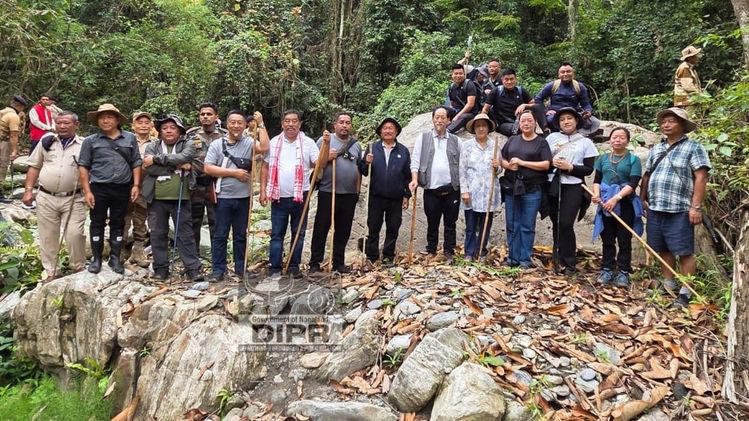
Lower Tizu development projects came under focus as a high-level delegation from the Nagaland government visited the region. The team acted under the guidance of Neiphiu Rio and aimed to assess ongoing initiatives.
Officials inspected several key projects. These included infrastructure, connectivity, and welfare schemes. The visit reflects the government’s push to accelerate development in remote areas.
Local authorities accompanied the delegation. They provided updates on progress and challenges. As a result, the visit offered a comprehensive review of the situation on the ground.
The initiative highlights the importance of monitoring. It also shows the government’s commitment to balanced regional growth.
Read More: Sikkim Launches Call of the Himalaya Trek to Boost Tourism
Delegation assesses infrastructure and connectivity projects
The delegation closely examined infrastructure works in Lower Tizu. Roads, bridges, and public facilities formed the main focus areas. Officials reviewed construction quality and timelines.
Connectivity remains a major concern in the region. Therefore, improving road networks has become a priority. Better connectivity can support economic activities and access to services.
The team also interacted with engineers and contractors. They discussed project delays and possible solutions. This interaction aimed to ensure timely completion.
Officials emphasised accountability during the review. They urged all stakeholders to maintain quality standards. As a result, the visit is expected to improve implementation efficiency.
Focus on welfare schemes and public services
Lower Tizu development projects also include several welfare initiatives. The delegation reviewed schemes related to health, education, and livelihoods. These programmes aim to improve living conditions.
Officials visited local institutions such as schools and health centres. They assessed the availability of basic services. Feedback from residents played an important role.
The team noted both progress and gaps. In some areas, services have improved significantly. However, certain challenges still remain.
Authorities have assured that issues will be addressed. They have promised better delivery of services. This commitment aims to strengthen public trust.
Community interaction highlights local concerns
A key part of the visit involved interaction with local communities. Residents shared their experiences and expectations. They also highlighted challenges faced in daily life.
Common concerns included connectivity, employment, and access to services. People requested faster implementation of projects. They also asked for better communication from authorities.
The delegation listened to these concerns carefully. Officials noted the issues for further action. This engagement reflects a participatory approach to governance.
Community leaders welcomed the visit. They expressed hope for faster development. Such interactions help build trust between citizens and government.
Government stresses timely completion of projects
The delegation stressed the need for timely completion of Lower Tizu development projects. Delays can affect both cost and public benefit. Therefore, officials urged strict adherence to timelines.
They also emphasised regular monitoring. Continuous review can help identify issues early. This approach ensures smoother execution.
Authorities highlighted the importance of coordination. Different departments must work together effectively. Strong coordination can improve results.
Officials have also warned against negligence. They have asked agencies to maintain transparency. These measures aim to improve accountability.
Boost to regional development expected
The review of Lower Tizu development projects is expected to boost regional growth. Improved infrastructure can enhance economic opportunities. It can also attract investment.
Better connectivity will help local businesses. Farmers and traders can access wider markets. This development can improve livelihoods.
Welfare schemes will also contribute to progress. Improved health and education services can raise living standards. Therefore, the impact of these projects will be significant.
Experts believe such visits play a key role. They ensure that policies translate into action. As a result, development becomes more effective.
Strategic importance of Lower Tizu region
Lower Tizu holds strategic importance for Nagaland. Its location and resources make it vital for development planning. Therefore, focused attention on the region is necessary.
The government aims to integrate remote areas into the growth process. Development in such regions reduces inequality. It also strengthens overall progress.
Officials have highlighted long-term goals. These include sustainable development and community empowerment. The current review aligns with these objectives.
The visit reflects a broader vision. It shows the government’s intent to reach every part of the state.
Conclusion
The review of Lower Tizu development projects by the delegation under Neiphiu Rio marks an important step in governance. The visit has provided valuable insights into progress and challenges.
By focusing on infrastructure, welfare, and community engagement, the government aims to ensure balanced growth. The emphasis on accountability and timely completion will improve outcomes.
As follow-up actions take shape, the region may witness faster development. The initiative highlights the importance of active monitoring and inclusive planning.
Ultimately, the visit reinforces the commitment to improving lives in remote areas. Lower Tizu development projects now stand at a crucial stage, with expectations of meaningful progress in the near future.
Read More: PM Modi to inaugurate HPCL refinery in Rajasthan on April 21