


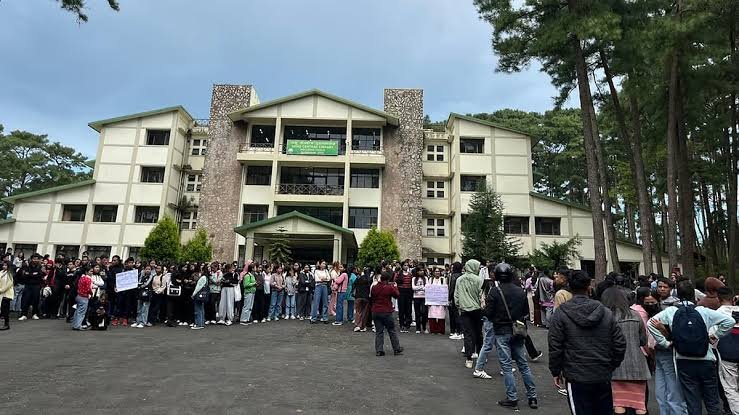
The NEHU hostel infrastructure protest drew attention in Shillong on August 24 as the North-Eastern Hill University Students’ Union staged a sit-in demanding better hostel facilities. Students used the protest to highlight concerns over accommodation and campus infrastructure. Moreover, the demonstration placed student welfare and living conditions at the centre of discussions at the university. The students’ demands now put greater focus on the need for improvements in hostel facilities.
Agartala Airport Expansion: AAI Sanctions ₹120 Crore for International Cargo Facilities
NEHU Hostel Infrastructure Protest Brings Student Demands Forward
The NEHU Students’ Union organised the sit-in on August 24 to demand better hostel infrastructure at North-Eastern Hill University in Shillong. The demonstration reflected concerns among students regarding the condition and availability of essential accommodation facilities.
Hostels form an important part of university life, particularly for students who come from outside Shillong. Therefore, adequate accommodation can directly affect students’ daily routines, comfort and overall campus experience.
Furthermore, hostel infrastructure involves more than accommodation alone. Students depend on suitable facilities and properly maintained common areas to manage their academic and personal routines effectively.
The sit-in consequently gave students a platform to publicly raise their concerns and seek attention from university authorities.
NEHU Hostel Infrastructure Protest Focuses on Better Facilities
The students’ demand for improved hostel infrastructure highlights the broader importance of campus facilities in higher education. Students require reliable accommodation so they can focus on their studies without facing unnecessary difficulties in their living arrangements.
Additionally, universities need to maintain residential facilities as student populations and infrastructure requirements change. Regular maintenance can help address problems before they become larger concerns.
The protest also demonstrates the role of student unions in communicating collective concerns. Through organised demonstrations such as sit-ins, students can bring specific campus issues to the attention of administrators.
Meanwhile, constructive communication between students and university authorities can help identify practical solutions. Discussions can clarify which infrastructure problems require immediate attention and which improvements need longer-term planning.
NEHU Hostel Infrastructure Protest Puts Student Welfare in Focus
Student welfare remains closely connected to the quality of campus infrastructure. For residential students, hostels effectively become an extension of the university environment.
Consequently, inadequate facilities can create difficulties beyond accommodation itself. Students may experience disruptions to their daily routines, particularly when basic infrastructure requires improvement.
Moreover, better hostel facilities can contribute to a more supportive academic environment. When students have suitable residential conditions, they can devote greater attention to classes, assignments and other university activities.
The August 24 sit-in therefore brought a wider campus issue into focus. Rather than treating hostel facilities as a secondary concern, the protest highlighted their importance to students’ overall university experience.
At the same time, university authorities can use student feedback to understand infrastructure priorities. Regular consultation can help institutions respond to emerging concerns more effectively.
NEHU Hostel Infrastructure Protest Could Encourage Institutional Action
The sit-in has increased attention on the condition of hostel infrastructure at NEHU. The next stage will depend on how university authorities respond to the students’ demands and whether discussions lead to concrete improvements.
Furthermore, addressing infrastructure concerns can require planning, funding and coordination. Authorities may need to assess existing facilities, identify urgent requirements and establish realistic timelines for improvements.
Students, meanwhile, can continue communicating their concerns through recognised institutional channels. Constructive engagement can help both sides work toward solutions while keeping student welfare at the centre of discussions.
The protest also highlights a broader challenge faced by universities across India: maintaining campus infrastructure while meeting the needs of growing student communities.
Therefore, the NEHU hostel issue could encourage greater attention to residential facilities and student welfare at the institution. Effective follow-up will remain important to ensure that concerns raised during the August 24 sit-in receive appropriate consideration.
Conclusion
The NEHU hostel infrastructure protest on August 24 highlighted student concerns about hostel facilities at North-Eastern Hill University in Shillong. The Students’ Union used a sit-in to demand better infrastructure and draw attention to student welfare. Moreover, meaningful dialogue between students and university authorities can help identify priorities and develop practical improvements for campus accommodation.
FAQs
1. What happened at NEHU on August 24?
The North-Eastern Hill University Students’ Union staged a sit-in in Shillong demanding better hostel infrastructure.
2. Why is hostel infrastructure important for university students?
Suitable hostel facilities provide students with a supportive living environment and can contribute to their overall academic experience.
3. Who organised the protest?
The NEHU Students’ Union organised the sit-in.
4. What did the students demand?
The students demanded improvements to hostel infrastructure and better residential facilities.
5. What could happen after the protest?
University authorities may consider the students’ concerns, assess infrastructure requirements and engage with student representatives over possible improvements.