


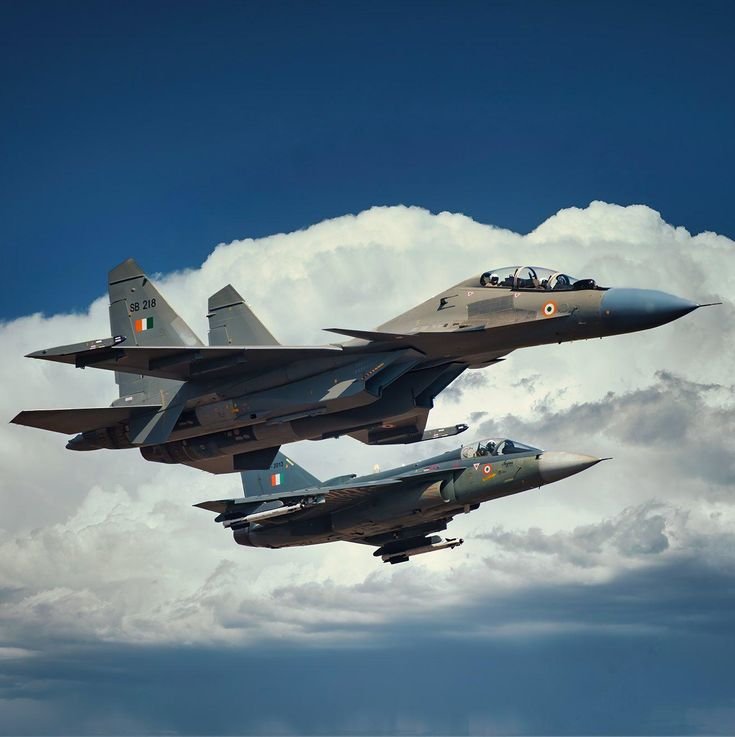
The Indian Air Force (IAF), together with the Indian Army and Indian Navy, will conduct a major Northeast India military exercise from November 13 to 20, 2025. The complex maneuvers aim to test readiness across land, air and sea domains in the strategically sensitive region.
This large-scale operation comes as regional tensions and border dynamics evolve rapidly. It signals a clear message that India’s defence forces are ramping up their operational posture in the northeast.
Why This Northeast India Military Exercise Matters
Strategic Focus and Border Readiness
The exercise will unfold in the northeastern sector bordering multiple neighbours — including China, Bhutan, Myanmar and Bangladesh. The IAF has already issued a rather wide-ranging Notice to Airmen (NOTAM) for the region.
By deploying the Army, Navy and Air Force in joint operations, the exercise strengthens India’s readiness to respond swiftly across terrains and threats. Analysts say this demonstrates India’s commitment to dual-front preparedness and integrated defence posture.
Multi-Domain Training Across Services
While official details remain sparse, reports indicate that the exercise will include advanced fighter aircraft, air-defence units, logistics support, amphibious operations and coordinated missions across all three services.
Such integration ensures that the IAF, Army and Navy can operate in sync — crucial in high-stakes scenarios involving air, land and maritime elements.
Key Components of the Drill
Aerial and Air-Defence Operations
The IAF will deploy its assets for forward deployment and high-tempo sorties in the region’s challenging terrain. The NOTAM suggests multiple dates and phases running through November-January.
Army and Navy Joint Manoeuvres
The Army and Navy will participate in land and maritime operations. On-shore coordination with air assets will test amphibious readiness, logistics, and service interoperability. A government press release references shore-based carrier operations and combined units.
Logistics, Connectivity and Rapid Deployment
One emphasis of the exercise will be rapid mobilization and supply chain resilience. In the northeastern region, infrastructure constraints pose real challenges. This drill provides an opportunity to validate systems under realistic conditions.
Regional and Diplomatic Implications
Message to Neighbours and Strategic Deterrence
Holding a major exercise in the northeast — rather than only on India’s western frontier — broadens the scope of strategic messaging. It underscores that India views the entire eastern front as critical to national security.
Infrastructure and Dual-Use Benefits
Beyond immediate military gains, such exercises can accelerate infrastructure investments — roads, airfields, logistics hubs — which often serve civilian and development needs too. The northeast’s connectivity can benefit as a by-product.
Public Awareness and Civil Coordination
Large drills inevitably affect local communities: airspace restrictions, transport disruptions and heightened security presence. Effective communication with the public and civil authorities is vital to maintain support and minimise inconvenience.
Challenges and What to Watch
- Terrain & weather: The northeast region features complex terrain and diverse climates which can challenge large-scale operations.
- Coordination across services: Despite frequent joint drills, real-world interoperability always remains a work in progress.
- Infrastructure readiness: While major bases exist, some forward areas may still lack robust connectivity or support facilities for sustained operations.
- Diplomatic interplay: Guarding against escalation is important — visible drills can be mis-interpreted by neighbours if not contextualised carefully.
What This Means for the Northeast
For the people and states of India’s northeast, this military exercise promises both symbolic and practical implications. On one hand, it reflects recognition of the region’s strategic importance. On the other, it could catalyse further infrastructure development, employment opportunities and heightened civil-defence awareness.
Policymakers and local stakeholders should monitor how the exercise’s footprint interacts with local economies, transport systems and community life. If executed smoothly, it may pave the way for enhanced security-development linkages in a region long viewed as marginalised.
READ MORE: Assam Semiconductor Facility Marks a Turning Point for Northeast India