


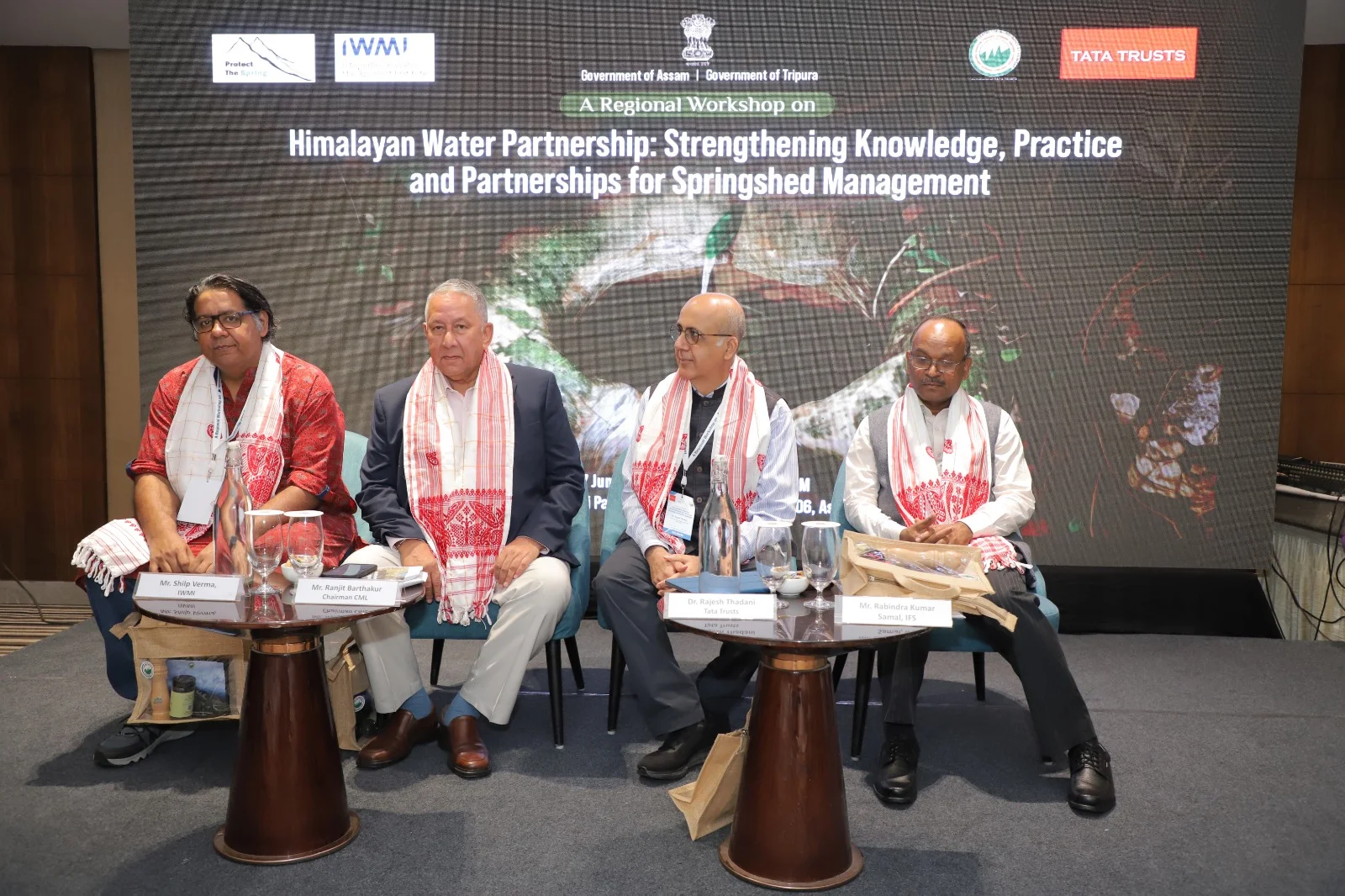
The Northeast Regional Institute of Water and Land Management (NERIWALM) has organized a watershed conservation workshop to promote sustainable management of water resources and land ecosystems across the region. The program brought together experts, researchers, government officials, and stakeholders to discuss innovative strategies for preserving watersheds and ensuring long-term environmental sustainability. Moreover, officials stated that the workshop aims to strengthen awareness and encourage scientific approaches to resource management. The initiative highlights the increasing importance of integrated conservation practices in Northeast India.
Manipur Weights and Measures Department Cracks Down on Unscrupulous Traders Altering Digital Scales
Assam Tightens Security Networks Significantly for Upcoming National Competitive Re-Examinations
Experts Discuss Sustainable Watershed Management Practices
Northeast regional institute of water and land management holds watershed conservation workshop to enhance understanding of sustainable resource management. Consequently, participants are exchanging ideas on protecting catchment areas and improving water security.
The workshop features sessions on soil conservation, rainwater harvesting, and ecosystem restoration. Moreover, specialists are sharing insights into best practices for maintaining ecological balance. Therefore, stakeholders are expected to gain valuable knowledge for future conservation efforts.
Officials emphasized that healthy watersheds are essential for supporting agriculture, biodiversity, and rural livelihoods. Furthermore, scientific planning can help address challenges associated with climate change and land degradation. As a result, integrated management strategies are receiving increased attention.
Meanwhile, technical presentations and interactive discussions are being conducted throughout the program. Consequently, collaboration among experts is being strengthened.
Focus on Water Security and Environmental Protection
Northeast regional institute of water and land management holds watershed conservation workshop with the objective of improving water resource management. Moreover, watersheds play a vital role in maintaining river systems and groundwater reserves. Therefore, their conservation has become increasingly important.
Participants are examining methods to reduce soil erosion and enhance water retention capacity. Consequently, communities may benefit from improved water availability and ecosystem health. Such measures contribute to sustainable development.
Furthermore, the workshop highlights the importance of community participation in conservation programs. As a result, local stakeholders are expected to become more actively involved in environmental protection initiatives.
Meanwhile, awareness regarding climate resilience and sustainable land use is being promoted. Similarly, resource-efficient practices are being encouraged.
Strengthening Research and Capacity Building
The Northeast regional institute of water and land management holds watershed conservation workshop to strengthen research and capacity-building efforts. Moreover, knowledge sharing among institutions is essential for addressing environmental challenges. Therefore, collaborative learning has been prioritized.
Experts are discussing emerging technologies and innovative approaches for monitoring watersheds. Consequently, scientific tools can be utilized more effectively in conservation planning. Such advancements improve the efficiency of environmental management.
Furthermore, training opportunities for professionals and field workers are being emphasized. As a result, technical capabilities are expected to improve.
Meanwhile, partnerships with academic and research institutions are being expanded. Similarly, interdisciplinary approaches are being encouraged.
Promoting Long-Term Ecological Sustainability
The workshop reflects the growing commitment to ensuring ecological sustainability in Northeast India. Moreover, conserving watersheds supports biodiversity and strengthens climate resilience. Therefore, integrated resource management remains a priority.
Officials stated that sustainable watershed management is essential for balancing development and environmental protection. Consequently, policy frameworks are expected to increasingly incorporate conservation principles. Such approaches support long-term ecological health.
Furthermore, future workshops and outreach programs are being planned. As a result, awareness regarding resource conservation is likely to expand.
Meanwhile, stakeholders are exploring opportunities for joint initiatives. Similarly, community-based conservation efforts are receiving support.
Conclusion
Northeast regional institute of water and land management holds watershed conservation workshop, marking an important effort to promote sustainable water and land resource management. Moreover, the event provides a valuable platform for experts and stakeholders to exchange knowledge and best practices.
The initiative is expected to strengthen research, capacity building, and environmental awareness. Therefore, it contributes significantly to ecological sustainability and climate resilience in the Northeast.
As the Northeast regional institute of water and land management holds watershed conservation workshop, it underscores the importance of scientific and community-driven approaches to conserving natural resources.
FAQs
1. Who organized the watershed conservation workshop?
The Northeast Regional Institute of Water and Land Management (NERIWALM).
2. What was the objective of the workshop?
To promote sustainable water and land resource management.
3. What topics were discussed?
Soil conservation, rainwater harvesting, and ecosystem restoration.
4. Why are watersheds important?
They support water security, agriculture, and biodiversity.
5. How does the workshop benefit stakeholders?
It enhances knowledge sharing and capacity building.