


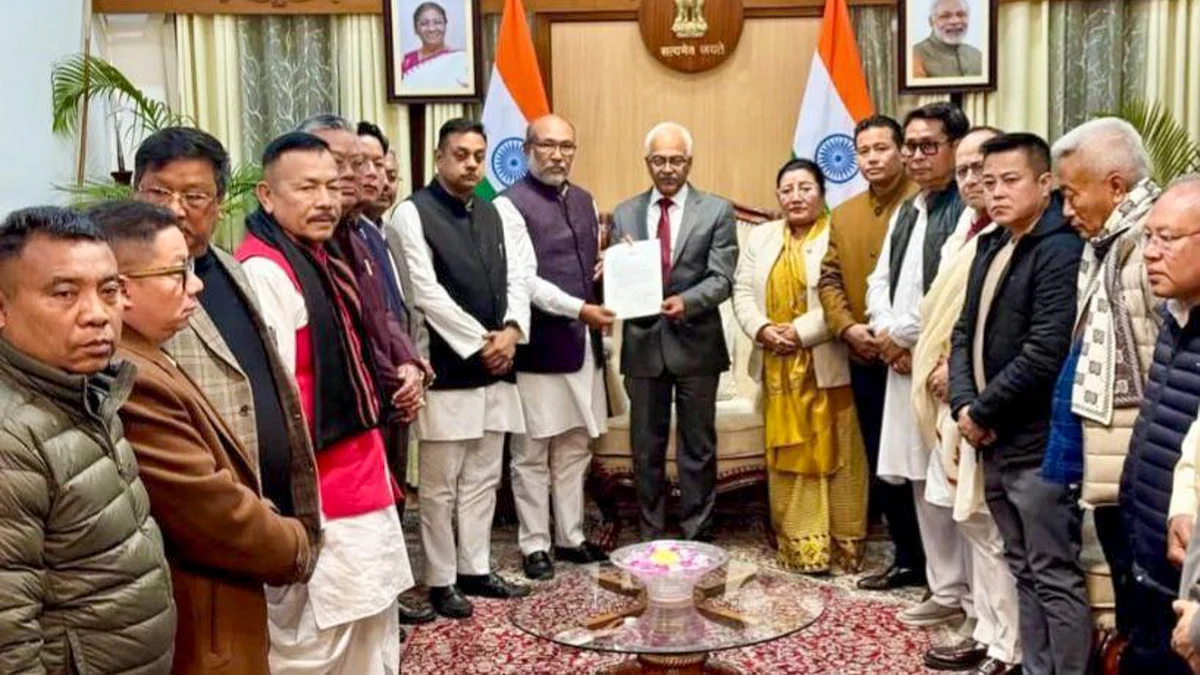
The Manipur political blame exchange has intensified after Congress leaders criticized Naga People’s Front (NPF) Manipur Unit President Awangbow Newmai over his remarks blaming previous Congress governments for the state’s structural breakdown. The latest statements have added to the ongoing political debate surrounding governance, security, and administrative challenges in Manipur. Meanwhile, political parties continue presenting their respective positions as public discussions over the state’s recent history and future policy direction gather momentum.
Assam Flood Situation Improves as Affected Population Drops to 6,678, Reports ASDMA
Congress Rejects NPF Allegations
The Manipur political blame exchange gained attention after Congress leaders publicly responded to comments made by NPF Manipur Unit President Awangbow Newmai. Consequently, Congress representatives rejected the allegations that previous Congress administrations were responsible for the state’s structural challenges. They argued that complex governance and security issues have evolved over many years and require balanced assessment.
Meanwhile, party leaders urged the public to evaluate historical developments through official records and factual discussion. They also maintained that political debates should remain focused on constructive solutions rather than assigning blame. Furthermore, Congress leaders reiterated their commitment to democratic dialogue and constitutional governance.
The exchange has attracted widespread political attention across the state.
Political Debate Intensifies
The Manipur political blame exchange has sparked renewed discussion among political parties regarding governance, security, and administrative policies. Leaders from different parties continue presenting contrasting interpretations of past decisions while defending their respective records. At the same time, political observers note that such debates often intensify during periods of heightened public scrutiny.
Furthermore, party representatives continue addressing the media to clarify their positions on issues affecting the state. Officials and political leaders have also encouraged peaceful and respectful public discourse throughout the ongoing debate.
Democratic engagement remains central to the political process.
Governance and Public Issues Remain Central
The Manipur political blame exchange highlights broader discussions about governance, development, and public administration in the state. Political parties continue outlining their views on security, infrastructure, economic growth, and institutional reforms. In addition, community stakeholders have called for constructive engagement that prioritizes public welfare over political confrontation.
Meanwhile, authorities continue monitoring the overall law and order situation to ensure that political activities remain peaceful. Officials have also appealed to citizens to rely on verified information and avoid misinformation.
Leaders emphasized that constitutional and democratic processes remain essential for resolving political differences.
Dialogue Continues Among Political Parties
The Manipur political blame exchange demonstrates the continuing importance of open political discussion within a democratic framework. Therefore, political parties continue presenting their perspectives while encouraging public participation through lawful and constitutional means.
Moreover, leaders across the political spectrum remain engaged in discussions concerning governance and the state’s future. Continued dialogue, factual communication, and peaceful democratic engagement will remain important for strengthening public confidence and supporting long-term stability in Manipur.
Conclusion
The Manipur political blame exchange marks another chapter in the ongoing debate over governance and accountability in the state. Congress leaders have rejected allegations made by NPF Manipur Unit President Awangbow Newmai, maintaining that Manipur’s challenges cannot be attributed to a single administration. Meanwhile, political parties continue presenting their views as democratic discussions on governance, development, and public policy move forward.
FAQs
1. Who criticized the NPF leader’s remarks?
Congress leaders publicly responded to the comments made by NPF Manipur Unit President Awangbow Newmai.
2. What sparked the latest political debate?
The debate began after allegations linked previous Congress governments to Manipur’s structural challenges.
3. What is the Manipur political blame exchange?
The Manipur political blame exchange refers to the public disagreement between Congress leaders and the NPF over responsibility for the state’s governance and structural issues.
4. What did Congress leaders argue?
They said Manipur’s challenges developed over many years and require balanced, fact-based assessment.
5. How have political parties addressed the issue?
They have presented their positions through public statements and media interactions.
6. What have officials and leaders emphasized?
They have encouraged peaceful democratic dialogue, responsible communication, and adherence to constitutional processes.