


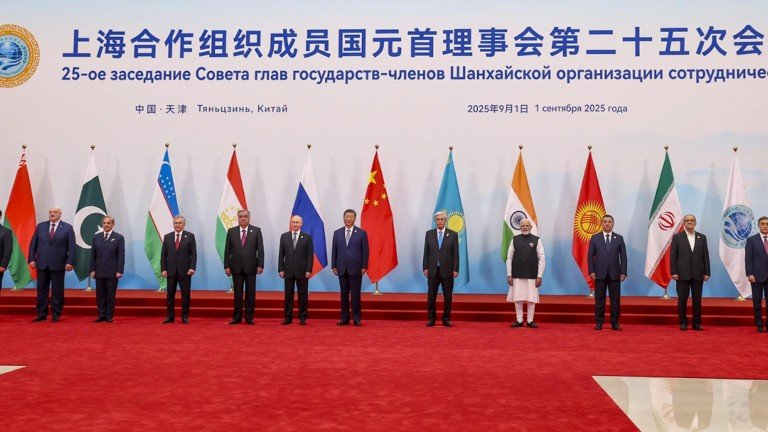
The Shanghai Cooperation Organisation (SCO) strongly condemned the recent terror attack in Pahalgam, which targeted security forces and civilians in Jammu and Kashmir. The incident, which has shaken the region, drew sharp responses from leaders across the member states. Indian Prime Minister Narendra Modi, in his address during the SCO meeting, stressed that terrorism continues to be the biggest threat to peace and stability in the region. He added that the support some states extend to terror groups remains unacceptable.
Condemnation from SCO Nations
The SCO collectively denounced the Pahalgam attack, underlining that terrorism in any form is a grave crime against humanity. The joint statement highlighted the need for strong cooperation among member states to dismantle terror networks. It reiterated that nations must not provide shelter, funding, or moral support to extremist organizations.
Leaders from Russia, China, and Central Asian countries echoed this sentiment, emphasizing that the persistence of terrorism obstructs regional growth and development. They called for greater intelligence-sharing, joint operations, and stricter laws to ensure the menace of terrorism is effectively countered.
PM Modi’s Strong Stand Against Terror Support
Prime Minister Narendra Modi addressed the gathering with a firm message. He stressed that the fight against terrorism cannot succeed if certain countries continue to use it as a political tool. Without naming any nation directly, he stated that the backing of terror outfits by state actors not only destabilizes neighbors but also weakens global security.
He further noted that innocent lives, such as those lost in Pahalgam, should not become bargaining chips in geopolitical games. According to him, global organizations must adopt a zero-tolerance policy and hold nations accountable that aid terror activities directly or indirectly.
Background of the Pahalgam Attack
The Pahalgam attack took place earlier this month when militants ambushed a convoy of security forces in South Kashmir. Several personnel were injured, and the incident sparked widespread outrage across India. Security forces have intensified their operations in the region to track down the perpetrators.
The attack not only reignited concerns about cross-border terrorism but also brought back focus on the unresolved issue of militant safe havens. Authorities believe that the strike was executed with external support, which makes the SCO’s joint stance even more significant.
Call for United Action
The SCO summit witnessed a clear agreement among members on the urgency of joint action. Leaders noted that terror groups are becoming increasingly sophisticated in their methods, using modern technology and global networks for financing and propaganda.
The organization stressed that all countries must deny safe passage, arms, and logistical help to terrorists. It also urged member nations to strengthen laws to curb radicalization and recruitment, particularly among the youth.
PM Modi proposed that the SCO create a dedicated task force to counter terrorism financing, similar to the Financial Action Task Force (FATF), to monitor and penalize countries enabling such activities. His proposal received broad acknowledgment from member nations.
Wider Implications for the Region
Analysts believe the SCO’s unified condemnation and India’s strong words mark a turning point in the regional discourse on terrorism. With growing instability in Afghanistan and spillover effects in South Asia, the call for cooperation comes at a crucial time.
If SCO members translate their statements into concrete measures, it could lead to stronger regional mechanisms against cross-border terrorism. However, experts caution that differences among member states may still pose challenges in implementing joint action.
Political Reactions in India
The Indian political spectrum responded strongly to the Pahalgam attack and the subsequent statements. Leaders across parties welcomed the SCO’s condemnation, while many praised PM Modi’s firm stand. Opposition figures, however, demanded quicker steps to bring the perpetrators to justice and secure the border areas more effectively.
Security experts emphasized that while international condemnation helps, on-ground measures such as better surveillance, intelligence coordination, and modern equipment for forces remain critical to preventing future attacks.
Looking Ahead
The SCO summit has set the tone for a renewed fight against terrorism in the region. For India, the Pahalgam attack served as a grim reminder of the persistent threat it faces. PM Modi’s speech underlined that terrorism cannot be justified under any pretext and that the international community must act decisively against states that aid such violence.
As the SCO moves forward, much will depend on how seriously member nations implement their commitments. For the families affected by the Pahalgam attack and the citizens of the region, the hope remains that such joint efforts will bring lasting peace and security.
Read More: Mizoram Marks 3rd Mithun Day with Focus on Farming