


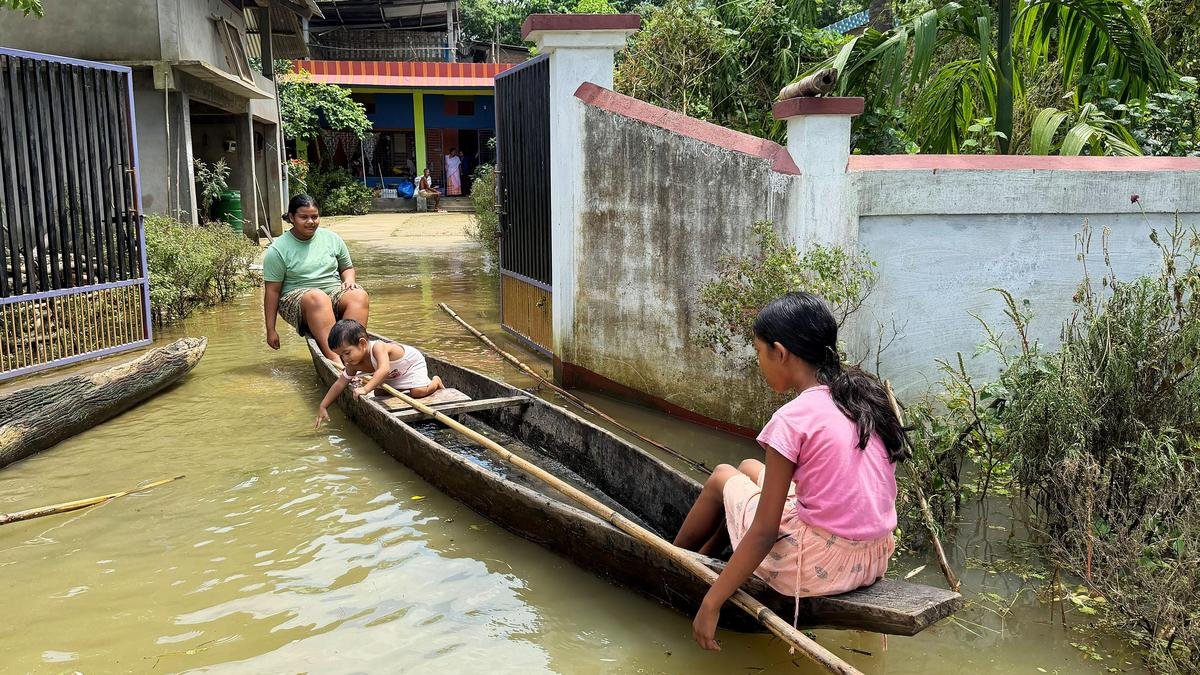
The Sivasagar flood disaster has intensified attention from both Assam and central authorities after the state’s reported flood-related death toll reached 95. The scale of the casualties has increased pressure for stronger coordination on rescue operations, relief distribution, infrastructure assessment, and long-term flood management.
Sivasagar has faced the consequences of widespread flooding, including displacement, damaged homes, disrupted transport, and agricultural losses. Moreover, the reported fatalities have raised questions about whether existing disaster-response systems can adequately protect vulnerable communities during severe flood events.
However, central involvement in a major disaster does not automatically indicate administrative failure. National agencies can support state authorities when emergencies exceed local capacity or require specialised resources.
Makhan Relief Camp Row: Naga Groups Demand Justice Before Political Visits
Sivasagar Flood Disaster Draws Central Attention
The reported death toll of 95 has elevated the flood crisis beyond a purely local concern.
Severe disasters can require coordination between district administrations, state agencies, and central authorities. Furthermore, national disaster-response mechanisms can provide additional personnel, equipment, financial support, and technical expertise when state resources face heavy pressure.
The Sivasagar situation has consequently attracted wider attention.
However, the exact scope of central involvement depends on official decisions and the evolving needs of affected communities.
Why Central Coordination Matters
Flood emergencies can quickly overwhelm local systems.
Rescue teams may need boats, specialised equipment, medical support, and logistical assistance to reach isolated communities. Additionally, central agencies can help coordinate resources across multiple affected districts when a disaster affects a large geographical area.
Such coordination can strengthen emergency operations.
However, state and district administrations remain central to local relief delivery and community-level response.
95 Deaths Raise Disaster-Management Questions
The reported death toll of 95 highlights the human impact of the flooding.
Each fatality can raise questions about evacuation, early warnings, rescue access, infrastructure, and emergency preparedness. Moreover, authorities need to verify casualty information carefully while supporting affected families.
The scale of the losses has increased public interest in the effectiveness of disaster-response measures.
However, the casualty figure alone cannot establish whether particular authorities or agencies failed in their responsibilities.
Sivasagar Communities Face Displacement
Flooding has forced many residents to seek safer locations.
Families may move to relief camps, higher ground, or temporary shelters when water enters homes and threatens local infrastructure. Furthermore, displaced residents can lose access to schools, workplaces, markets, healthcare facilities, and agricultural land.
These disruptions create significant humanitarian needs.
However, conditions vary between villages and communities depending on flood levels and accessibility.
Central Agencies Can Strengthen Rescue Efforts
National disaster-response agencies can provide specialised capabilities during major emergencies.
Additional rescue personnel, boats, communication equipment, and logistical resources can help local authorities reach isolated communities. Moreover, central coordination can support operations when several districts require assistance simultaneously.
This capacity becomes especially valuable during severe flooding.
However, effective rescue still depends on local information and coordination with district officials.
Relief Operations Need Greater Coordination
Flood relief requires continuous supplies and accurate information.
Authorities must provide food, drinking water, medicines, sanitation facilities, and temporary shelter to displaced families. Additionally, officials need reliable estimates of affected populations to distribute resources effectively.
Central support can supplement state-level operations.
However, local authorities remain responsible for identifying community needs and coordinating many aspects of relief delivery.
Infrastructure Damage Adds Pressure
Flooding can damage roads, bridges, embankments, drainage systems, and communication networks.
When transport links fail, rescue teams may struggle to reach isolated settlements and relief supplies may face delays. Furthermore, damaged infrastructure can prolong displacement even after floodwaters begin to recede.
Infrastructure assessment therefore becomes an important part of the response.
However, reconstruction generally requires longer-term planning after emergency operations end.
Agriculture Faces Heavy Losses
Flooding can severely affect Sivasagar’s rural economy.
Farmers may lose crops, livestock, equipment, and access to farmland. Moreover, prolonged waterlogging can delay cultivation and increase the cost of restoring agricultural activity.
Central and state agencies may therefore need to assess agricultural losses as part of the recovery process.
However, compensation and rehabilitation depend on official damage assessments and applicable relief rules.
Healthcare Support Remains Critical
Large-scale flooding can increase pressure on healthcare services.
Affected residents may require emergency treatment, medicines, medical teams, and access to hospitals. Additionally, contaminated water and poor sanitation can create additional public-health risks.
Relief camps therefore require continued medical monitoring.
However, healthcare needs can change as displacement continues and floodwaters recede.
Sivasagar Relief Camps Require Monitoring
Relief camps become essential when residents cannot safely return home.
Authorities need to ensure adequate food, water, sanitation, shelter, and medical assistance. Furthermore, officials must identify vulnerable groups and ensure that their specific needs receive attention.
Central assistance can supplement supplies and logistical support where necessary.
However, the quality of individual camps depends heavily on local administration and ground-level coordination.
Early Warnings Become a Key Issue
Flood preparedness depends heavily on timely information.
Authorities need effective systems for monitoring rainfall, river levels, and rapidly changing conditions. Moreover, residents need warnings early enough to evacuate safely when necessary.
The disaster could therefore renew calls for stronger early-warning systems.
However, warning systems cannot eliminate every risk when floods develop rapidly or conditions change unexpectedly.
Political Debate Intensifies
The reported fatalities have increased political scrutiny of flood management.
Opposition parties and public representatives can question preparedness, relief operations, infrastructure maintenance, and rehabilitation policies. Additionally, calls for central intervention can become part of broader debates over the responsibilities of state and national authorities.
The political discussion may continue during the recovery phase.
However, political criticism should remain separate from verified findings about administrative performance.
Financial Assistance Could Follow
Major disasters can require significant public expenditure.
Authorities may provide emergency assistance and later assess losses to homes, crops, livestock, and infrastructure. Furthermore, additional resources may become available through established disaster-response frameworks.
Financial support can help affected communities begin rebuilding.
However, the amount and distribution of assistance depend on official assessments and applicable policies.
Long-Term Flood Management Takes Centre Stage
The crisis has renewed attention on Assam’s recurring flood risks.
Long-term discussions can focus on embankment maintenance, drainage, river management, wetland protection, flood forecasting, and resilient infrastructure. Moreover, lessons from Sivasagar can inform future disaster-preparedness strategies.
Central and state coordination could become important for large infrastructure projects.
However, long-term flood mitigation requires sustained implementation rather than temporary measures.
Central Intervention Does Not End Local Responsibility
National assistance can strengthen a state’s emergency response, but local institutions remain crucial.
District officials understand local geography, vulnerable settlements, evacuation routes, and community needs. Additionally, local authorities coordinate relief camps and communicate directly with affected residents.
Effective disaster management therefore requires cooperation at every level.
However, the precise division of responsibilities depends on the nature of the emergency and the agencies involved.
Recovery Will Determine the Next Phase
The end of flooding will not immediately end the crisis.
Families may need assistance rebuilding homes, restoring farms, replacing livestock, and returning to work. Moreover, damaged roads and public infrastructure can require months of repair.
The recovery phase could therefore become as important as the initial rescue response.
However, rehabilitation timelines will depend on the extent of damage and availability of resources.
Conclusion
The Sivasagar flood disaster, amid a reported Assam flood death toll of 95, has intensified attention on the need for coordinated disaster management. Central involvement can provide additional rescue capacity, technical resources, financial support, and logistical assistance when state and district systems face exceptional pressure.
Moreover, the reported fatalities have renewed questions about evacuation, early-warning systems, infrastructure resilience, and relief operations. At the same time, central support does not automatically establish administrative failure, and responsibility must remain based on verified evidence and official assessments.
Overall, the crisis demonstrates why effective flood response requires cooperation between local, state, and national institutions. For Sivasagar’s affected communities, the priority remains timely relief, safe rehabilitation, infrastructure recovery, and stronger preparedness before the next major flood event.
FAQs
1. Why has the Sivasagar flood disaster attracted central attention?
The reported scale of the disaster and Assam’s flood-related death toll of 95 have increased the need for coordinated emergency support and disaster-management resources.
2. Does central intervention mean the state government failed?
Not necessarily. Central agencies can support states during major disasters when additional resources, specialised teams, or broader coordination become necessary.
3. What support can central agencies provide?
Depending on the emergency, central support can include rescue personnel, equipment, logistics, technical assistance, and financial mechanisms for disaster response.
4. What are the main challenges facing Sivasagar?
Key challenges include displacement, relief-camp management, infrastructure damage, agricultural losses, healthcare needs, and restoring essential services.
5. What happens after the emergency response?
Authorities must assess damage, provide eligible assistance, repair infrastructure, support displaced families, and strengthen long-term flood preparedness.