


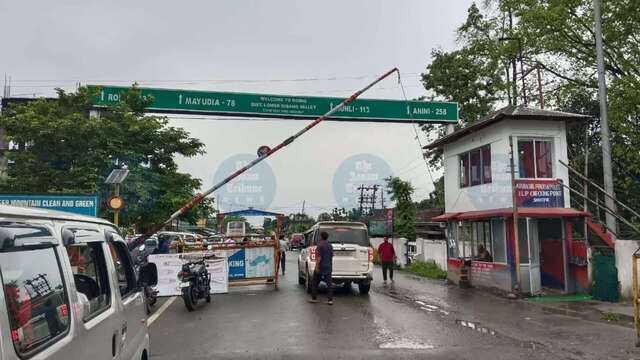
The implementation of stricter Inner Line Permit (ILP) regulations in Arunachal Pradesh has triggered concern among labourers from Assam who regularly travel to the neighbouring state for work opportunities. Many workers fear the tightened rules could affect their livelihoods and create difficulties in accessing employment across the border.
The ILP system regulates the entry of non-residents into Arunachal Pradesh and remains an important mechanism for protecting indigenous communities and preserving local identity. However, recent enforcement measures and stricter monitoring have raised anxiety among daily wage labourers and small workers who depend on temporary jobs in the state.
Read More: Meghalaya CM Lays Foundation Stone for Mini Stadium in North Garo Hills
Workers and transporters said the new restrictions have increased documentation requirements and verification procedures at entry points. Several labourers claimed they now face delays and uncertainty while travelling for work.
The issue has sparked discussion among local communities, labour groups, and political observers, particularly in border districts where economic activities often depend on cross-state movement.
Labourers express concern over livelihood impact
Many labourers from Assam travel regularly to Arunachal Pradesh for construction work, road projects, small businesses, agriculture, and daily wage jobs. For several families living in border districts, such work opportunities remain an important source of income.
Workers said the stricter ILP enforcement has created fear and confusion among labourers who may not fully understand the updated procedures and requirements. Some individuals claimed they faced difficulties during document checks at entry gates.
Several labourers expressed concern that delays in obtaining permits could affect their ability to secure timely employment. Daily wage workers often depend on immediate work opportunities and cannot afford long waiting periods.
Transport operators and contractors also reported concerns regarding movement restrictions and verification processes. They said labour shortages could affect ongoing infrastructure and development projects if workers face difficulties entering the state.
However, authorities in Arunachal Pradesh maintain that ILP regulations remain necessary to ensure proper monitoring and legal entry of outsiders into the state.
ILP system remains sensitive issue
The Inner Line Permit system holds strong political and cultural importance in several northeastern states, including Arunachal Pradesh. The mechanism aims to protect indigenous populations, preserve traditional cultures, and regulate migration into protected regions.
Local organisations and student bodies in Arunachal Pradesh have repeatedly demanded stricter implementation of ILP regulations to prevent illegal settlement and demographic imbalance. Many groups believe strict monitoring is necessary to safeguard the interests of indigenous communities.
Political observers noted that balancing economic needs with cultural protection remains a sensitive challenge for the state government. While local industries and infrastructure projects require labour, community organisations continue emphasising the importance of strong ILP enforcement.
Officials stated that the recent measures focus on improving monitoring systems and ensuring compliance with existing regulations rather than stopping legal labour movement completely.
Authorities have also urged visitors and workers to complete required documentation before entering the state to avoid inconvenience at checkpoints.
Border districts feel economic pressure
The stricter ILP enforcement has particularly affected districts located along the Assam-Arunachal border, where economic activities often depend on daily movement of people and goods.
Small traders, transporters, and contractors said cross-border business operations could slow down if labour movement becomes more difficult. Construction and infrastructure sectors may especially face challenges because many workers come from neighbouring Assam districts.
Labourers from Assam often travel to Arunachal Pradesh for short-term assignments linked to road construction, market work, and seasonal labour. Contractors stated that uncertainty regarding permits could discourage workers from accepting projects in the state.
Some business owners expressed concern that project costs may increase if labour availability declines. They urged authorities to simplify procedures for genuine workers while maintaining security and monitoring measures.
Residents in border regions also highlighted the close economic and social connections between communities on both sides. Many families rely on trade and labour movement for their livelihoods.
Authorities stress legal compliance
Officials in Arunachal Pradesh defended the stricter enforcement measures and said ILP regulations already exist under established legal provisions. Authorities stressed that proper implementation remains important for maintaining administrative control and protecting local interests.
Government officials reportedly stated that legal workers and visitors would not face problems if they possess valid documents and follow procedures correctly. Authorities also appealed to labourers and contractors to remain aware of permit requirements before travelling.
Security agencies and local administration have increased monitoring at entry points to ensure compliance with regulations. Officials said the measures aim to prevent illegal entry and improve record management.
At the same time, some community leaders called for practical solutions that balance local concerns with economic realities. They argued that genuine labourers should not face unnecessary hardship while travelling for employment.
Observers believe improved communication and awareness campaigns could help reduce confusion among workers regarding updated ILP procedures.
Labour groups seek easier procedures
Labour representatives and local organisations have urged authorities to introduce simpler and faster permit procedures for workers travelling legally to Arunachal Pradesh. They said many daily wage labourers lack access to digital systems or detailed administrative information.
Some groups suggested the creation of dedicated facilitation centres near border areas to assist labourers with permit applications and documentation requirements. Others called for temporary work permits linked to verified employers and contractors.
Social activists also pointed out that migrant workers often face economic vulnerability and depend heavily on uninterrupted access to work opportunities. Delays in permits can therefore create financial hardship for families.
At the same time, several organisations acknowledged the importance of respecting Arunachal Pradesh’s legal and cultural protections under the ILP framework. They stressed the need for balanced solutions that protect local interests without disrupting livelihoods unnecessarily.
Political observers believe the issue may continue generating discussion as stricter enforcement measures remain in place.
Issue highlights broader regional challenges
The concerns surrounding stricter ILP regulations reflect broader challenges related to migration, employment, and identity in Northeast India. States in the region often balance economic development needs with efforts to protect indigenous populations and cultural heritage.
Arunachal Pradesh continues to maintain the ILP system as an important safeguard mechanism, while neighbouring Assam remains a major source of labour and trade connections. The close economic relationship between the two states makes cross-border movement highly significant.
As stricter monitoring continues, labourers and contractors hope authorities will adopt practical measures that reduce confusion and delays for genuine workers. Better awareness and smoother administrative systems may help ease tensions surrounding the issue.
For now, many Assam labourers remain uncertain about how the tightened regulations may affect future work opportunities in Arunachal Pradesh. The coming weeks could prove important as authorities, labour groups, and local communities continue discussing the impact of stricter ILP enforcement.
Read More: Assam’s Gram Panchayats Shine At National Panchayat Awards 2025