


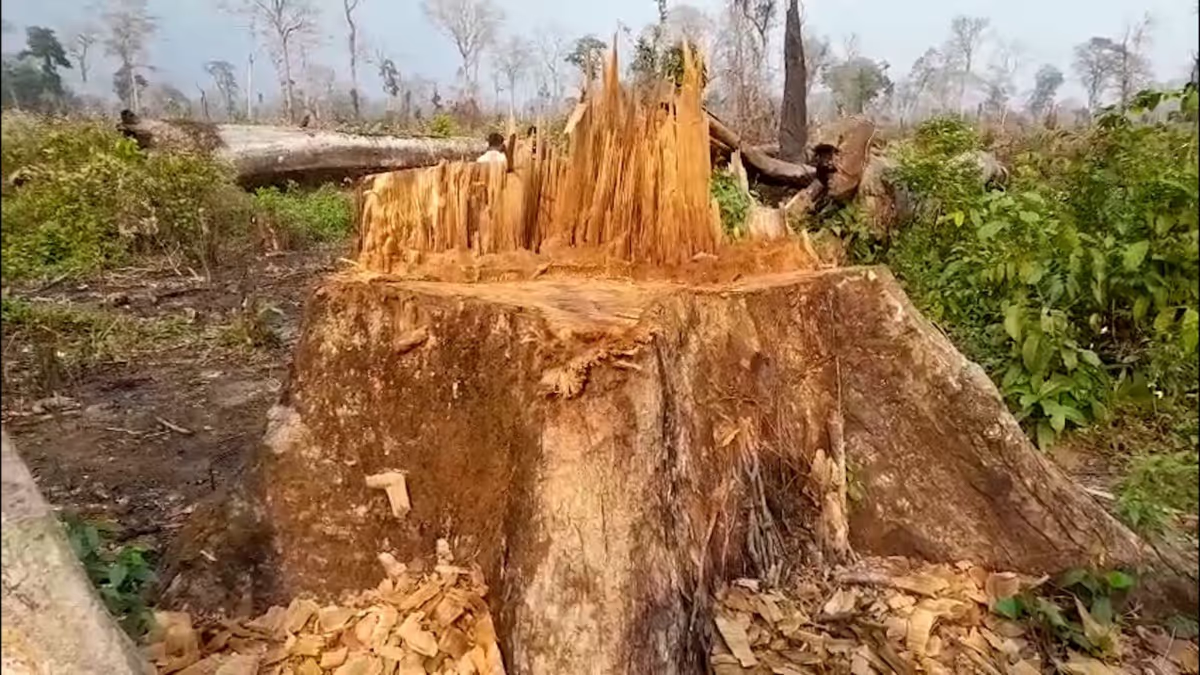
Tension gripped Assam’s newly notified Sikhna Jwhwlao National Park after an alleged encroachment attempt by a large group of people sparked a rapid security response. The incident unfolded when hundreds reportedly tried to force their way into the protected forest area, raising serious concerns about law and order. Forest officials and security personnel intervened immediately to prevent any damage to the ecologically sensitive zone.
The situation has once again brought the spotlight on the fragile balance between conservation efforts and livelihood pressures in Assam. Sikhna Jwhwlao National Park, notified to safeguard rich biodiversity, has remained under close watch since its declaration. Authorities said any attempt to alter forest boundaries would be dealt with strictly under existing laws.
What Happened at Sikhna Jwhwlao National Park
According to officials, the alleged encroachment bid took place near the park’s peripheral zone. The group reportedly assembled early and attempted to move inward, claiming customary or livelihood-related rights. Forest guards detected the movement in time and alerted senior officials and local police.
Security forces were deployed swiftly to prevent escalation. Officials said no major violence was reported, but the situation remained tense for several hours. Preventive measures were taken to disperse the crowd peacefully and secure vulnerable stretches of the forest boundary.
Swift Response by Forest and Security Officials
Senior forest officials confirmed that the response was coordinated and timely. Rapid deployment helped avoid physical damage to forest land and wildlife habitats. Authorities emphasized that Sikhna Jwhwlao National Park falls under strict protection norms.
Officials reiterated that encroachment in notified protected areas is illegal. They said awareness drives had already been conducted in surrounding villages about the park’s status. Despite this, sporadic attempts to enter forest land continue to pose challenges.
Importance of Sikhna Jwhwlao National Park
Sikhna Jwhwlao National Park is considered ecologically significant for Assam. It hosts diverse flora and fauna and acts as a vital green corridor. Conservationists have stressed that any human intrusion can irreversibly harm its ecosystem.
The park also plays a role in regulating local climate and water systems. Environmental experts warn that even small-scale encroachments can snowball into larger degradation. Protecting such areas is critical for long-term ecological security.
Conservation Versus Livelihood Concerns
The incident has reignited a sensitive debate across Assam. Many communities living near forest areas depend on land and forest resources for survival. They often claim historical usage rights, while authorities rely on legal boundaries and conservation laws.
Experts say the issue cannot be viewed in isolation. Sustainable rehabilitation and livelihood alternatives are essential to prevent repeated confrontations. Without inclusive solutions, similar flashpoints are likely to recur.
Government’s Stand on Encroachment
State authorities have maintained a firm stance on forest protection. Officials said encroachment would not be tolerated, especially in national parks and wildlife reserves. At the same time, they acknowledged the need for dialogue with affected communities.
The Assam government has previously launched schemes aimed at resettlement and alternative livelihoods. However, implementation gaps remain a concern. The Sikhna Jwhwlao episode highlights the urgency of bridging policy intent with ground realities.
Local Reactions and Political Undercurrents
Local residents expressed mixed reactions to the incident. While some supported strict conservation measures, others voiced fears of displacement and loss of livelihood. The situation has also drawn political attention, with leaders urging calm and constructive engagement.
Political observers say forest-related tensions often intensify ahead of larger policy decisions. They warn against using such sensitive issues for polarisation. Long-term stability depends on trust between communities and the administration.
Call for Dialogue and Sustainable Solutions
Environmental groups and civil society organisations have called for immediate dialogue. They argue that enforcement alone cannot solve deep-rooted issues. Participatory conservation models, they say, can help reduce conflict and protect forests.
Experts recommend clear communication, transparent land records, and community involvement. Such steps can prevent misinformation and sudden mobilisations. Sikhna Jwhwlao National Park, they stress, should become a model for coexistence rather than confrontation.
The Road Ahead
Authorities have said additional monitoring will continue around the park. Patrolling has been intensified to prevent further attempts at encroachment. Officials also hinted at renewed awareness campaigns in nearby areas.
The incident serves as a reminder of the challenges facing conservation in Assam. As pressure on land increases, proactive governance becomes crucial. Protecting Sikhna Jwhwlao National Park while addressing human concerns will shape the future of conservation in the region.