


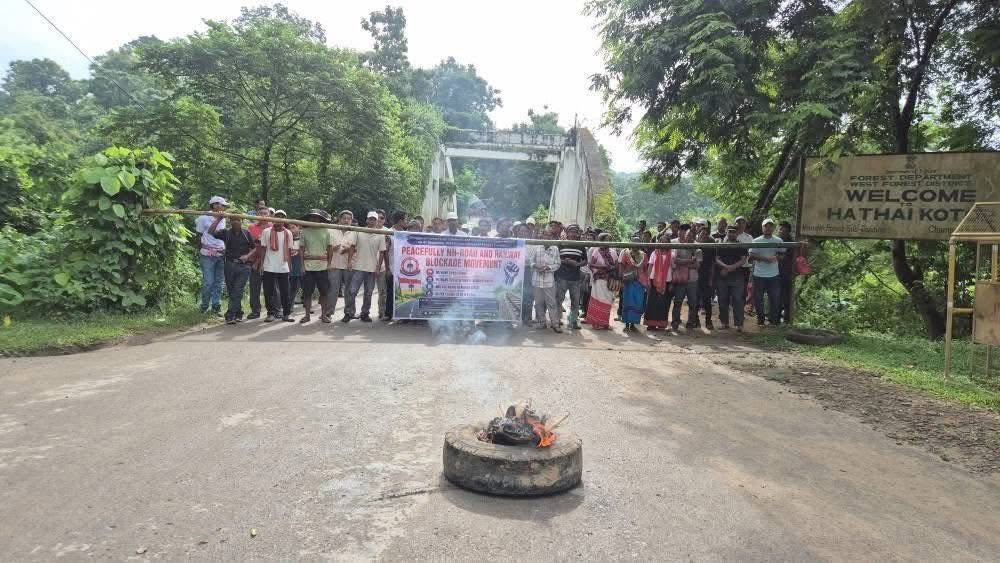
Transport services across several parts of Tripura faced major disruptions on Friday after surrendered cadres of the National Liberation Front of Tripura (NLFT) and All Tripura Tiger Force (ATTF) launched a 72-hour rail and road blockade. The protesters demanded the immediate implementation of commitments made under the 2024 peace settlement agreement signed with the Government of India and the Tripura government. Consequently, vehicle movement along key highways and railway routes came to a halt in several areas.
Furthermore, the blockade affected commuters, daily wage earners, students, and patients travelling for urgent purposes. Meanwhile, discussions between the state government and representatives of the former militant groups failed to produce an immediate resolution. The protesters continue to press for the release of a ₹250 crore rehabilitation package and other promised benefits.
Read More: Assam-Nagaland Oil MoU Boosts Northeast Growth
Key Facts
- State: Tripura
- Protest Duration: 72-hour rail and road blockade
- Groups Involved: Former cadres of NLFT and ATTF
- Main Demand: Implementation of 2024 peace settlement commitments
- Rehabilitation Package: ₹250 crore
- Affected Areas: West Tripura and Khowai districts
- Major Protest Sites: Subalsingh, Sadhupara Bridge, and Brighudasbari
- Transport Impact: National Highway and railway services disrupted
- Government Representative: Tribal Welfare Minister Bikash Debbarma
- Issue Raised: Delay in rehabilitation, employment, healthcare, and financial support
Blockade Brings Transport Services to a Standstill
A 72-hour rail and road blockade called by surrendered cadres of the NLFT and ATTF severely affected transport services across Tripura on Friday.
The protesters launched the agitation to demand the immediate implementation of promises made under the 2024 peace settlement agreement. According to the former cadres, authorities have not yet delivered several rehabilitation and development measures outlined in the accord.
Consequently, transportation networks in West Tripura and Khowai districts faced significant disruptions. Hundreds of commuters encountered difficulties as road and rail connectivity suffered major interruptions.
Protesters Demand Action on Peace Accord Commitments
The former militant groups signed a peace agreement with the Government of India and the Tripura government in 2024. Through that agreement, both sides aimed to promote peace, rehabilitation, and social integration for surrendered cadres.
However, the protesters claim that several commitments remain pending. Therefore, they organized the blockade to draw attention to issues related to rehabilitation, employment opportunities, healthcare assistance, and financial support.
Furthermore, they urged the government to accelerate the implementation of development initiatives promised under the settlement.
Key Locations Witness Demonstrations
The blockade took place at three major locations in West Tripura district. Protesters gathered at Subalsingh under Mohanpur subdivision, Sadhupara Bridge in Jirania subdivision, and Brighudasbari.
Meanwhile, a large crowd assembled near Sadhupara Bridge and blocked vehicle movement on the Assam-Agartala National Highway. As a result, traffic congestion increased and travellers remained stranded for several hours.
Moreover, security personnel monitored the situation to prevent any escalation while maintaining law and order in the affected areas.
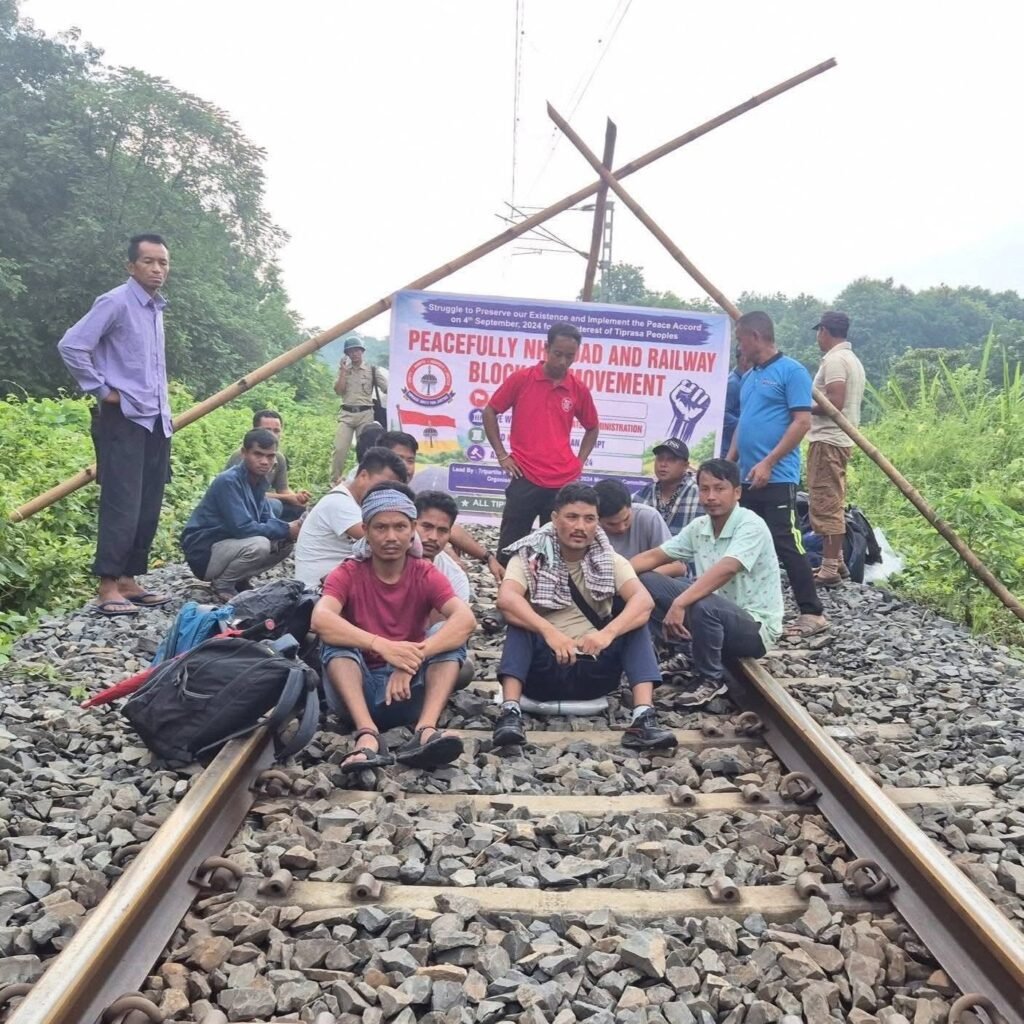
Railway Services Face Disruption
The agitation also affected railway operations in the state.
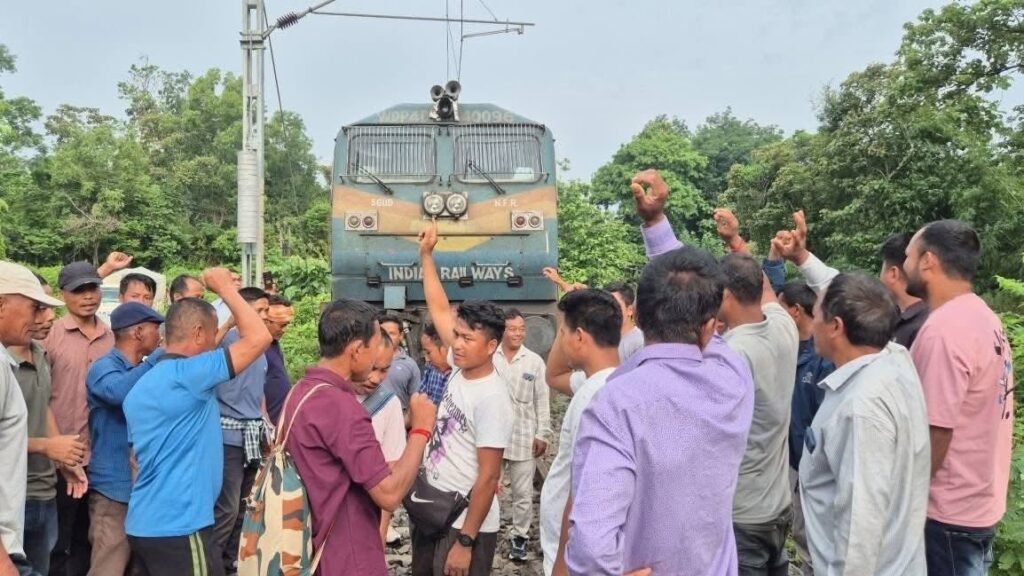
Notably, the Agartala-Sikandrabad train could not continue its scheduled journey after protesters stopped it near Brighudasbari. Consequently, railway authorities had to send the train back, causing inconvenience to passengers.
Furthermore, several travellers experienced delays and uncertainty as railway services remained affected by the blockade.
Commuters Bear the Brunt of the Shutdown
Ordinary citizens faced significant hardships due to the disruption of transportation services.
Students travelling for examinations and classes encountered difficulties reaching their destinations. Similarly, office-goers struggled to commute, while patients requiring medical attention faced delays in accessing healthcare facilities.
Additionally, daily wage earners suffered financial losses because transport interruptions prevented them from reaching workplaces.
Many passengers expressed frustration over recurring shutdowns and blockades. Several commuters argued that ordinary people often bear the greatest burden whenever transportation services stop.
One commuter stated that authorities usually announce shutdowns in advance, but affected citizens rarely receive immediate solutions when problems arise. Another traveller pointed out that daily wage earners lose valuable income whenever transport services remain suspended.
Bus Services Remain Affected
The impact of the blockade became particularly visible at the Radhanagar Bus Stand in Agartala.
Several long-distance bus services remained suspended because operators could not guarantee safe passage through the affected routes.
Meanwhile, some smaller vehicles operated only up to Mohanpur. However, services toward Kailashahar through Khowai and Manik Bhandar remained largely suspended.
As a result, many passengers postponed their travel plans or searched for alternative routes.
Government Holds Talks with Protesters
In an effort to resolve the situation, Tribal Welfare Minister Bikash Debbarma met representatives of the surrendered militant groups at the Civil Secretariat.
During the discussions, both sides focused on pending rehabilitation issues and the implementation of promises made under the peace agreement.
However, the meeting did not produce a final resolution. Consequently, the blockade continued despite the dialogue.
Rehabilitation Package at the Centre of Demands
A major issue behind the protest involves the ₹250 crore rehabilitation package announced under the 2024 peace settlement.
The former cadres argue that authorities must expedite the release and implementation of the package. They believe the funds will help support rehabilitation projects, employment initiatives, healthcare services, and community development programs.
Meanwhile, Minister Bikash Debbarma stated that the government has already approved the package. Furthermore, he clarified that authorities will release funds after representatives of the former militant groups submit detailed project proposals.
Therefore, the government maintains that the rehabilitation process remains active and requires procedural completion before fund distribution.
Background of the Peace Accord
The NLFT and ATTF once operated as insurgent groups in Tripura. However, both organizations disbanded in 2024 after signing a peace agreement with the Centre and the state government.
The accord aimed to bring former cadres into mainstream society through rehabilitation, skill development, economic support, and peace-building initiatives.
Moreover, the agreement sought to strengthen long-term stability in Tripura by addressing socio-economic concerns and encouraging development in affected communities.
Question & Answer
What caused the blockade in Tripura?
Former NLFT and ATTF cadres launched the blockade to demand implementation of commitments made under the 2024 peace settlement agreement.
Which areas were affected?
The blockade disrupted transportation in West Tripura and Khowai districts, particularly around Subalsingh, Sadhupara Bridge, and Brighudasbari.
What are the protesters demanding?
They are seeking implementation of the ₹250 crore rehabilitation package, employment opportunities, healthcare support, and financial assistance.
How did the blockade affect railway services?
Protesters stopped the Agartala-Sikandrabad train near Brighudasbari, forcing railway authorities to return the train.
What did the government say?
Minister Bikash Debbarma said the rehabilitation package has received approval and authorities will release funds after receiving project proposals.
Location Context
Tripura is a strategically important state in Northeast India and serves as a vital transport corridor connecting the region. Therefore, disruptions on major highways and railway routes can significantly affect trade, travel, and daily life. Furthermore, the successful implementation of peace accords remains crucial for maintaining long-term stability, development, and economic growth across the Northeast.
Also Read: Assam-Nagaland Oil MoU Marks Historic Milestone