


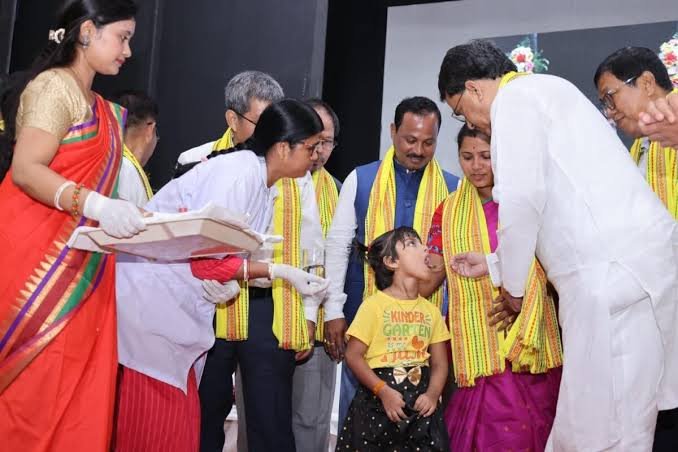
Tripura has launched a major child healthcare campaign targeting more than 10.30 lakh children across the state. The initiative aims to expand healthcare outreach and strengthen access to essential services for young beneficiaries. At the same time, visiting Union Minister Ram Nath Thakur has reviewed the implementation of central government welfare schemes in Tripura. These developments highlight the state’s focus on child health and welfare delivery. Moreover, the campaign and ministerial review have brought attention to healthcare access, programme implementation, and coordination between central and state authorities.
Assam: Five Workers Injured, One Missing After Explosion at Oil India Tank Farm
Child Healthcare Campaign Targets Over 10.30 Lakh Children
Tripura’s latest healthcare campaign aims to reach more than 10.30 lakh children. The large-scale initiative reflects an effort to expand health services among the state’s younger population.
The campaign’s target covers children across different areas of Tripura. Furthermore, its wide reach highlights the importance of coordinated planning between healthcare workers and local administration.
Child health programmes can support early identification of health concerns and improve access to essential services. They also help families receive information about preventive healthcare and available facilities.
The campaign will require effective coordination to reach its intended beneficiaries. In addition, public awareness and community participation can help families access the services offered through the initiative.
Healthcare Outreach and Child Welfare Priorities
Children require regular access to healthcare services during their early years. Therefore, large-scale campaigns can play an important role in strengthening preventive healthcare and public awareness.
Healthcare workers often serve as the main link between families and local health facilities. Their outreach activities can help identify children who need further medical attention.
Moreover, community-level participation can improve awareness about child health and available government services. Parents and guardians also play an important role by ensuring that children receive appropriate care.
The campaign’s target of more than 10.30 lakh children highlights the scale of the planned outreach. However, its overall impact will depend on implementation, service quality, and follow-up support.
Union Minister Ram Nath Thakur Reviews Central Schemes
Visiting Union Minister Ram Nath Thakur has reviewed the implementation of central government schemes in Tripura. The review forms another important part of the state’s ongoing welfare-related activities.
Such reviews help examine how government programmes reach their intended beneficiaries. Furthermore, they provide an opportunity to assess implementation challenges and coordination between different administrative departments.
The minister’s visit has brought attention to the delivery of central welfare initiatives in the state. Officials and implementing agencies play an important role in ensuring that eligible people receive the intended benefits.
However, the specific schemes reviewed and the findings of the assessment require further official details. Clear information about the review would help explain its outcomes and any proposed follow-up measures.
Central and State Coordination in Welfare Delivery
The implementation of welfare programmes often requires coordination between central and state authorities. Different departments must work together to ensure that schemes reach eligible beneficiaries.
In addition, local administrative bodies help communicate programme details and support delivery at the community level. Effective coordination can reduce implementation difficulties and improve access to public services.
Healthcare initiatives also depend on trained personnel, suitable infrastructure, and reliable monitoring. Consequently, regular reviews can help authorities identify gaps and consider corrective measures.
Tripura’s child healthcare campaign and the Union Minister’s scheme review highlight two important aspects of public welfare delivery. One focuses on reaching young beneficiaries, while the other examines the implementation of government programmes.
Public Awareness Remains Important
The success of large-scale welfare campaigns depends partly on public awareness. Families need clear information about eligibility, available services, and where they can receive assistance.
Moreover, local healthcare workers and administrative teams can help address questions from residents. Their involvement can improve communication and encourage participation.
Parents and guardians should also follow information released through official health channels. This can help them understand the campaign’s services and access relevant support.
Meanwhile, monitoring and follow-up activities remain important for assessing the programme’s reach. Authorities can use such assessments to identify areas requiring additional attention.
Conclusion
Tripura’s child healthcare campaign aims to reach more than 10.30 lakh children, marking a major public health initiative in the state. Meanwhile, Union Minister Ram Nath Thakur has reviewed the implementation of central welfare schemes during his visit. Both developments highlight the importance of healthcare outreach and effective welfare delivery. Continued coordination, public awareness, and monitoring will remain essential for achieving the intended objectives.
FAQs
How many children will the healthcare campaign target?
The campaign aims to reach more than 10.30 lakh children across Tripura.
What is the main focus of the initiative?
The campaign focuses on expanding child healthcare outreach and access to essential services.
Which Union Minister visited Tripura?
Union Minister Ram Nath Thakur visited the state and reviewed central government welfare schemes.
What did Ram Nath Thakur review?
He reviewed the implementation of central government schemes in Tripura. Specific scheme details require further confirmation.
Why are child healthcare campaigns important?
They can improve access to essential health services, strengthen preventive care, and increase public awareness.
What supports successful welfare programme implementation?
Effective coordination, trained personnel, public awareness, monitoring, and accessible services all contribute to implementation.