


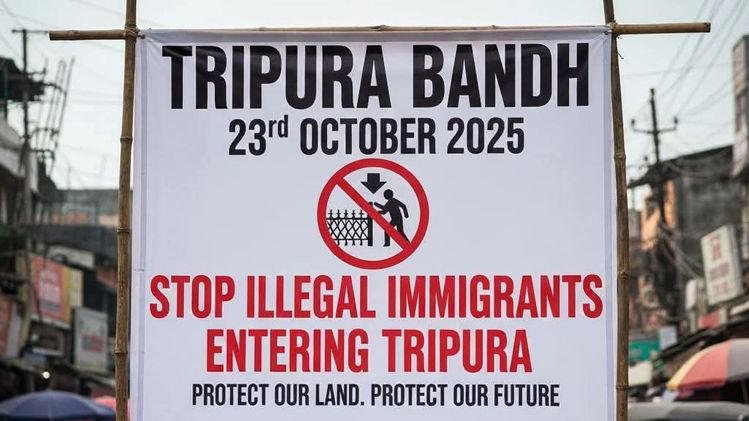
Tension has gripped Tripura after the Tripura Civil Society bandh was announced to protest against the proposed Tiprasa Accord and rising illegal infiltration. The 24-hour shutdown, called by several civil and indigenous organisations, aims to draw attention to what they describe as “threats to the identity and rights of indigenous people.”
The bandh, scheduled for Thursday, seeks to pressure both the state and central governments to address growing concerns over demographic imbalance, illegal migration, and the terms of the upcoming Tiprasa Accord. Protesters have urged the authorities to ensure that the agreement protects indigenous interests before finalizing it.
Read More: Sikkim Government Urges NHIDCL to Address Frequent NH-10 Closures
Protest Against Tiprasa Accord Clauses
Civil society groups and community leaders have expressed deep apprehension over the proposed Tiprasa Accord, which is expected to grant political and administrative safeguards to indigenous people under the Tripura Tribal Areas Autonomous District Council (TTAADC).
However, several organisations allege that some provisions might undermine existing land and resource rights of the local population. They fear that the accord may not adequately address the long-standing demand for full autonomy and greater control over traditional territories.
During a press briefing, members of the Joint Civil Society Forum of Tripura said that the bandh is not against development but against policies that could dilute indigenous identity. “We support peace and progress, but not at the cost of our roots. The Tiprasa Accord must truly represent the will of the indigenous people,” stated one of the forum’s spokespersons.
Rising Concerns Over Illegal Infiltration
Alongside the debate on the Tiprasa Accord, the issue of illegal infiltration from neighbouring Bangladesh has reignited tension across the state. Civil society organisations claim that unchecked migration has already changed Tripura’s demographic composition, marginalising its indigenous population.
According to local leaders, continued migration threatens social stability, employment opportunities, and land ownership patterns. They have demanded stronger border security and verification measures to prevent further infiltration.
One leader remarked, “Tripura’s indigenous communities are shrinking, both in number and influence. The government must act before it’s too late.” The demand for immediate steps to stop illegal entry has become one of the major triggers for the Tripura Civil Society bandh.
Streets Empty as Bandh Begins
As the bandh commenced on Thursday morning, shops, markets, and business establishments remained closed in many areas, particularly in the tribal-dominated districts. Public transport was minimal, and roads wore a deserted look.
Security personnel were deployed across sensitive zones to prevent any untoward incidents. Educational institutions remained shut, and government offices recorded low attendance. The bandh was largely peaceful, though isolated incidents of slogan shouting were reported from a few places.
Local police officials confirmed that no major clashes occurred, crediting community leaders for maintaining order. The bandh’s impact was felt strongly in areas under the Tripura Tribal Areas Autonomous District Council, including Khumulwng, Ambassa, and Kanchanpur.
Voices from the Ground
Residents across Tripura expressed mixed reactions to the shutdown. While many supported the call, others were concerned about disruptions to daily life. “We understand their demands, but continuous bandhs affect small traders and daily wage earners,” said a shopkeeper in Agartala.
Meanwhile, student bodies and youth organisations took out peaceful rallies in solidarity with the protest. Many carried placards reading “Save Indigenous Identity” and “Stop Illegal Infiltration.” Women’s groups also joined the demonstration, demanding protection of land rights and representation in future negotiations related to the Tiprasa Accord.
Government’s Response to the Bandh
The Tripura government has urged civil society groups to withdraw their bandh and engage in dialogue. Chief Minister Dr. Manik Saha stated that the government is open to discussions and will ensure that the Tiprasa Accord benefits every section of society.
He assured that indigenous welfare remains a top priority for his administration. “We will not sign any agreement that harms the interests of our indigenous brothers and sisters. The state government stands firm in safeguarding their identity and culture,” the Chief Minister said in a public statement.
The Chief Secretary also held meetings with security agencies to ensure law and order during the bandh. The government’s appeal for calm seemed to have worked in maintaining peace, though protest leaders insisted they would continue their democratic movement until their concerns were addressed.
Experts Highlight Need for Dialogue
Political analysts and social observers have urged both the government and protest leaders to adopt a dialogue-based approach. They believe that confrontation will only delay the implementation of solutions beneficial to both the state and indigenous communities.
Experts argue that the Tripura Civil Society bandh reflects deep-rooted anxieties about cultural preservation and equitable development. “These concerns cannot be ignored. The solution lies in transparent dialogue and inclusive decision-making,” said one political analyst based in Agartala.
The Broader Context of Tripura’s Identity Struggle
Tripura has long faced challenges related to migration, cultural preservation, and representation. Once a predominantly indigenous state, it has witnessed demographic shifts over the decades due to cross-border migration. Civil society organisations have often voiced fears that this could lead to cultural erosion and loss of political influence for indigenous groups.
The ongoing protests highlight the continuing tension between aspirations for self-determination and the need for social harmony. Observers say the current situation offers the government a crucial opportunity to rebuild trust and create a lasting framework for peace.
Calls for Peace and Constructive Resolution
Despite the strong emotions surrounding the issue, several community elders have appealed for restraint and unity. They urged all sides to avoid violence and focus on finding solutions through discussion. “Our aim is not division but recognition. Let this movement bring clarity and justice for all,” said one senior community leader.
As the Tripura Civil Society bandh concluded peacefully, it left behind a powerful message: the indigenous people’s quest for dignity, security, and recognition remains alive. Whether the government responds with sensitivity and inclusiveness will determine the next chapter in Tripura’s evolving socio-political landscape.
Read More: Meghalaya Police Destroy 10 Tonnes of Illegally Grown Cannabis in East Khasi Hills