


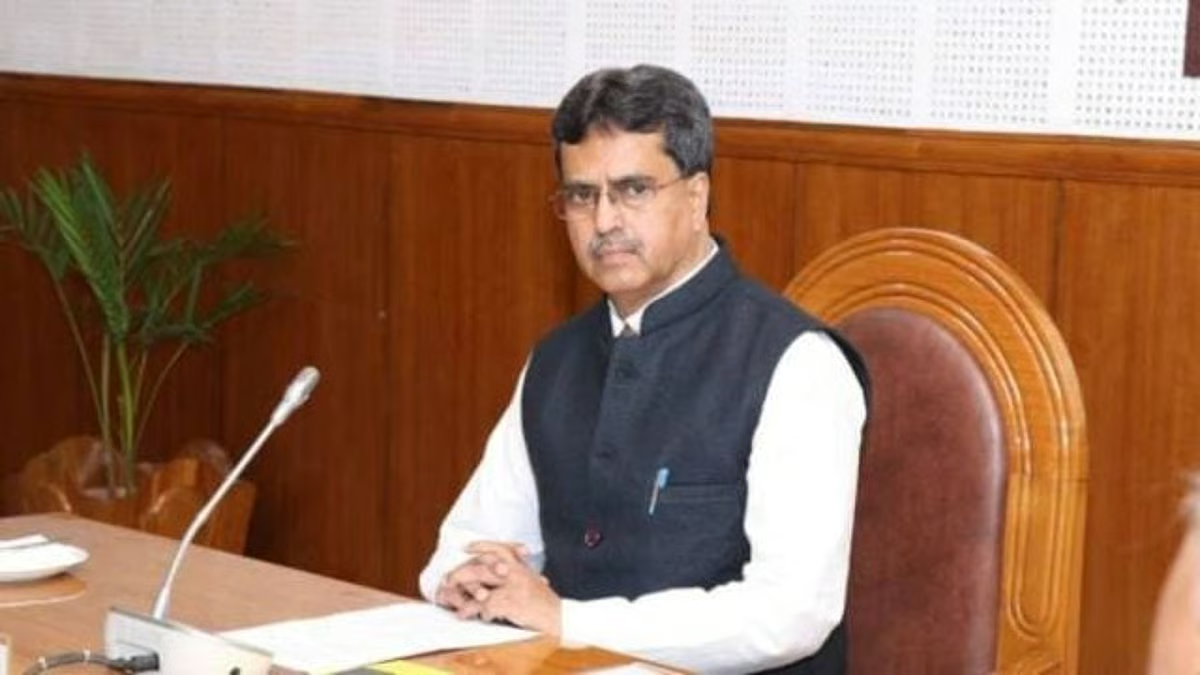
Agartala, Aug 16, 2025 — Tripura Chief Minister Dr. Manik Saha on Saturday doubled down on his government’s zero-tolerance policy against drugs. Also, directing police and security agencies to intensify statewide operations.
He urged citizens, parents, and educational institutions to stay alert, report suspicious activity. Although, join a coordinated campaign to protect youth from addiction and trafficking.
A sharper, statewide crackdown
At a high-level meeting with Home, Police, Excise, and Border officials, the Chief Minister called for joint, time-bound operations targeting supply chains and hotspots.
District police have been asked to step up highway checks, surprise raids. Further, surveillance along vulnerable stretches near international borders.
Officials said inter-agency coordination will be tightened to track transport routes, storage points, and financial channels used by traffickers. The CM pressed for fast prosecution under the NDPS Act. Besides, swift attachment of assets to disrupt cartels’ cash flow and deter repeat offenders.
Community vigilance at the core
Dr. Saha appealed to local bodies, village committees, and youth clubs to act as first responders against neighborhood peddling and new synthetic substances.
He emphasized discrete reporting through helplines. Moreover, with identity protection for informants to encourage community participation without fear.
Parents were advised to watch for behavioral changes, sudden cash needs, and absenteeism, and to seek timely counseling.
The state will also expand walk-in counseling facilities and referral services to ensure families get help early, not after a crisis.
Protecting campuses and workplaces
Awareness first, enforcement always
The Education and Social Welfare departments will launch a campus-focused awareness drive covering schools, colleges, and coaching hubs.
Sessions will include peer-mentor programs, mental health support, and age-appropriate modules on legal consequences, addiction risks, and online drug deals.
Employers and industrial units have been asked to introduce workplace policies on substance abuse prevention.
Periodic orientation, confidential support lines, and employee assistance programs will be rolled out with industry associations’ support.
Border vigilance and technology upgrades
Closing gaps along critical corridors
With Tripura’s geography making it vulnerable to cross-border smuggling. Besides, government will deepen coordination with central agencies and neighboring states.
While, night patrolling, checkpoint tech, and canine units will be scaled up in phases where data shows higher seizure potential.
The CM cleared proposals for license-plate recognition, CCTV network expansion, and analytics-driven patrol rosters.
This data-led approach will help map repeat routes, vehicles of interest, and emerging patterns linked to synthetic and pharma-grade substances.
Rehabilitation and second chances
While enforcement is uncompromising, the Chief Minister underlined treatment-led rehabilitation for users, especially first-time and juvenile cases.
De-addiction centers will receive enhanced capacity, with more trained counselors, dual-diagnosis care, and after-care for relapse prevention.
The state is partnering with NGOs for community-based recovery, skill training, and job placement to reduce the risk of re-addiction. Families will be included in structured support groups, ensuring sustained recovery pathways and social reintegration.
Measurable targets and public reporting
Additionally, to ensure accountability, the government will publish monthly dashboards on seizures, arrests, prosecutions, and rehabilitation enrollments.
Districts will receive performance benchmarks. Above all, with rewards for best-performing teams and course-corrections where outcomes lag.
The Home Department will also review case pendency and conviction rates, removing bottlenecks that slow deterrence. Furthermore, training for investigators and prosecutors will be upgraded to strengthen evidence chains and withstand legal scrutiny.
What citizens can do today
Residents have been asked to use official helplines to report peddling near schools, hostels, bus stands, and market areas. Hence, people should avoid sharing unverified rumors online and instead submit photos, vehicle numbers, and precise locations through secure channels.
Parents and educators can download state awareness toolkits and conduct short weekly sessions on digital traps, party-drug risks, and peer pressure. Housing societies can designate a drug-free ambassador, maintain visitor logs, and coordinate with local police for neighborhood briefings.
The road ahead
Tripura’s battle against narcotics requires relentless pressure on supply, honest conversation about demand, and a humane approach to recovery. With zero tolerance as the guiding principle. Nevertheless, the state aims to turn today’s momentum into sustained, measurable progress that safeguards its youth.