


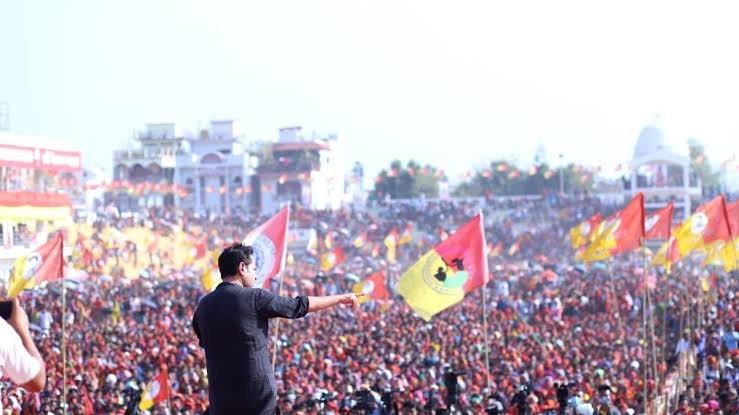
TIPRA Motha’s decision to avoid a political realignment ahead of Tripura’s grassroots elections has intensified competition across the state’s tribal areas. The party has maintained an independent political position while emphasising constitutional safeguards, indigenous rights, land protection, and cultural identity.
The stance comes as political parties prepare for village-level contests that could test their grassroots organisation and influence. Moreover, TIPRA Motha’s refusal to quickly enter a new political arrangement could complicate alliance calculations among rival parties.
The party’s position reflects its demand for concrete commitments on issues affecting indigenous communities. However, the electoral impact of this strategy will depend on candidate selection, local alliances, voter preferences, and the strength of competing organisations.
Tripura Election Commission Gears Up for Intense Voter Roll Upgrades
TIPRA Motha Rejects Immediate Realignment
TIPRA Motha has chosen to maintain its political identity rather than immediately realign with another political formation.
The decision allows the party to campaign on its own priorities and negotiate from an independent position. Furthermore, it prevents TIPRA Motha from having to dilute its demands to accommodate the agenda of a potential alliance partner.
This approach could help the party preserve its distinct identity among tribal voters.
However, remaining independent also means the party must rely heavily on its own organisational strength.
Constitutional Safeguards Remain Central
Constitutional safeguards remain at the heart of TIPRA Motha’s political messaging.
The party has consistently highlighted indigenous rights, political representation, land protection, and cultural preservation. Additionally, it has argued for concrete commitments rather than relying exclusively on verbal assurances during political negotiations.
These demands form an important part of its argument against a quick political realignment.
However, constitutional changes can involve legal and institutional processes that extend beyond the control of any single political alliance.
Land and Language Shape the Campaign
Land protection and language preservation have become significant themes in TIPRA Motha’s political strategy.
Land remains closely connected to indigenous livelihoods and community identity. Meanwhile, tribal languages represent an important part of cultural heritage and community life.
By emphasising both issues, TIPRA Motha can connect political demands with concerns that affect everyday life.
However, voters may also place strong emphasis on employment, education, healthcare, infrastructure, and welfare delivery.
Grassroots Elections Test Party Strength
The upcoming grassroots elections will provide a major test of TIPRA Motha’s organisational capacity.
Village-level contests require strong local networks, credible candidates, and sustained voter outreach. Moreover, candidates often need to address highly specific community concerns that may differ from the party’s broader political agenda.
A strong performance could validate TIPRA Motha’s decision to remain independent.
However, weaker results could encourage the party to reconsider its strategy after the elections.
Political Realignment Could Divide Support
A political realignment could potentially create tensions within TIPRA Motha’s support base.
The party has developed a distinct political identity around indigenous issues. Furthermore, entering an alliance without clear guarantees could raise questions about whether its core demands would remain central to its campaign.
Maintaining independence allows the party to avoid those immediate compromises.
However, electoral cooperation can sometimes help parties consolidate votes and resources.
Ruling Alliance Faces New Calculations
TIPRA Motha’s independent stance could complicate the calculations of the ruling political alliance.
If TIPRA Motha contests a large number of seats, rival parties may face multi-cornered contests in tribal areas. Additionally, vote division could become an important factor where several candidates compete for overlapping support.
The ruling alliance may therefore need to adjust its grassroots strategy.
However, the effect will vary from one constituency to another.
Written Guarantees Remain Important
TIPRA Motha’s insistence on concrete or written commitments provides another reason for its cautious approach to political realignment.
Formal guarantees can establish clearer expectations between political partners. Moreover, they can provide voters with a basis for evaluating whether alliance commitments translate into action after an election.
For TIPRA Motha, this approach reinforces its demand for accountability.
However, written commitments alone cannot guarantee implementation.
Local Candidates Could Decide Outcomes
The independent strategy places considerable importance on candidate selection.
Strong community relationships can give candidates an advantage in village-level elections. Furthermore, voters may evaluate candidates according to their accessibility, reputation, development record, and understanding of local concerns.
TIPRA Motha will therefore need effective candidates across the areas where it contests.
However, party-level messaging may not carry equal influence in every village.
Development Issues Remain Important
Although constitutional and indigenous issues dominate TIPRA Motha’s political messaging, development will also shape the grassroots campaign.
Communities may seek better roads, schools, healthcare facilities, drinking water, electricity, employment, and welfare access. Additionally, agricultural support and improved connectivity can affect rural livelihoods.
TIPRA Motha and its competitors will therefore need to combine broader political demands with practical local proposals.
However, the importance of individual development issues will vary across communities.
Independent Strategy Offers Political Leverage
TIPRA Motha’s refusal to realign immediately could strengthen its bargaining position if the party performs well.
A strong result would demonstrate that the party can maintain electoral support without depending on a broader alliance. Consequently, other political organisations could have greater incentives to negotiate with TIPRA Motha on its terms.
The party could then enter future discussions from a stronger position.
However, electoral weakness could reduce that leverage.
September Elections Could Define Future Strategy
The grassroots elections could determine whether TIPRA Motha continues its current independent approach.
A strong performance could encourage the party to maintain its separate political identity. Conversely, disappointing results could prompt discussions about alliances, seat-sharing, or changes to its campaign strategy.
The results could therefore influence Tripura’s tribal political landscape beyond the immediate elections.
However, local election results should not automatically be treated as a prediction of future Assembly contests.
Why TIPRA Motha Is Holding Its Ground
TIPRA Motha’s position reflects a strategic calculation: political cooperation should follow clear commitments rather than precede them.
The party can preserve its negotiating flexibility by remaining independent while continuing to engage with other political organisations. Moreover, the approach allows it to keep constitutional safeguards and indigenous interests at the centre of its campaign.
This strategy gives the party room to negotiate after assessing its electoral strength.
However, it also exposes TIPRA Motha to the risks of contesting against multiple political competitors.
Conclusion
TIPRA Motha’s refusal to pursue immediate political realignment has added uncertainty to Tripura’s grassroots elections. The party has chosen to maintain its independent identity while prioritising constitutional safeguards, indigenous rights, land protection, language preservation, and political representation.
Moreover, the strategy could strengthen TIPRA Motha’s bargaining position if it performs strongly across tribal areas. At the same time, an independent campaign can create greater electoral risks because competing parties may divide the same voter base.
Overall, the grassroots elections will provide a crucial test of TIPRA Motha’s strategy. The results will show whether the party can convert its independent political stance into grassroots support and determine how much influence it holds in future alliance negotiations.
FAQs
1. Why is TIPRA Motha refusing political realignment?
TIPRA Motha wants to maintain its independent political identity and secure concrete commitments on its core constitutional and indigenous-rights demands.
2. What issues are central to the party’s strategy?
Constitutional safeguards, indigenous rights, land protection, language preservation, political representation, and local development remain key issues.
3. Could TIPRA Motha’s stance affect the ruling alliance?
Yes. An independent TIPRA Motha campaign could create more multi-cornered contests and alter vote-sharing calculations in tribal areas.
4. Could the party form an alliance later?
The independent position does not permanently rule out future negotiations. Any alliance would likely depend on political conditions and the commitments offered by potential partners.
5. Why are the grassroots elections important?
The elections will test TIPRA Motha’s local organisation and provide an indication of its current support among voters in Tripura’s tribal areas.