


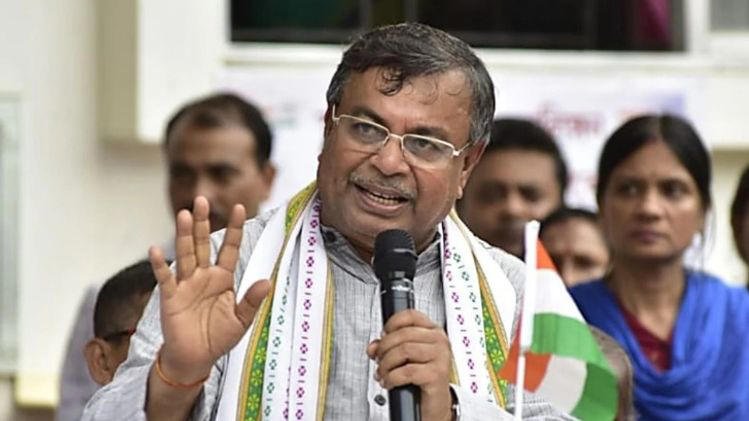
The Tripura government has unveiled a transformative plan for its power sector. On January 3, Power Minister Ratan Lal Nath announced that the state has selected 10 specific river locations to host 185 MW hydrokinetic power projects in Tripura. This initiative aims to utilize the natural flow of rivers to generate clean electricity. Consequently, the state hopes to ensure a reliable 24×7 power supply for all its citizens.
Read More: CM Manik Saha Launches 69th National School Games Yoga Event in Agartala
Advancing Sustainable Energy Through Technology
The announcement came during the bhoomi pujan ceremony for the new Super Energy Conservation Building Code (ECBC) building at Banamalipur, Agartala. During the event, the Minister emphasized that the state must embrace modern solutions. If Tripura fails to adopt new technology, he warned, it risk falling behind in the global development race.
Specifically, the government is turning to Hydrokinetic Turbine Technology. Unlike traditional dams, this method does not require massive infrastructure or water storage. Instead, these turbines capture energy directly from the moving water. Because of this, 185 MW hydrokinetic power projects in Tripura represent an environmentally friendly alternative to conventional hydropower. Furthermore, this technology is ideal for the state’s perennial river systems.
Strategic Locations for Power Generation
The Power Department has already completed the identification process for the project sites. These locations are spread across various districts to ensure a balanced energy distribution.
Identified River Sites Include:
- Chakmaghat and Maharani: Key areas for initial deployment.
- Dumbur and Natunbazar: Leveraging established water paths.
- Manu, Kulai, and Kalsi: Tapping into the currents of major river basins.
- Feni, Dhalai, and Sangan: Sites located in Ampi and Lakhipur regions.
Work on these sites is expected to begin as early as next month. By diversifying the energy mix, the state aims to reduce its heavy reliance on depleting natural gas reserves. Moreover, the 185 MW hydrokinetic power projects in Tripura will contribute significantly to the state’s goal of meeting a projected peak demand of 650 MW by the year 2031.
Infrastructure and Efficiency Goals
In addition to generation, the government is focusing on energy conservation. The upcoming Super ECBC building in Agartala is a prime example of this commitment. With an investment of ₹12.33 crore, this facility will be one of only five such energy-efficient buildings in India. Thus, it serves as a model for future urban development in the Northeast.
According to Minister Nath, Tripura currently provides an average of 23 hours and 54 minutes of electricity daily. However, the number of consumers has grown from 7.21 lakh in 2018 to over 10.57 lakh today. This rapid growth necessitates a massive increase in capacity. Therefore, projects like the 185 MW hydrokinetic power projects in Tripura are essential to maintain the state’s development trajectory.
A Multi-Pronged Solar and Hydro Strategy
The hydrokinetic push is part of a broader “Green Tripura” vision. The Minister also highlighted the success of the PM Surya Ghar: Muft Bijli Yojana. He noted that if five lakh households adopt 2 kW rooftop solar systems, the state could generate an additional 1,000 MW daily.
Currently, the Power Department is also installing solar systems on 2,000 government buildings. This project alone is expected to add 80 MW of power by next year. However, the 185 MW hydrokinetic power projects in Tripura remain a unique priority because they provide a continuous energy flow that does not depend on sunlight. Consequently, hydrokinetic power offers a more stable “base load” for the state’s electrical grid.
Conclusion: Powering a Prosperous Tripura
To conclude, the identification of 10 river sites marks a historic shift in Tripura’s energy policy. By combining the 185 MW hydrokinetic power projects in Tripura with aggressive solar adoption, the state is carving a path toward total self-reliance.
Ultimately, these projects will boost the local GDP and increase per capita income by creating a surplus of “green” energy. As construction begins next month, residents can look forward to a future of uninterrupted, eco-friendly electricity. Thanks to the forward-thinking leadership of the Power Department, Tripura is set to become a beacon of renewable energy in India.
Read More: iPhone 17: How Apple’s “Super Phone” Is Shaking the 2025 Market