


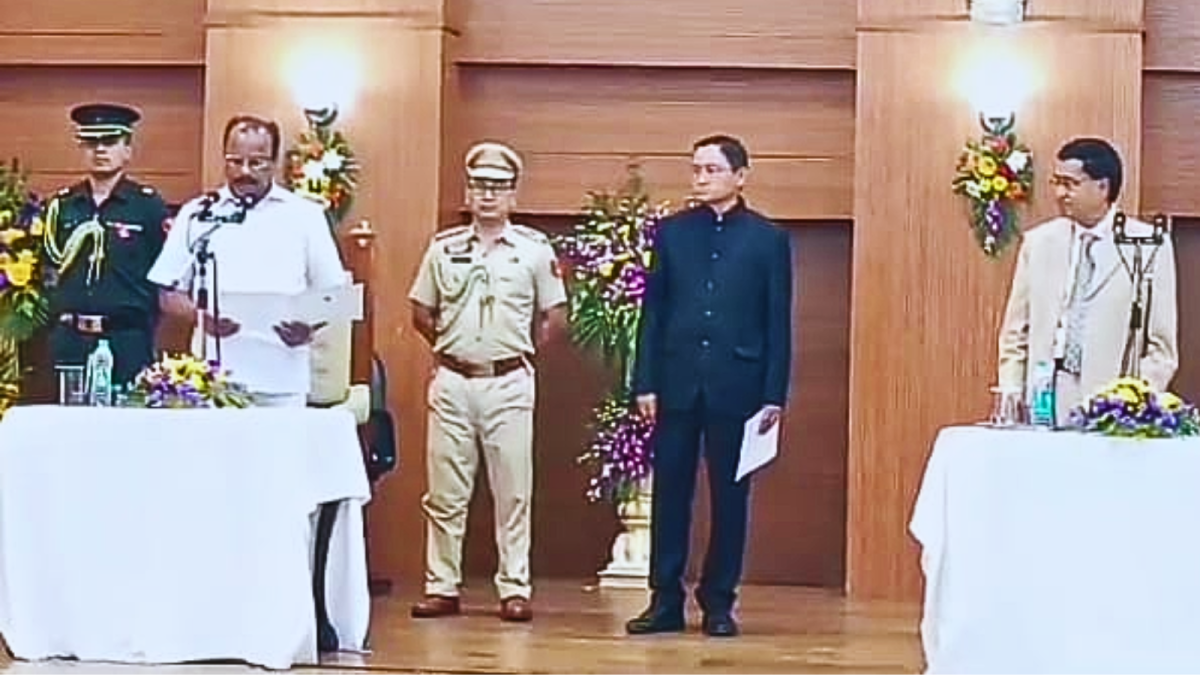
Tripura Lokayukta B K Kilikdar has resigned from office less than two years after taking charge, citing health reasons, officials said. Kilikdar submitted his resignation to Governor Indrasena Reddy Nallu three days before the September 10 report, and the resignation was subsequently accepted. The state government has now been asked to begin the process of appointing his successor.
Border Fencing Progress Audited: Tripura Reviews 805.99 Km of India-Bangladesh Fence
Tripura Lokayukta Resignation Comes Before Two-Year Mark
B K Kilikdar, a former judicial officer, became Tripura’s fourth Lokayukta on August 16, 2024. His departure therefore comes shortly before he would have completed two years in the position. The resignation has attracted attention because of both its timing and the circumstances surrounding the functioning of the anti-corruption institution during his tenure.
According to officials cited in reports, Kilikdar submitted his resignation to Governor Indrasena Reddy Nallu citing health-related reasons. The Governor accepted the resignation, while the state government received instructions to initiate the process for selecting a successor.
The stated reason for the resignation remains health-related. Importantly, there has been no official confirmation that disagreements with the government caused Kilikdar to leave office. Therefore, claims about other possible factors need to remain separate from the officially cited reason.
The development now creates a vacancy at the head of Tripura’s statutory anti-corruption institution. Consequently, the next stage will involve the government beginning the process required to appoint a new Lokayukta.
Kilikdar’s Tenure Drew Administrative Attention
Kilikdar’s resignation has also prompted discussion about several proceedings undertaken by the Lokayukta’s office during his tenure. Administrative sources cited by TripuraInfo said that sections of the state administration had concerns about what they viewed as targeted action involving certain government officials and employees.
One reported matter involved a senior bureaucrat and a decision dating back roughly 15 years, when the officer had served as Director of the Education Department. The Lokayukta’s office reportedly sought a response from the Education Department and later directed the officer to appear personally.
The proceedings reportedly generated questions within administrative circles about how the matter was being pursued given the time that had passed since the original decision. Sources said the issue was subsequently brought to the attention of the Chief Minister and the Governor.
However, these reports do not establish a direct connection between the proceedings and Kilikdar’s resignation. The available reporting explicitly notes that there is no official statement linking his decision to disagreements with either the state government or Raj Bhavan.
That distinction remains important because the Lokayukta functions as an independent statutory institution. Therefore, administrative concerns surrounding particular proceedings should not automatically be treated as the reason for an office-holder’s resignation.
Lokayukta Institution Holds Anti-Corruption Role
The Lokayukta serves as an important institutional mechanism for examining allegations involving corruption and maladministration. Tripura established its Lokayukta institution in December 2012, before the wider statutory framework created by the Lokpal and Lokayuktas Act, 2013.
The institution’s role makes continuity in its leadership significant. A vacancy at the top can affect the administrative handling of pending matters and the broader functioning of the office. Consequently, the appointment of a successor will be an important next step for the state government.
Kilikdar’s background as a former judicial officer also formed part of his profile before taking the position. He assumed office as the state’s fourth Lokayukta in August 2024 and remained in the post until his resignation was accepted in September 2026.
Meanwhile, the circumstances surrounding his departure have generated discussion about the balance between institutional independence and administrative oversight. The Lokayukta must be able to examine matters within its jurisdiction, while government departments and officials remain subject to established legal and procedural safeguards.
Therefore, the transition to a new Lokayukta will attract attention not only because of the vacancy but also because of the expectations surrounding the institution’s independence and effectiveness.
Successor Appointment Becomes Immediate Priority
With Kilikdar’s resignation accepted, the immediate administrative task is to begin the process of appointing his successor. Reports indicate that the state government has been asked to initiate that process.
The appointment will determine who leads the institution through its next phase. Moreover, the incoming Lokayukta will inherit an office that has recently faced attention over proceedings involving government officials.
The government has not publicly announced a successor in the reports currently available. Therefore, details about the next appointment should await an official notification rather than speculation.
At the same time, the transition provides an opportunity to maintain continuity in the institution’s work. Any pending proceedings would need to continue according to the applicable legal framework, while the new office-holder would be expected to establish their own approach to the Lokayukta’s statutory responsibilities.
The resignation also highlights the importance of clearly distinguishing confirmed facts from administrative speculation. Kilikdar’s health remains the stated reason for his resignation, while reports about dissatisfaction within parts of the administration concern the wider circumstances and have not been officially established as the cause of his departure.
Conclusion
The Tripura Lokayukta resignation has created a leadership vacancy at the state’s anti-corruption institution before B K Kilikdar completed two years in office. Kilikdar, who took charge as the fourth Lokayukta on August 16, 2024, submitted his resignation to Governor Indrasena Reddy Nallu citing health reasons. The resignation was subsequently accepted.
Although reports have highlighted administrative concerns over some recent Lokayukta proceedings, there is no official confirmation that those issues caused Kilikdar’s departure. Therefore, health reasons remain the stated basis for the resignation.
The immediate focus now shifts to the appointment of a successor and the continued functioning of the Lokayukta institution. Moreover, the transition will be closely watched because of the institution’s role in addressing allegations of corruption and maladministration in Tripura.
FAQs
Why did Tripura Lokayukta B K Kilikdar resign?
B K K Kilikdar resigned citing health reasons, according to officials and reports. There is no official confirmation that administrative disagreements caused his resignation.
When did B K Kilikdar become Tripura Lokayukta?
Kilikdar took charge as Tripura’s fourth Lokayukta on August 16, 2024.
Who accepted the Tripura Lokayukta’s resignation?
Governor Indrasena Reddy Nallu accepted Kilikdar’s resignation after it was submitted to him.
What happens after the Tripura Lokayukta resignation?
The state government has been asked to begin the process of appointing a successor to Kilikdar.
Did the Tripura Lokayukta resignation result from a dispute with the government?
There is no official confirmation of such a link. While administrative sources reported concerns about some proceedings, the stated reason for Kilikdar’s resignation remains health-related.