


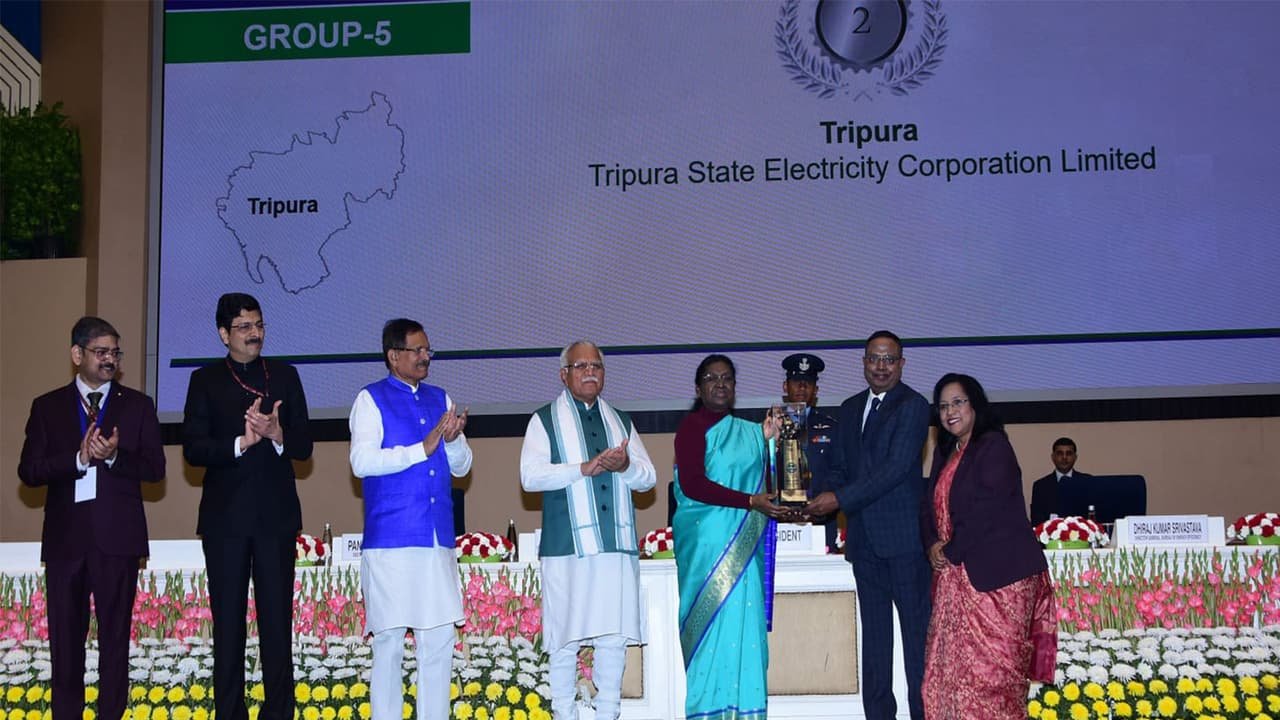
Tripura has achieved a significant milestone, securing the second position among all Indian states in the national rankings for effective energy conservation initiatives. This remarkable recognition, based on the performance assessment criteria set by the Bureau of Energy Efficiency (BEE), underscores the state’s dedicated efforts to promote energy efficiency and sustainable practices across various sectors.
The ranking highlights the state’s success in implementing key government schemes and driving behavioral change towards responsible energy use. The second-place finish positions Tripura as a leader in the Northeast region regarding energy management. Therefore, this accomplishment serves as a major endorsement of the state’s focused strategy on power sector reforms and sustainable development.
Read More: CM Sarma Meets VP Radhakrishnan, Invites Him to Assam
Key Drivers of Tripura’s Success
Several targeted actions propelled Tripura to this high rank. Firstly, the state successfully implemented mandatory energy audits for high-energy-consuming buildings and industries. These audits helped identify areas of waste and guided corrective measures. Secondly, the state launched aggressive public awareness campaigns. These campaigns educated citizens and institutions about the financial and environmental benefits of conserving energy.
Furthermore, the state actively promoted the adoption of energy-efficient appliances. This included distributing LED bulbs under various schemes. The replacement of conventional, power-intensive lighting with energy-saving alternatives across government buildings and households yielded substantial energy savings. Thus, these practical steps formed the backbone of the successful Tripura Energy Conservation Initiative.
The State Designated Agency (SDA) for energy conservation played a crucial role. This agency effectively monitored the implementation of BEE guidelines. In addition, it ensured compliance with the Energy Conservation Act, 2001. Their rigorous oversight and coordination with various state departments were fundamental to achieving the desired outcomes.
Impact on Various Sectors
Tripura’s energy conservation success extended across multiple sectors, illustrating a holistic approach.
- Government Sector: State departments adopted strict guidelines for minimizing energy usage in their offices. This included optimizing air conditioning usage and relying on natural light where possible.
- Industrial Sector: The state provided incentives and technical assistance to small and medium enterprises. This encouraged them to upgrade old machinery with energy-efficient models. Consequently, the operational costs for these units decreased, benefiting the local economy.
- Domestic Sector: Mass awareness drives, coupled with appliance distribution schemes, led to significant changes in household consumption patterns. Citizens began consciously using less energy, recognizing its importance.
The Path Forward for Sustainable Energy
Achieving the second rank is not just a point of pride; it sets a high standard for future endeavors. The state government recognizes that sustaining this momentum requires continuous effort and innovation. Therefore, the focus now shifts towards implementing more advanced measures.
Future plans include integrating renewable energy sources, such as solar power, more widely into the state’s energy mix. Moreover, the state aims to invest in smart grid technologies. These technologies will help monitor energy consumption in real-time and facilitate quicker response to efficiency gaps.
The success of the Tripura Energy Conservation Initiative demonstrates that even smaller states can achieve impressive national results through strong political will, effective institutional mechanisms, and community participation. This achievement firmly places Tripura on the national map as a model for energy efficiency and sustainable development, inspiring other states to redouble their own efforts.
Read More: What Does the “i” in iPhone and iPad Really Mean?