


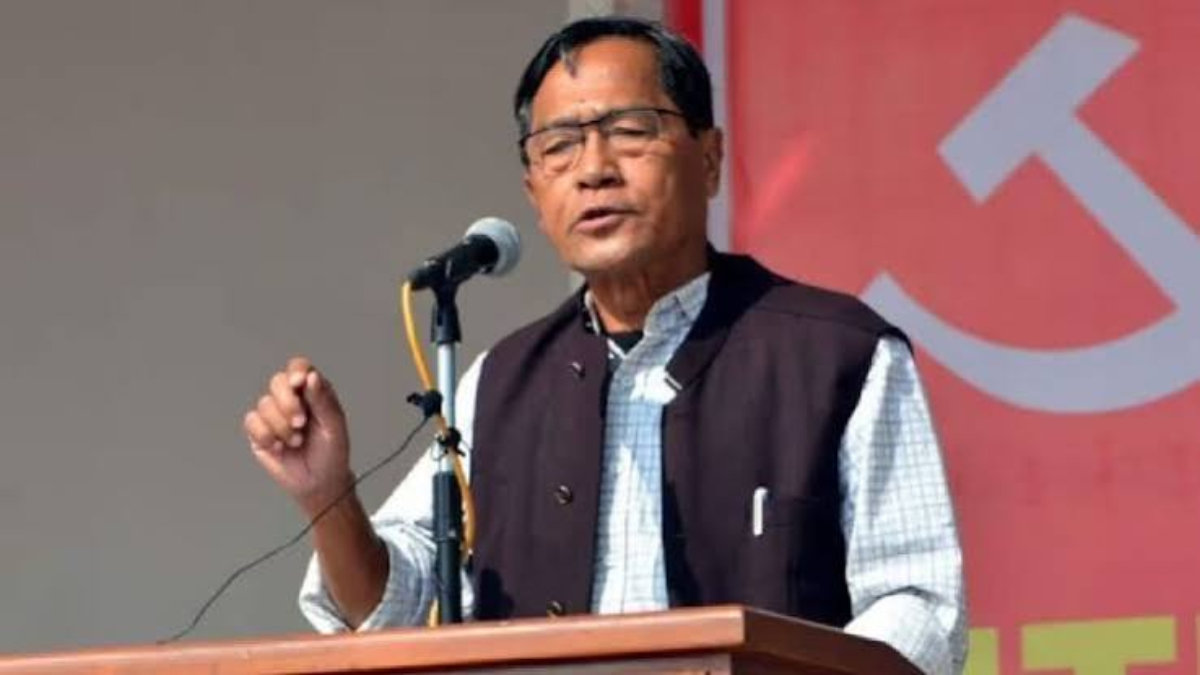
The Tripura UCC debate has intensified after Leader of Opposition Jitendra Chaudhury raised concerns about its possible impact on minority groups and tribal communities. His remarks came after Chief Minister Manik Saha said Tripura would implement a Uniform Civil Code if the Centre issued directions.
Chaudhury’s concerns focus on the protection of community rights and customary practices. The issue gained fresh attention after Union Home Minister Amit Shah said NDA governments in 21 states would introduce the UCC before 2029.
Tripura UCC debate gains fresh momentum
The Tripura UCC discussion entered a new phase after Saha said the state would follow the Centre’s decision. Speaking to reporters, the chief minister also indicated that tribal areas could remain outside the UCC’s scope.
Saha said he understood that tribal areas might receive an exemption because customary laws govern matters such as marriage and inheritance there. However, he did not announce a final exemption or provide details of how such an arrangement would work.
The statement leaves questions about the extent of any exemption and the legal framework for customary practices.
Jitendra Chaudhury flags minority concerns
Chaudhury, the CPI(M) leader and Tripura’s Leader of Opposition, has previously criticised the UCC over its possible effect on India’s diverse personal laws. In 2023, he argued that the proposed code could dilute constitutional principles and raised concerns about minority rights and cultural diversity.
His concerns come amid a wider debate over whether a common civil framework should replace different religious personal laws. Supporters of the UCC have presented it as a way to create common rules for areas such as marriage, divorce, succession and related personal matters.
However, critics have questioned how a uniform framework would interact with customary and community-specific practices. In Tripura, that question has added importance because tribal communities have distinct customs and an autonomous district council governs tribal areas.
Tripura UCC and tribal customary laws
Tripura’s tribal areas are administered through the Tripura Tribal Areas Autonomous District Council, or TTAADC. Customary practices play a role in community affairs, making the proposed scope of the UCC a significant issue for residents in those areas.
The chief minister’s reference to a possible exemption provides some indication of the government’s approach. Still, the government has not yet published a detailed UCC proposal for Tripura or specified which customary laws would remain protected.
Meanwhile, the state is preparing for Village Committee elections in the TTAADC areas. The timing has brought tribal governance and customary rights into wider public discussion.
What the Tripura UCC could cover
A Uniform Civil Code generally refers to a common set of civil rules governing personal matters regardless of religion. In discussions around the policy, these matters can include marriage, divorce, inheritance, succession and adoption.
The exact provisions matter because the impact cannot be assessed from the term “UCC” alone. A final state law would need to establish which existing personal laws it replaces, which practices it preserves and whether any communities or territories receive exemptions.
For Tripura, the treatment of tribal customary law will therefore remain a central question. Additionally, the effect on religious minorities will depend on the provisions eventually proposed and enacted.
Tripura UCC debate awaits clearer framework
The immediate issue remains at the stage of political statements rather than a final Tripura UCC law. Saha has said the state will act if the Centre communicates a decision, while also indicating that tribal areas may be exempted.
At the national level, Shah’s recent statement has added urgency to the debate. He said NDA governments in 21 states would introduce the UCC before 2029, although the precise legislative process will differ from state to state.
For now, the main questions in Tripura concern the scope of the proposed code, safeguards for minorities and the future of tribal customary practices. Further clarity will depend on the Centre’s directions and any draft or legislation brought forward by the state government.
Assam Records Zero Rhino Poaching in 2025, Major Conservation Milestone