


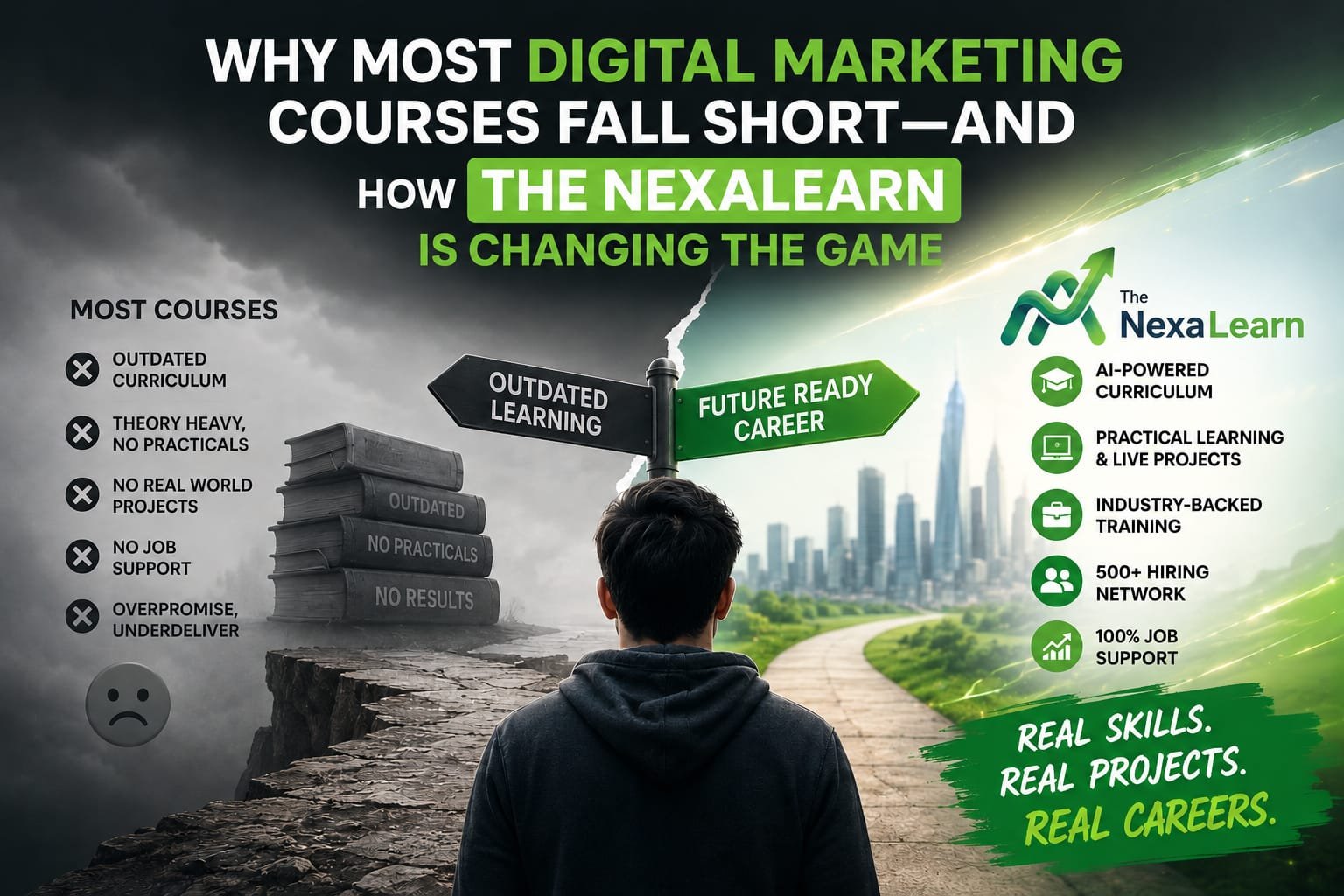
Search for a digital marketing job today, and you’ll notice something interesting. Most employers no longer hire people for a single skill like SEO or social media. One role now expects someone to understand paid advertising, content, analytics, websites, reporting, and AI tools together. That change has influenced how learners compare the Best Digital Marketing Courses. Certificates still matter, but they are no longer enough on their own. Recruiters spend far more time discussing projects, practical knowledge, and problem-solving during interviews than asking where someone completed their course.
Digital Marketing in India
Businesses of every size now invest in digital marketing, but the work varies from one industry to another. The table below shows how companies currently use digital marketing across different business functions.The same change has influenced Digital Marketing Institutes in India. Learners now expect practical projects, experienced mentors, AI-based marketing workflows, and interview preparation because these areas receive just as much attention during recruitment as technical knowledge.
The NexaLearn Digital Marketing Course comes here, which provides AI Infused Curriculum, Industry Backed Project and 10+ years of experience mentors.
Not just Marketing, The NexaLearn covers Gen AI Data Analytics Course as well which helps you to upgrade into Full Stack Marketer.
What Employers Expect From Digital Marketers Today?
Spend a few minutes reading digital marketing job descriptions on any major hiring platform, and one thing becomes obvious. Companies rarely hire people for a single skill anymore. A role that mentions SEO usually expects some understanding of content. Performance marketing jobs talk about analytics. Social media roles ask for reporting, audience research, and campaign planning. AI has become another expectation rather than a separate advantage.
Interview conversations have changed as well.
Recruiters spend less time asking, “Which course did you complete?” They want to know what you’ve worked on and how you think when a campaign doesn’t perform as expected.
Typical interview questions now sound like this:
- Which campaign are you most confident discussing?
- How did you decide your target audience?
- Which numbers did you monitor before making changes?
- What happened after you adjusted the campaign?
- Where did AI actually save time during your work?
Answers to these questions come from practical experience, not from memorising definitions. That explains why many learners now compare the Best Digital Marketing Courses based on project work, mentor feedback, and interview preparation instead of simply choosing the first programme they find online.
The Skills Recruiters Notice First
Every marketing tool eventually receives an update. Campaign platforms change. AI tools change. Reporting dashboards change. The way someone approaches a marketing problem usually matters for much longer.
These are few skills that are notice first in market:
- SEO
- Google Ads
- Meta Ads
- Google Analytics 4
- Performance Marketing
- Email Marketing
- Content Marketing
- Marketing Automation
- AI Tools
- Marketing Reporting
That is the foremost reason why many learners now compare the Best Digital Marketing Courses differently. Instead of asking which programme covers the highest number of tools, they want to know where they’ll build stronger projects, receive detailed mentor feedback, and develop the confidence to explain their work during interviews.
What Learners Usually Notice After the First Few Weeks
Choosing from the Best Digital Marketing Courses sounds easier than it really is. Almost every course page talks about SEO, Google Ads, Meta Ads, AI, practical projects, certifications, and placement support. Read a few brochures, and the difference between one programme and another starts becoming difficult to recognise.
The questions usually come later.
Some learners wonder why nobody has reviewed their assignment in detail. Others realise they have completed several projects, but still don’t know how to explain their work during an interview. Some finish the syllabus without discussing a single campaign with someone who actively works in digital marketing.
Most learners join a digital marketing course expecting personalized mentorship, real-world projects, ongoing portfolio development, interview preparation throughout the course, practical AI implementation, and guidance from experienced professionals. In reality, many courses rely heavily on recorded lectures, structured practice exercises, theory-focused sessions, and AI modules that aren’t integrated into day-to-day marketing tasks. Portfolio building and interview preparation are often left until the end of the program, leaving learners with less practical experience than they anticipated.
Marketing work rarely follows one subject at a time. A campaign can begin with keyword research, move into content planning, continue through paid advertising, and finish with reporting, optimisation, and budget decisions. That is one reason many learners now spend more time comparing Digital Marketing Institutes in India than comparing course fees. They want to understand how they’ll learn, who will guide them, and what they’ll be able to discuss when they finally sit across from a recruiter.
Why Do More People Keep Shortlisting The NexaLearn, Leading Digital Marketing Institute in India?
Spend a little time comparing Digital Marketing Courses in India, and one thing quickly becomes noticeable. Most course pages mention almost the same subjects. SEO, Google Ads, Meta Ads, Analytics, AI, live projects, placement support, and certifications appear on nearly every website. Reading the syllabus alone rarely tells you how the learning actually happens after admission.
The NexaLearn looked at that gap from a different angle- rather than treating every subject as a separate classroom topic, the programme follows the same sequence that marketing teams deal with during everyday work. A campaign may begin with keyword research, move into content planning, continue with paid advertising, and finish with reporting, analysis, and improvements based on performance.
That same approach continues inside the NexaLearn’s Gen AI Digital Marketing Course:
10+ Industry Backed Projects: Learners work on SEO website audits, Google Ads campaign planning, Meta Ads strategy, GA4 performance reviews, marketing dashboards, email campaigns, competitor research, PPC simulations and social media strategy projects while each topic is being taught.
Portfolio Preparation: Each completed audit, campaign plan, dashboard, email project, case study and social media strategy adds useful work to the learner’s portfolio, giving them real examples to discuss when recruiters ask about practical experience.
Interview Preparation: Resume reviews, LinkedIn profile improvements, mock interviews and project discussions start during the course, giving learners enough time to improve their answers, organise their work and prepare for marketing interview questions properly.
Expert Mentor Review: Mentors with 10+ years of industry experience review assignments, explain what needs improvement, discuss campaign decisions and guide learners before they move to the next module or project.
AI Integrated Curriculum: More than 20 Gen AI tools are used for keyword research, campaign planning, content creation, reporting, competitor study, workflow management and regular marketing tasks, making AI part of the actual learning process.
Placement Support: The NexaLearn shares hiring opportunities through its network of 500+ companies, supports ambitious learners with interview preparation and gives regular career guidance until they start appearing for suitable job opportunities.
Flexible Batches: College students, working professionals, freelancers, business owners and career switchers can choose learning schedules that fit around their academic, professional and personal commitments without leaving the course midway.
Career Opportunities After Completing the Programme
Job titles in digital marketing have expanded drastically as the industry shifted from basic online advertising to a complex data-centric ecosystem. Companies now seek employees separately for SEO, paid advertising, content, social media, analytics, e-commerce, automation, and AI, as each area requires a distinct set of skills. The opportunities below show some of the common roles learners work towards after building practical experience and completing industry-focused digital marketing course training from The NexaLearn.
Digital Marketing Executive: ₹3–5 LPA
SEO Specialist: ₹3.5–8 LPA
Performance Marketing Specialist: ₹5–14 LPA
Social Media Manager: ₹4–10 LPA
Content Marketing Specialist: ₹4–9 LPA
PPC Analyst: ₹5–12 LPA
Marketing Automation Specialist: ₹6–14 LPA
Growth Marketing Specialist: ₹7–18 LPA
Digital Marketing Manager: ₹8–20 LPA
AI Marketing Strategist: ₹10–25 LPA
Please note that the salary would vary according to many factors like experience, job location, size of the company, technical knowledge, communication skills, and the responsibilities attached to each role.
Build Your Digital Marketing Career with The NexaLearn
The first marketing job becomes much easier when you already have practical projects, interview confidence, and industry-recognised skills on your resume. The NexaLearn’s Job-Oriented Digital Marketing Course with AI unifies learning and application of SEO, Performance Marketing, Social Media Marketing, Content Marketing, Analytics, and the latest Gen AI tools into one structured six-month programme that prepares learners for today’s hiring requirements.
More than 30,000 learners have already trusted The NexaLearn to strengthen their marketing careers. If you’re looking for practical learning, recognised certification, and genuine placement support in one place, this is the right time to achieve long-term career success.