


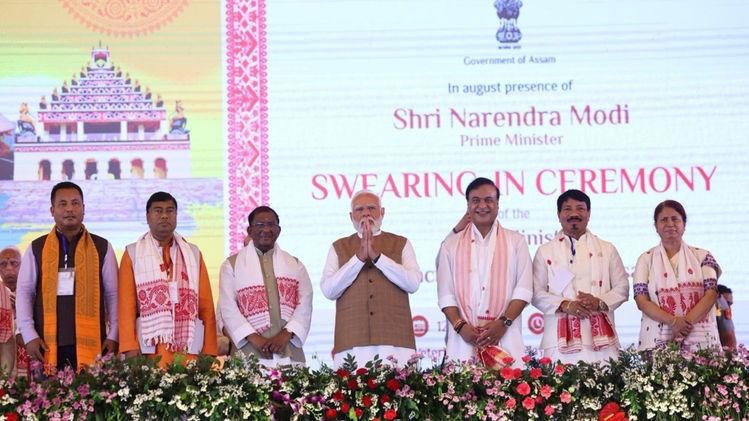
A recent report released by the Association for Democratic Reforms (ADR) has revealed that all five ministers in the Assam cabinet are crorepatis. The report also stated that one of the ministers has declared a criminal case against him in the affidavit submitted during the election process.
Read More: Manipur CM Y Khemchand Singh Condemns Kangpokpi Civilian Attack, Vows Strict Action
The findings once again brought attention to the financial background and legal records of elected representatives in India. ADR prepared the report after analysing affidavits filed by the ministers before the Assembly elections.
According to the report, the ministers collectively hold assets worth several crores, including movable and immovable properties. The analysis also highlighted educational qualifications, liabilities, and pending legal cases.
ADR Analyses Election Affidavits of Assam Ministers
The ADR report examined the self-sworn affidavits submitted by the ministers to the Election Commission before contesting the elections. These affidavits include details about assets, income, liabilities, educational background, and criminal cases.
According to the findings, all five ministers in the Assam cabinet declared assets worth more than Rs 1 crore, making them crorepatis. The report further noted that one minister has a criminal case registered against him.
ADR stated that the criminal case mentioned in the affidavit relates to charges filed under various sections of the law. However, the organisation clarified that the existence of a criminal case does not imply conviction unless proven in court.
Political observers believe such reports are important because they provide voters with information about the financial and legal background of public representatives. Transparency in election affidavits has become a key issue in Indian politics over the years.
Crorepati Ministers Reflect Growing Wealth in Politics
The ADR findings also highlighted the increasing number of wealthy candidates entering electoral politics across the country. Assam is no exception, as all five ministers declared assets running into crores.
Experts say the rising cost of elections and campaign management often favours financially strong candidates. In many cases, political parties prefer candidates with significant financial resources because they can independently support election campaigns.
The report showed that the ministers own properties, investments, vehicles, jewellery, and bank deposits. Several ministers also declared agricultural land and commercial assets in their affidavits.
At the same time, ADR stressed the importance of public scrutiny regarding the financial growth of politicians. Civil society groups have repeatedly called for stronger transparency measures and regular monitoring of elected representatives’ declared assets.
The report has also triggered fresh discussions on electoral reforms and the role of money in politics. Many activists believe political funding and campaign expenditure need stricter regulation to ensure fair representation.
One Minister Declares Criminal Case
Apart from wealth declarations, the ADR report stated that one Assam minister has declared a criminal case in the affidavit filed during the election process.
While the report did not interpret the seriousness of the case beyond the affidavit details, it pointed out that criminal charges against candidates remain a matter of public concern across India. Election reform groups have often argued that political parties should avoid fielding candidates with pending criminal cases.
However, legal experts maintain that individuals remain innocent until proven guilty in a court of law. In many cases, politicians claim that criminal charges are politically motivated or linked to protests and political activities.
The issue of criminal records among politicians has remained a major topic during elections. Several reports released by ADR over the years have shown that a significant number of legislators and MPs across India face pending criminal cases.
Political analysts say voters today are paying closer attention to the background of candidates, including their legal records and financial status. This has increased pressure on parties to maintain transparency while selecting candidates.
Educational Qualifications and Liabilities Also Examined
Apart from assets and criminal cases, the ADR report also examined the educational qualifications and liabilities of the ministers. The affidavits revealed that the ministers come from varied educational backgrounds.
Some ministers declared graduate and postgraduate degrees, while others mentioned professional or secondary-level qualifications. ADR noted that educational details are important because they help voters better understand the profile of public representatives.
The report also included details about liabilities such as loans and pending dues. According to ADR, some ministers declared liabilities linked to bank loans and financial institutions.
Transparency activists argue that such disclosures strengthen democratic accountability. They believe voters should have access to detailed information before electing leaders.
Meanwhile, political parties continue defending the financial growth of their leaders, saying many politicians come from successful business or professional backgrounds before entering public life.
Demand for Electoral Transparency Continues
The ADR report has once again renewed discussions on electoral transparency and political accountability in India. Organisations working on election reforms have repeatedly called for stronger laws regarding political funding and disclosure norms.
Over the years, ADR reports have become an important source of information for voters, researchers, and policymakers. The organisation regularly analyses affidavits filed by candidates during parliamentary and Assembly elections.
Political experts say such reports help strengthen democracy by encouraging informed voting. Public access to information regarding wealth, education, and criminal records allows voters to make better decisions.
In Assam, the latest findings are likely to remain part of political discussions in the coming weeks. Opposition parties may use the report to target the ruling establishment, while the government is expected to defend the ministers and highlight their public service record.
Despite growing criticism over the role of money in politics, wealthy candidates continue to dominate elections across many states. The ADR report on Assam ministers reflects a broader national trend where financial strength often plays a major role in electoral success.
As debates over electoral reforms continue, reports like these are expected to remain central to conversations around transparency, accountability, and democratic governance in India.
Read More: Charan Boro Takes Oath In Bodo In Assam NDA Government